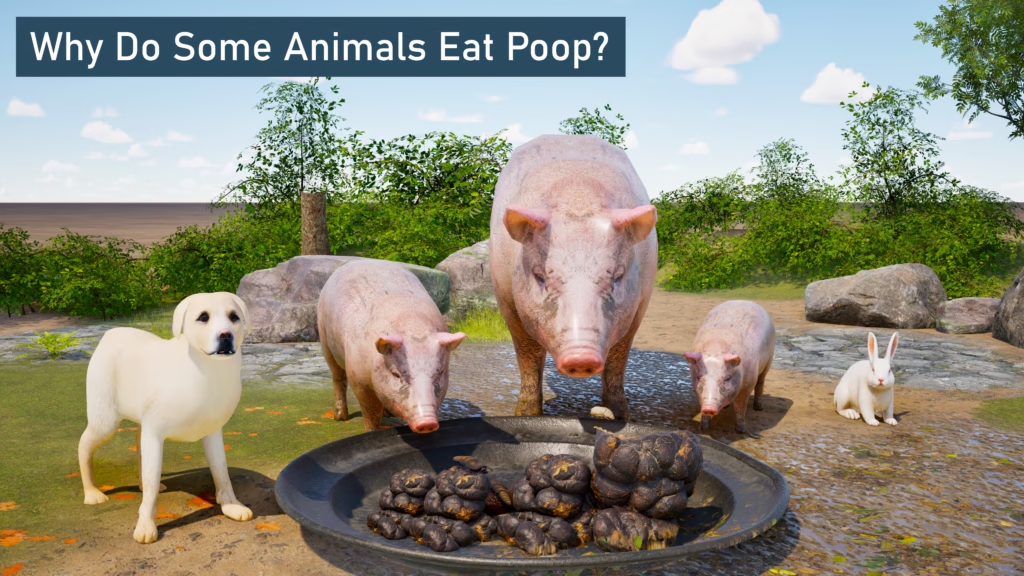
Why Do Some Animals Eat Poop? Explained in 3D
When humans are extremely hungry, they may eat almost anything they can find. But there is one thing humans instinctively avoid: feces. This strong aversion exists either because we feel a deep natural disgust toward it, or because we know feces can contain harmful germs and diseases.
However, in the animal kingdom, this rule does not always apply. For many animals, eating feces—scientifically known as coprophagy—is not strange at all. In fact, for some species, it is an essential survival strategy.
So why do some animals eat poop? Is feces really as dangerous as we think? The answers may surprise you.
Is Feces Always Dangerous?
One major reason animals eat feces is that feces are not always harmful—especially when they come from healthy individuals.
Feces from sick animals can contain dangerous bacteria, parasites, or viruses. But in healthy animals, feces mostly consist of:
Water
Undigested food
Harmless gut bacteria
In recent years, scientific research has explored the role of gut bacteria in health. One area of study involves transferring beneficial microorganisms from healthy sources to restore microbial balance in controlled clinical settings. This highlights that feces can contain biologically valuable microorganisms under specific conditions
Undigested Nutrients: A Hidden Food Source
Another key reason animals eat feces is nutrition.
During digestion, the body does not always extract all nutrients from food. This is especially true for animals that eat plants. Plant material is difficult to digest, and a significant portion of nutrients can pass through the digestive system unused.
Studies show that herbivores lose nearly one-third of the nutrients they consume through feces. This makes feces a rich secondary food source.
Because of this:
Many insects like beetles and flies survive entirely on animal dung
Feces recycle nutrients back into ecosystems
Some animals directly consume feces to reclaim lost energy
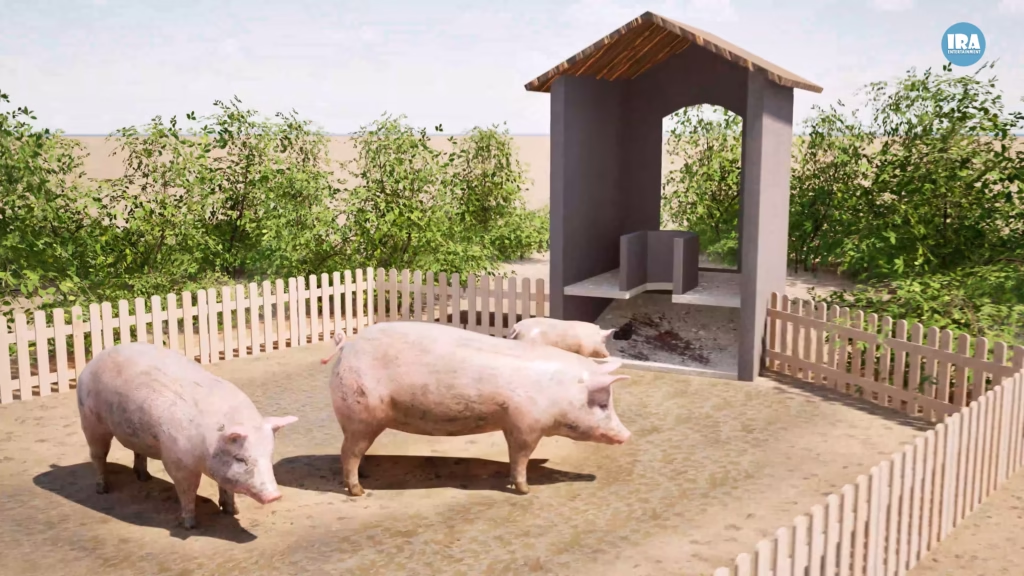
In ancient times, humans even built toilets above pig pens, allowing pigs to survive on human waste because it still contained enough nutrients.
Why Do Dogs Eat Poop?
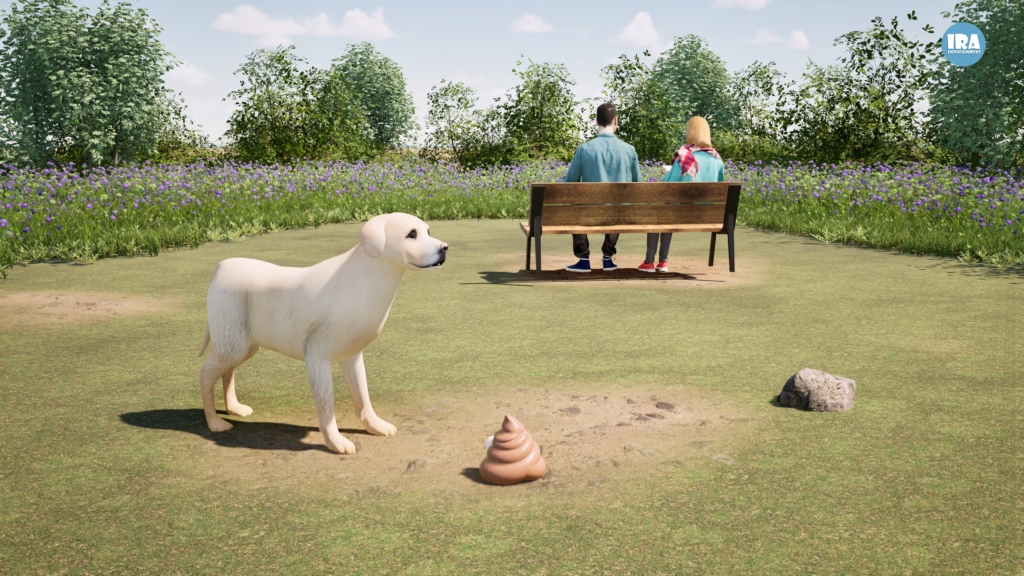
Many pet owners have witnessed dogs eating feces, a behavior that often causes alarm and disgust. But dogs have their reasons.
Dogs have an extremely strong sense of smell. They can detect:
Specific vitamins
Digestive enzymes
Nutritional deficiencies
Sometimes, dogs eat feces because they are lacking certain nutrients, especially B-vitamins or enzymes. In other cases, it may be instinctual behavior inherited from their wild ancestors, who ate feces to eliminate food traces that could attract predators.
While it’s unpleasant for humans, this behavior often has a biological explanation.
Gorillas and the Second Meal
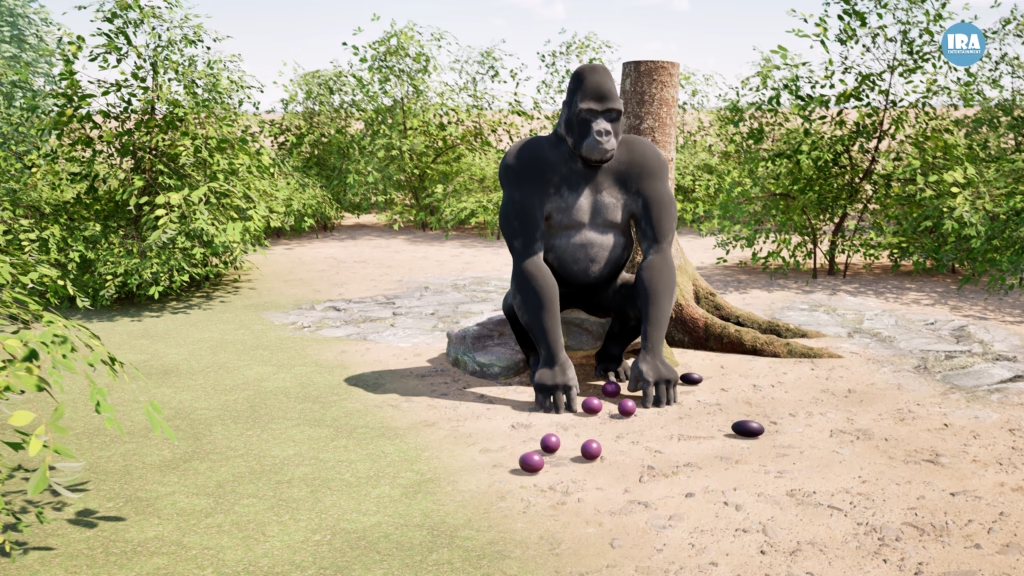
Gorillas are powerful plant-eating animals, but their digestive systems cannot fully break down all food components.
When gorillas eat hard seeds, their digestive systems often fail to extract all the fats and minerals inside. To compensate, gorillas sometimes eat their own feces to:
Re-digest undigested seeds
Absorb remaining fats and sodium
Maximize nutritional intake
This behavior helps them survive in environments where food quality may vary.
Cassowary Birds: Digestion on Fast-Forward
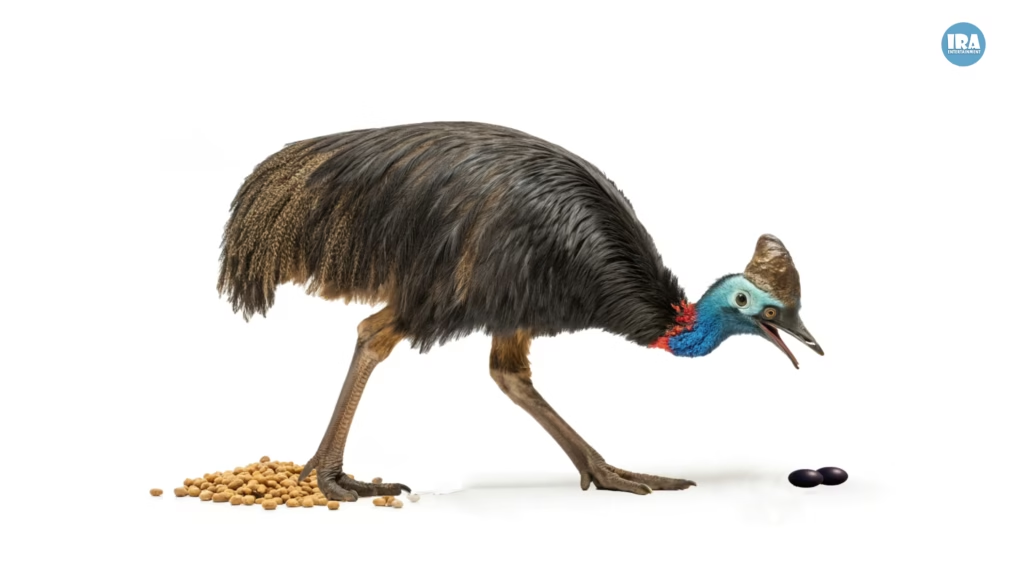
The cassowary, a large flightless bird found in tropical forests, has a very short digestive tract. Because of this:
Fruits often pass through its body partially undigested
Valuable nutrients remain in the expelled feces
When cassowaries notice this, they may turn around and eat their feces again, giving their bodies a second chance to absorb nutrients.
This behavior is less about habit and more about efficient digestion.
Animals That Must Eat Their Own Feces to Survive
For some animals, coprophagy is not optional—it is essential.
Rabbits: A Perfect Example
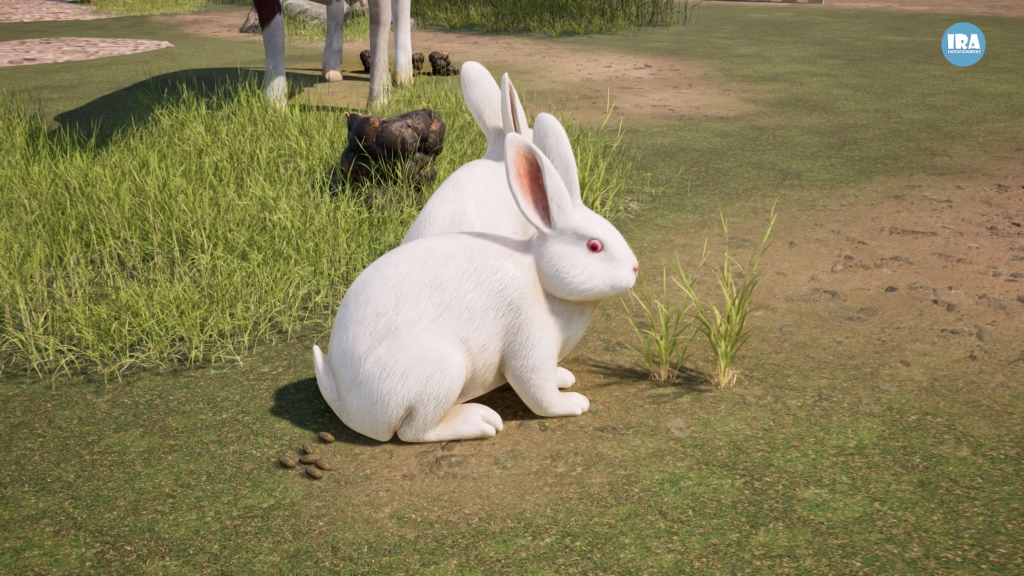
Rabbits eat grass like cows, but unlike cows, they do not have complex multi-chambered stomachs. Their digestive systems cannot fully break down plant fibers in one pass.
To solve this problem, rabbits produce two types of feces:
Soft feces (cecotropes) – rich in nutrients and beneficial bacteria
Hard pellets – the final waste product
Rabbits eat the soft feces directly from their anus. This process allows them to:
Absorb vitamins (especially B and K vitamins)
Reintroduce beneficial bacteria into their gut
Fully digest plant material
Only after this second digestion do rabbits pass the familiar dry pellets.
Without this behavior, rabbits would not survive.
Coprophagy Is Not Filthy—It’s Functional
From a human perspective, eating feces may seem revolting or unhygienic, but in the natural world, survival and efficiency matter far more than social taboos. Many animals practice coprophagy, and it serves very practical purposes that improve their health and chances of survival.
For example, coprophagy allows animals to recover nutrients that were not fully absorbed the first time food passed through the digestive system. It also helps maintain a healthy gut microbiome, replenishing beneficial bacteria that aid in digestion and nutrient absorption.
Animals that rely on low-quality, fibrous, or plant-based diets often use coprophagy as a strategy to maximize energy intake. Some species also face digestive limitations, such as short intestines or inefficient breakdown of certain foods, and eating feces helps them extract additional value from what they consume.
In nature, evolution is practical, not moral. Behaviors are selected based on function and survival advantage, not on human ideas of cleanliness. Coprophagy is a perfect example of a strategy that works—allowing species to thrive in challenging environments where nutrition is scarce or digestion is limited.
Why Humans Don’t Do It

Humans evolved with:
Highly efficient digestion
Cooking and food processing
Cultural norms around hygiene
We also face high risks from pathogens due to dense populations and shared environments. Over time, natural selection reinforced our strong psychological disgust toward feces as a protective mechanism.
So while humans can benefit medically from processed fecal bacteria, eating feces directly offers us no survival advantage.
Final Thoughts
Eating poop may sound shocking, but in the animal world, it is a smart biological strategy. For many species, feces are not waste—they are an opportunity.
Understanding coprophagy helps us appreciate how diverse and ingenious nature can be. What seems disgusting to humans may be life-saving for another creature.
Nature doesn’t follow human rules. It follows efficiency.
And sometimes, efficiency looks… messy.
About the Author: This article was prepared by the Ira Studios editorial team. We specialize in creating high-fidelity 3D educational visualizations. Our mission is to bridge the gap between complex anatomy and visual education through deep-dive 3D cross-sections and animations.
Watch the Full 3D Animation
To explore all of these processes in 3D, check out our detailed 3D Animation video.
Want to learn more through visual storytelling? Check out our detailed 3D explanation blog on Why is it so hard to catch a fly? Explained with 3d Animation
Useful Links : Coprophagia -Wikipedia