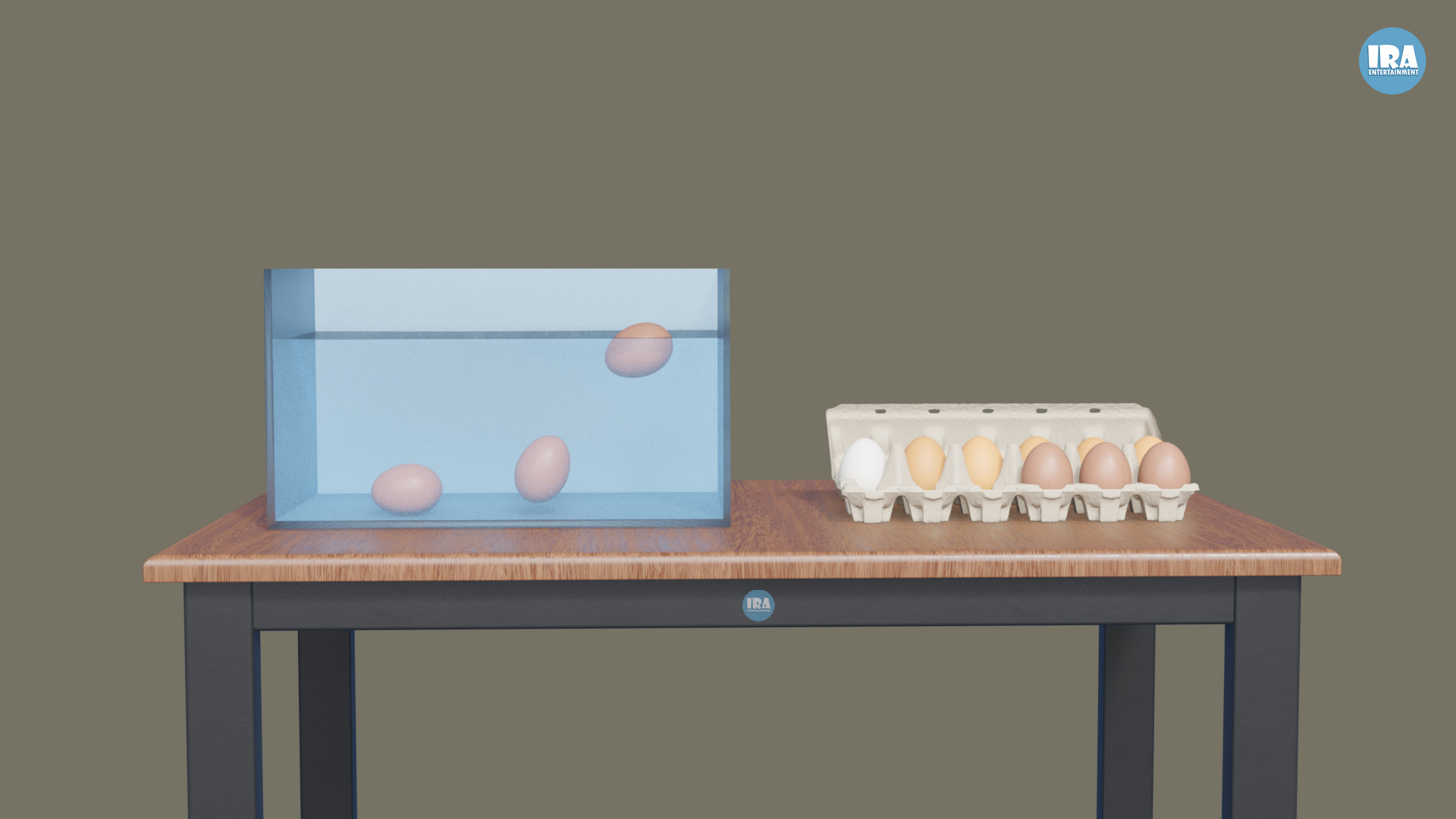
How to tell if an egg is bad?
Eggs are one of the most commonly used foods in kitchens around the world. They are nutritious, versatile, and easy to cook. However, because eggs are natural products, they do not stay fresh forever. Many people wonder how to determine whether an egg is still safe to eat.
One of the simplest and most scientific methods to check egg freshness is the water test. This method works because of natural changes that occur inside an egg as it ages. In this article, we will explore the science behind egg freshness and how you can easily test eggs at home.
The Science Inside an Egg
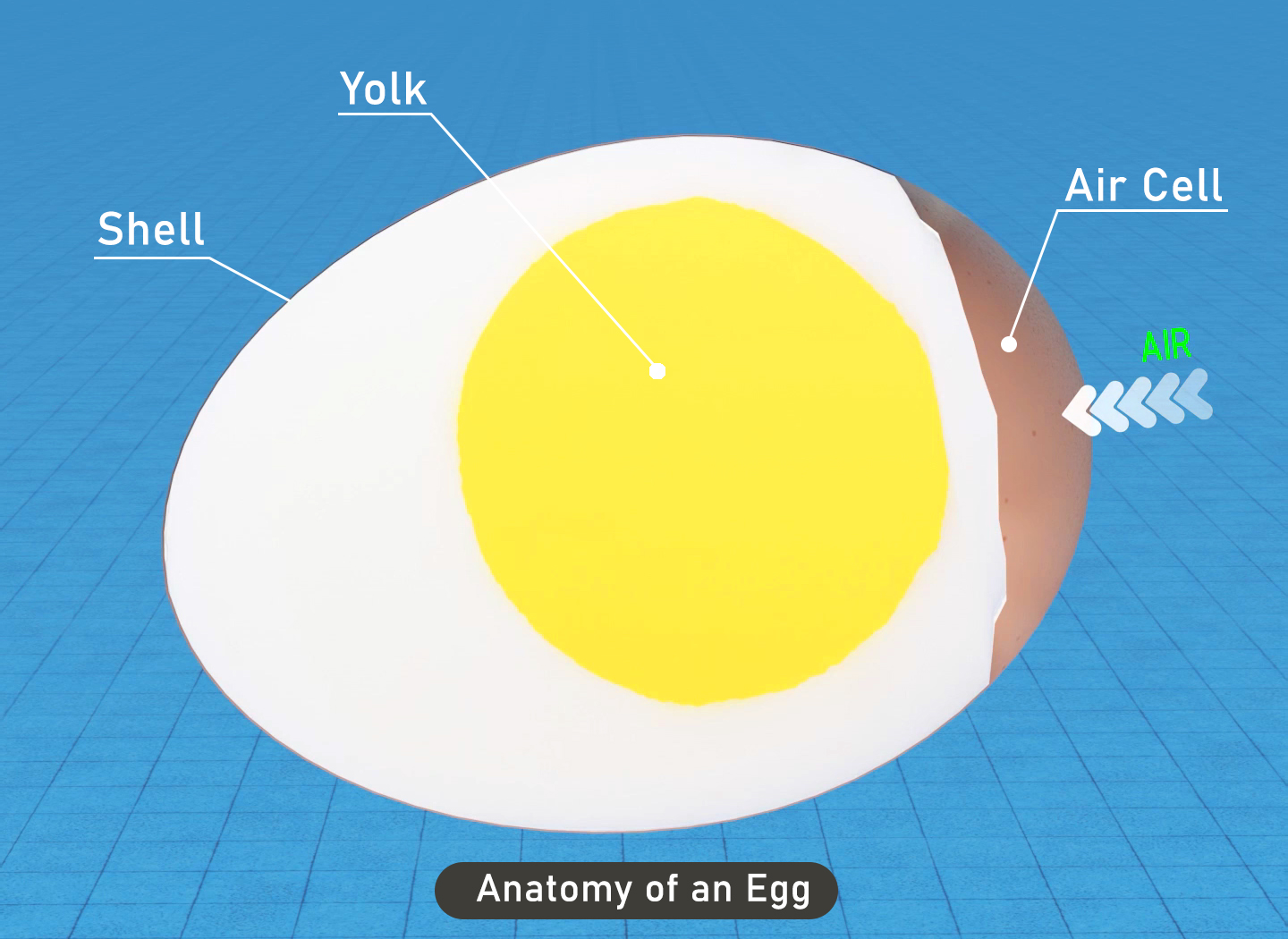
Every egg has a small air cell located at the wider end of the egg. This air pocket forms when the egg cools after it is laid.
Fresh eggs contain very little air inside them. However, as time passes, two important things happen:
Moisture slowly evaporates through the porous eggshell.
Carbon dioxide escapes from inside the egg.
At the same time, small amounts of outside air enter the egg through tiny pores in the shell. As a result, the air cell gradually becomes larger.
The older the egg becomes, the more air it contains.
This simple change in air volume is what allows us to test egg freshness using water.
The Egg Water Test: A Simple Scientific Method
The egg water test is an easy way to estimate how fresh an egg is.
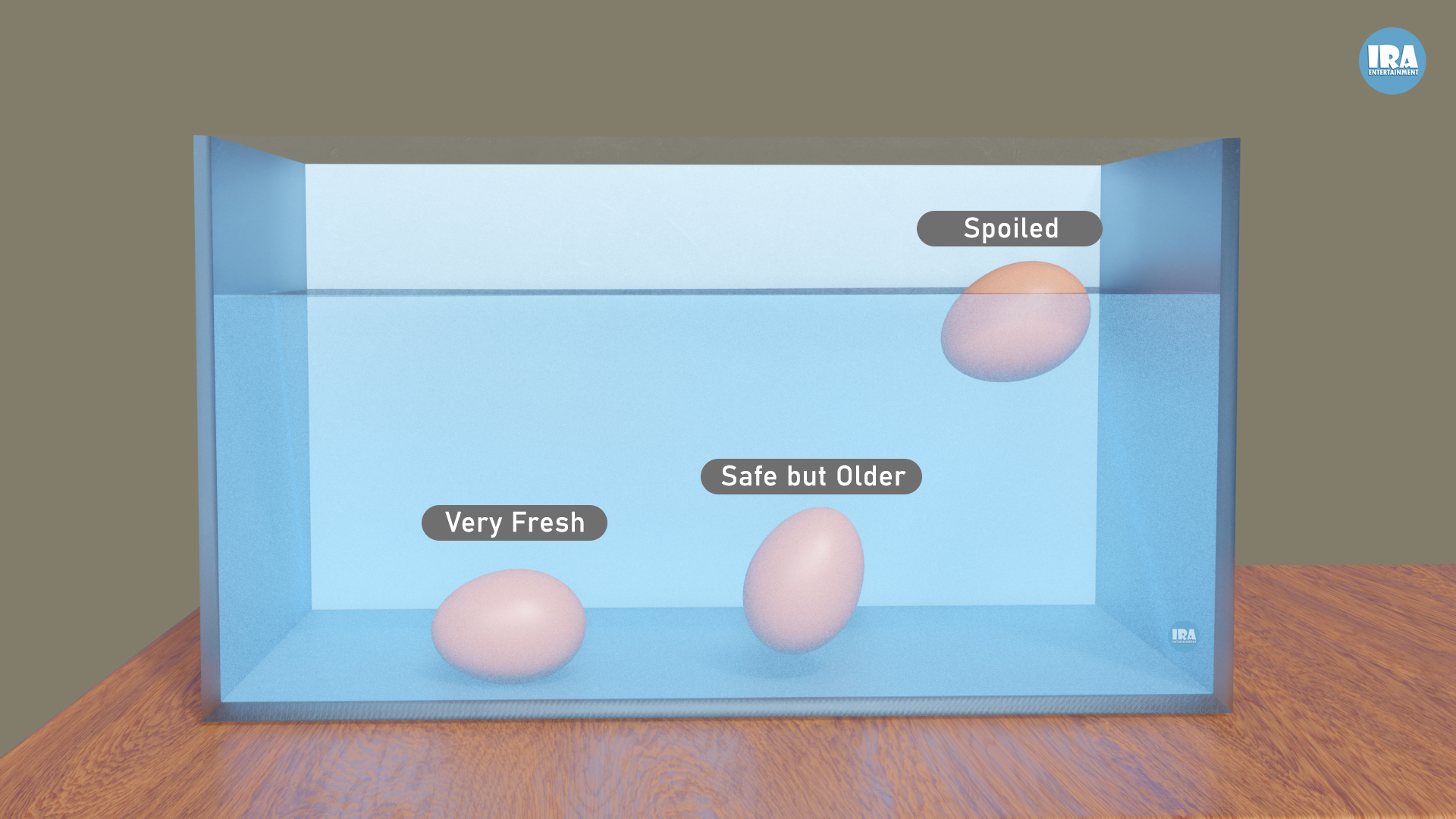
Step-by-step process
Fill a bowl or glass with cold water.
Gently place the egg into the water.
Observe how the egg behaves.
The way the egg moves in the water reveals its freshness.
1. Egg Sinks and Lies Flat – Very Fresh
If the egg sinks to the bottom and lies flat on its side, it is very fresh.
Fresh eggs contain very little air inside them, so they are denser than water. Because of this higher density, the egg sinks completely.
These eggs are ideal for:
Frying
Boiling
Baking
Poaching
This is the best condition for consumption.
2. Egg Sinks but Stands Upright – Still Safe but Older
Sometimes an egg will sink to the bottom but stand upright.
This means the egg has absorbed some air and the air cell has grown larger. The egg is not very fresh anymore, but it is still generally safe to eat if cooked properly.
However, it is recommended to use these eggs as soon as possible.
They are often suitable for:
Scrambled eggs
Omelets
Baking recipes
3. Egg Floats – Likely Spoiled
If the egg floats on the surface of the water, it usually means the egg has gone bad.
Floating occurs because the egg contains too much air inside, making it less dense than water.
A large air pocket forms due to:
moisture loss
gas release
air entering through shell pores
This condition often indicates spoilage, and the egg should not be consumed.
For safety reasons, floating eggs should be discarded immediately.
Why Eggs Become Bad Over Time
Even though eggs have protective shells, they are still affected by time and environmental conditions.
Several factors contribute to egg spoilage:
microbial growth
temperature changes
moisture loss
air exchange through shell pores
Proper storage in a refrigerator slows these processes but does not stop them completely.
Additional Signs of a Bad Egg
While the water test is helpful, you can also check other signs after cracking the egg.
Unpleasant smell
A rotten egg produces a strong sulfur-like odor.
Abnormal appearance
If the egg white is extremely watery or the yolk breaks easily, the egg may be old.
Unusual color
Any green, pink, or black discoloration may indicate bacterial contamination.
If any of these signs appear, the egg should be discarded.
Best Practices for Egg Storage
To keep eggs fresh for as long as possible:
Store eggs in the refrigerator.
Keep them in their original carton.
Avoid washing eggs before storage.
Maintain a consistent cold temperature.
These practices help slow down air exchange and bacterial growth.
Why the Water Test Works
The water test is based on density and buoyancy.
Fresh eggs are denser than water because they contain less air. As eggs age, the growing air cell reduces their density. Eventually, the egg becomes light enough to float.
This behavior follows a basic physical principle known as buoyancy, where objects float when they are less dense than the liquid around them.
Conclusion
Determining whether an egg is fresh does not require complicated equipment. By understanding the simple science behind egg aging, you can easily check egg freshness at home.
The egg water test is a quick and reliable method:
Sinks and lies flat → very fresh
Sinks but stands upright → older but usable
Floats → spoiled and should be discarded
This simple kitchen experiment combines everyday observation with scientific principles, helping you make safer food choices.
Using this method regularly can help reduce food waste and ensure that the eggs you consume are fresh and safe.
Watch the Full 3D Animation
To explore all of these processes in 3D, check out our detailed 3D Animation video.
Watch it in Malayalam!
Want to learn more through visual storytelling? Check out our detailed 3D explanation blog on Why Rain Smells So Good : Science Behind Petrichor
Useful Links :