This article is intended for historical and educational purposes only and does not promote or provide guidance for the use of weapons.
Let’s explore how does a Cannon work and their incredible evolution with easy-to-understand visuals.
Have you ever seen an old cannon while visiting a fort or museum? These historic weapons once played a major role in battles and shaped the rise and fall of kingdoms. Today’s modern missiles and guns evolved from cannons — but how exactly did cannons come to be, and how do they function?
Before the Cannon: The Evolution of Early Weapons
Before cannons existed, the main weapon used in war was the spear or lance. Early spears were made from hard stones and wood, later upgraded with iron tips. However, these weapons were only effective in close combat.
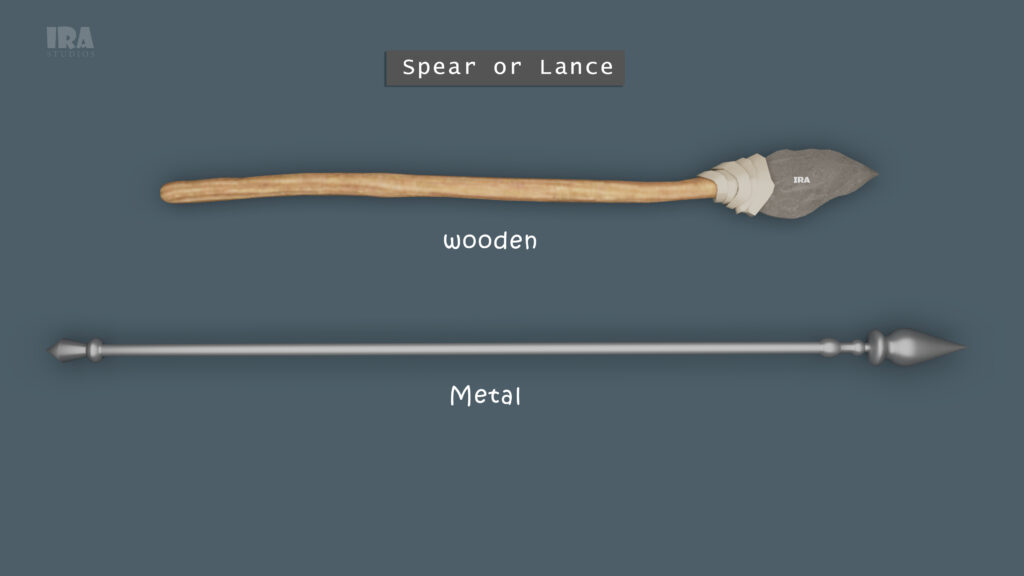
To overcome this limitation, a new weapon was invented between the 10th and 12th centuries in China — the fire lance.
The Fire Lance – The First Step Towards Guns
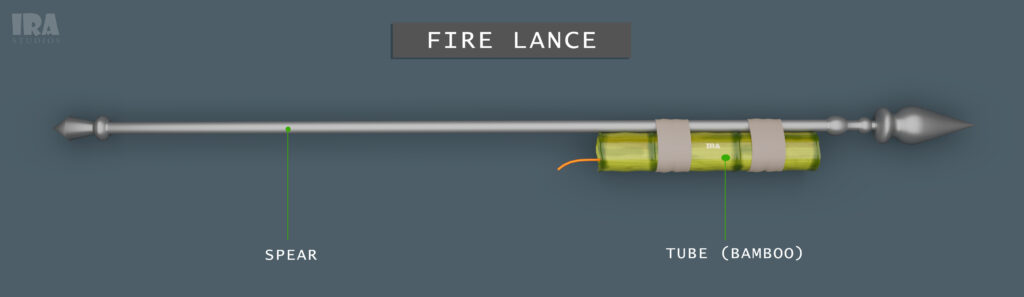
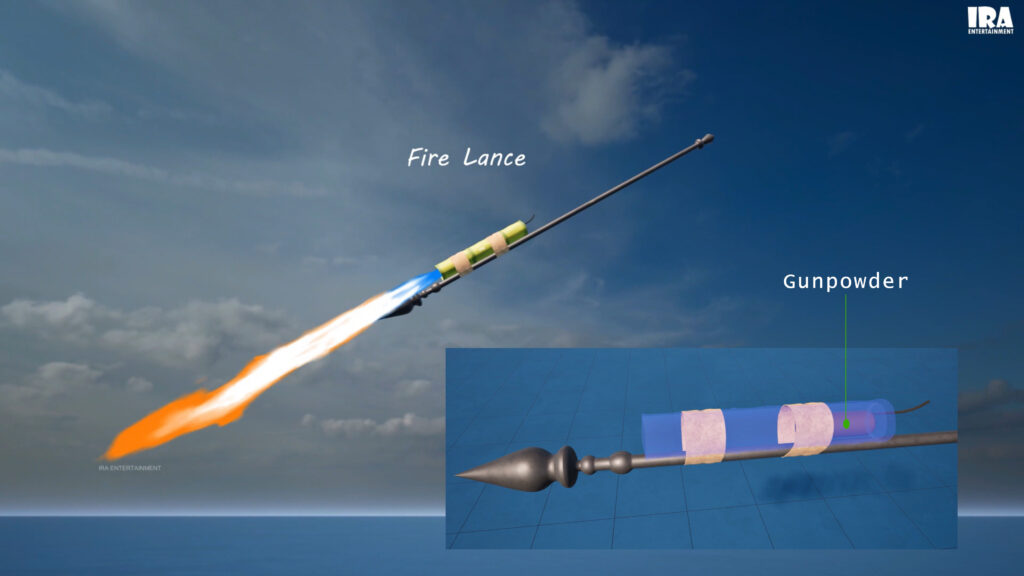
The fire lance is considered the ancestor of all modern firearms. It was basically a spear with a small tube attached. That tube was filled with gunpowder, and a simple setup was used to ignite it. When enemies came close, the gunpowder ignited, releasing flames and sometimes small metal pieces or stones. While it couldn’t shoot far, it was deadly at short range.
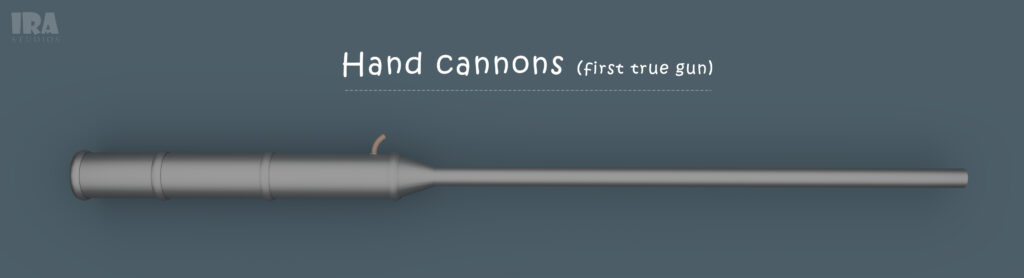
Hand Cannons
Later, in the 13th century, metal barrels were added, and Hand cannons were born — considered the world’s first true guns.
Hand cannons operated using the same working principle as cannons. Since their firing range and power were limited, cannons were later invented.
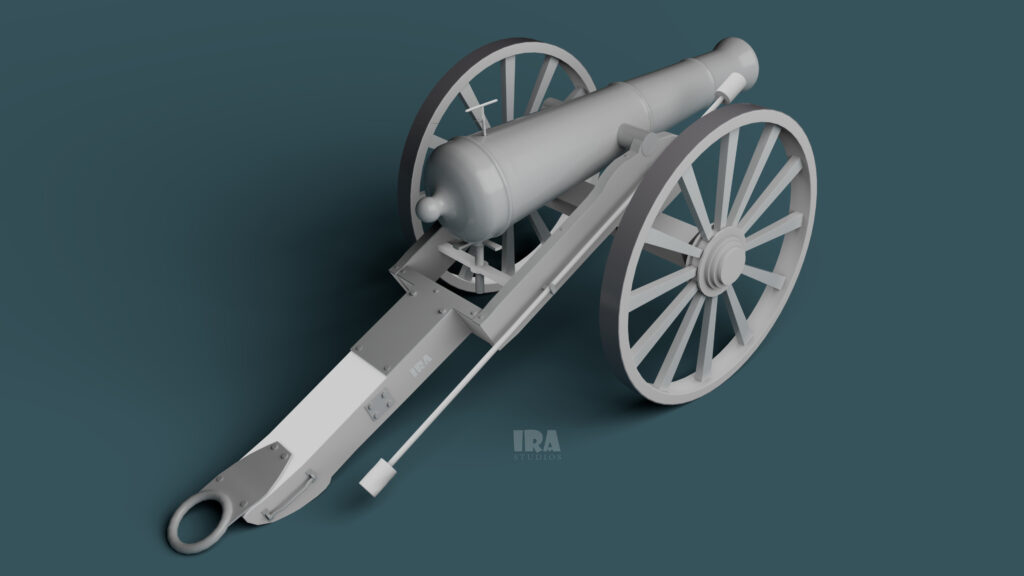
Main Parts of a Cannon
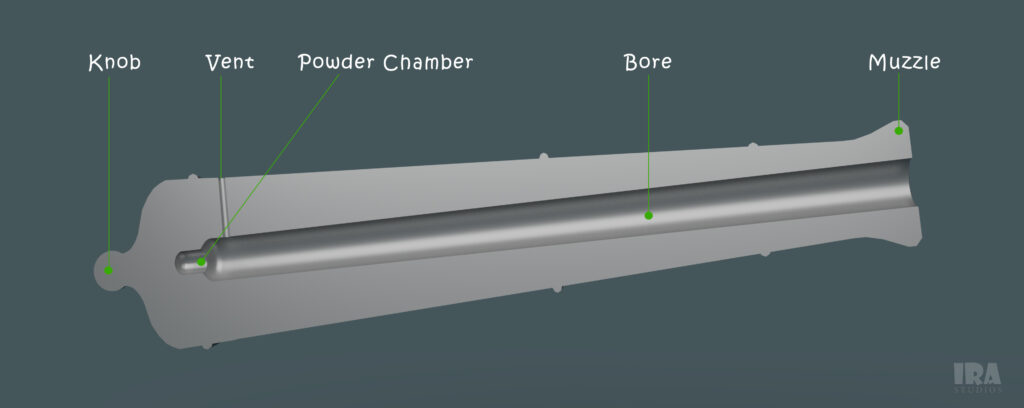
Muzzle – The front opening. The explosion pushes the cannonball out from here with high speed and direction.
Bore – The inner tube of the cannon barrel. It channels pressure from the explosion.
Vent – A small hole through which the fuse is lit to ignite the gunpowder.
Powder Chamber – Where the gunpowder is placed.
Knob – Helps in handling and sometimes absorbing recoil.
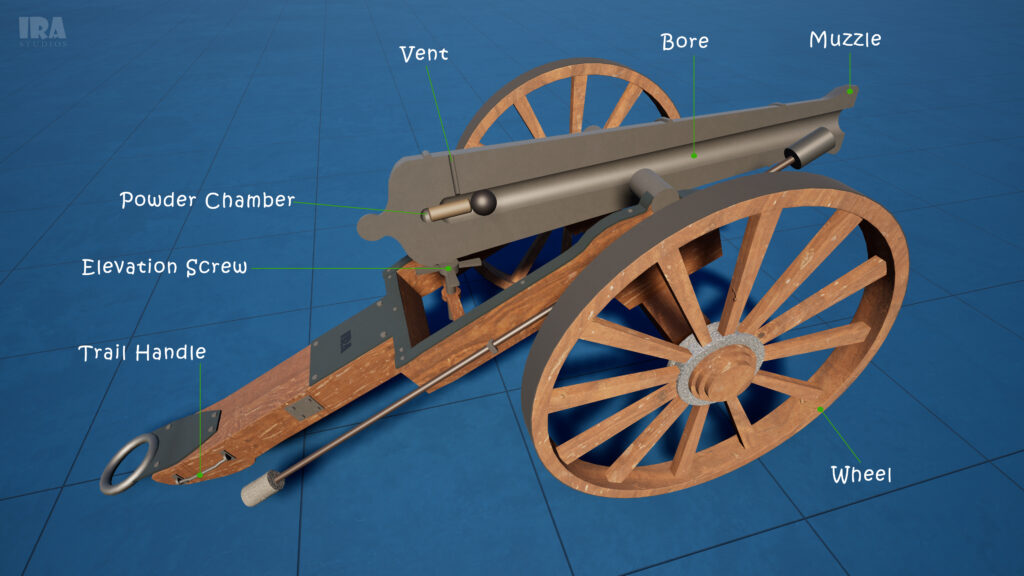
Trail Handle – Used to position and aim the cannon.
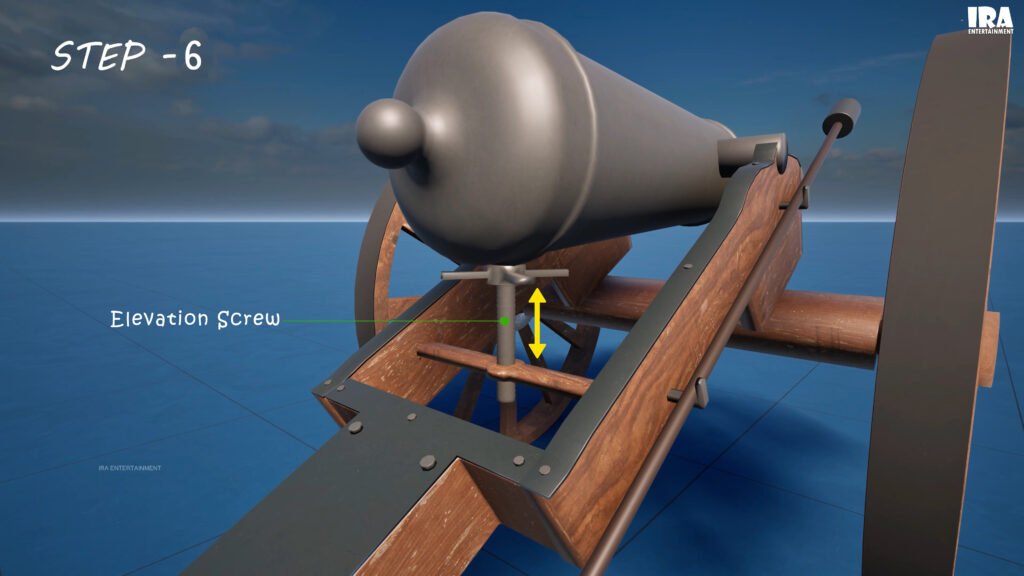
Elevation Screw – Allows manual adjustment of the cannon’s angle.
Carriage and Wheels – Help move the cannon, often pulled by horses.
Most cannons were made from bronze or iron to handle high pressure from the explosions.
How Many People Are Needed to Fire a Cannon?
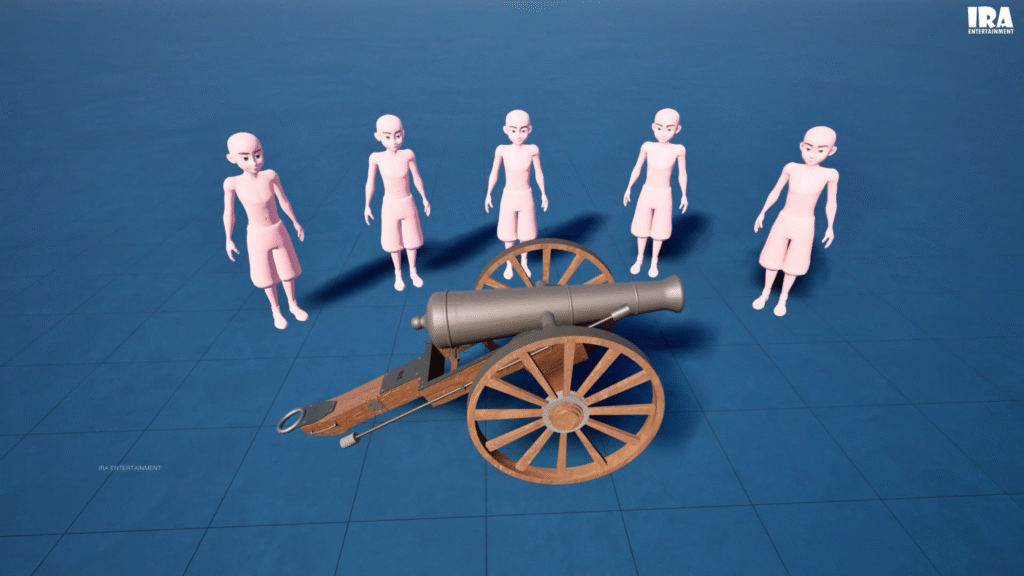
Operating a cannon isn’t a one-man job. It usually takes at least five people to prepare, load, and fire it safely. And moving large cannons required up to four horses.
How Does a Cannon Actually Work?
Let’s go through the full firing process of a traditional cannon:.
Step 1 – Set the Target
Pick your target, check the wind direction, and adjust the cannon’s aim.
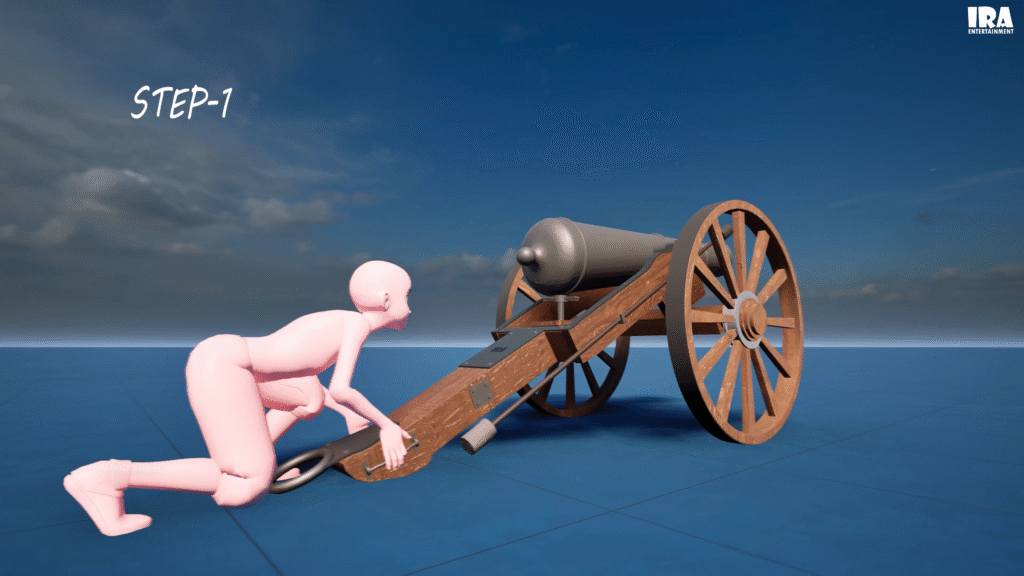
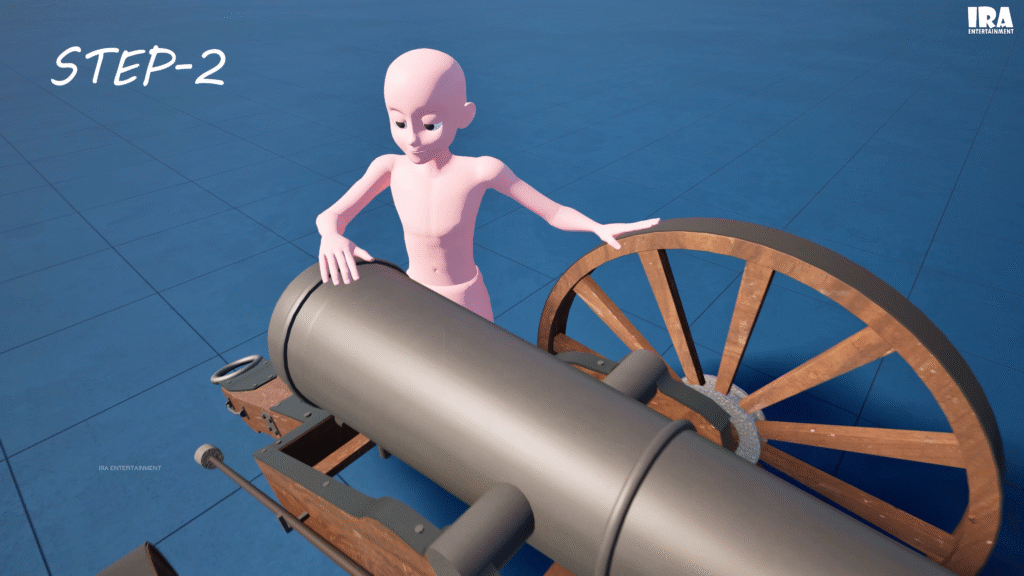
Step 2 – Seal the Vent
One person closes the vent hole using a vent stopper or finger to prevent sparks during loading.
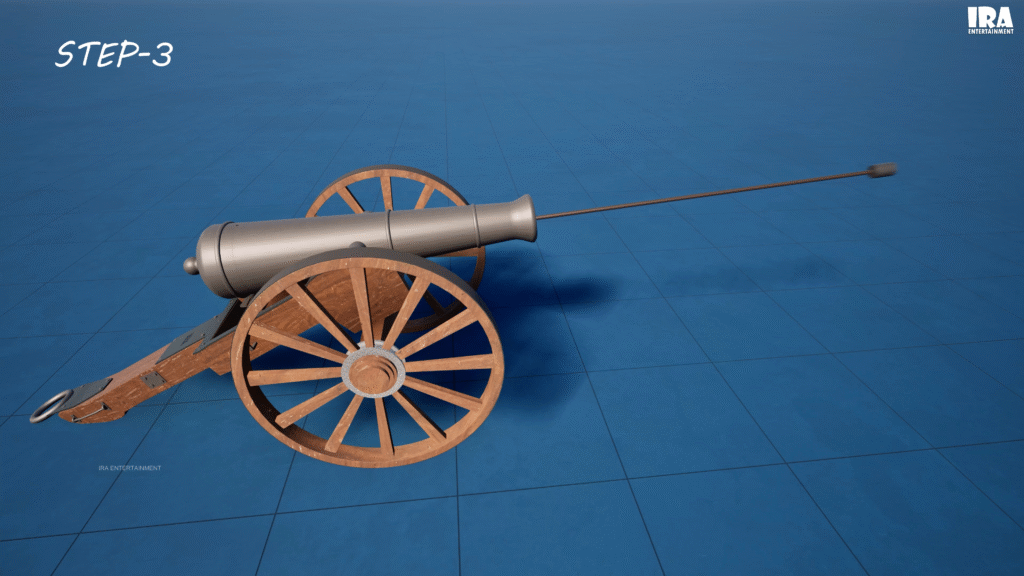
Step 3 – Clean the Barrel
Use a rod to clean the inside and remove any leftover debris or residue.
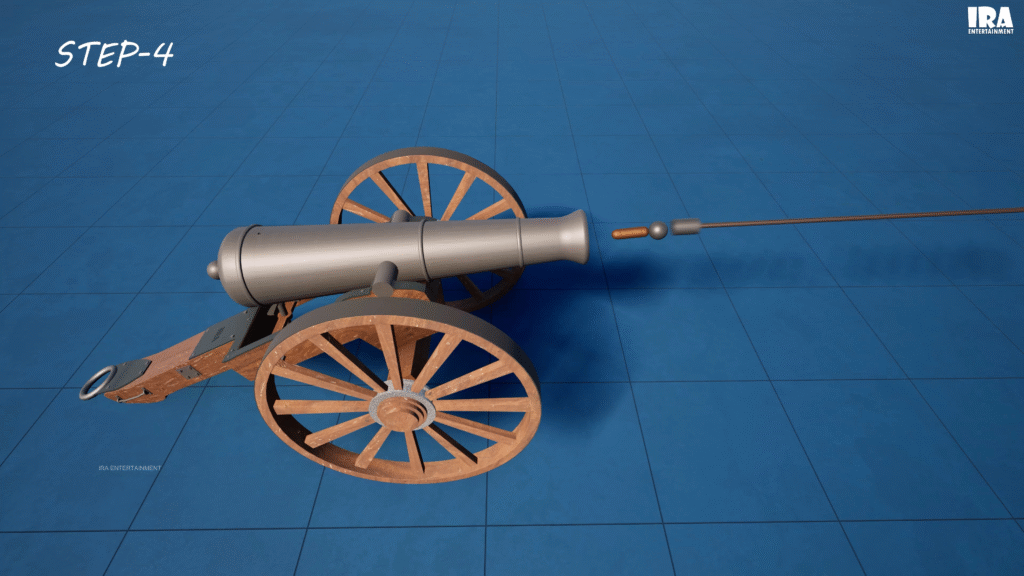
Step 4 – Gunpowder Loading
Gunpowder is packed into a powder bag and pushed into the barrel. The amount depends on:
Cannon size
Projectile weight
Desired firing range
Gunpowder Quantities
The amount of gunpowder varied depending on the size of the cannon and the period in which it was used.
Small cannons: 100g – 500g
Medium: 1kg – 3kg
Large: 5kg – 15kg
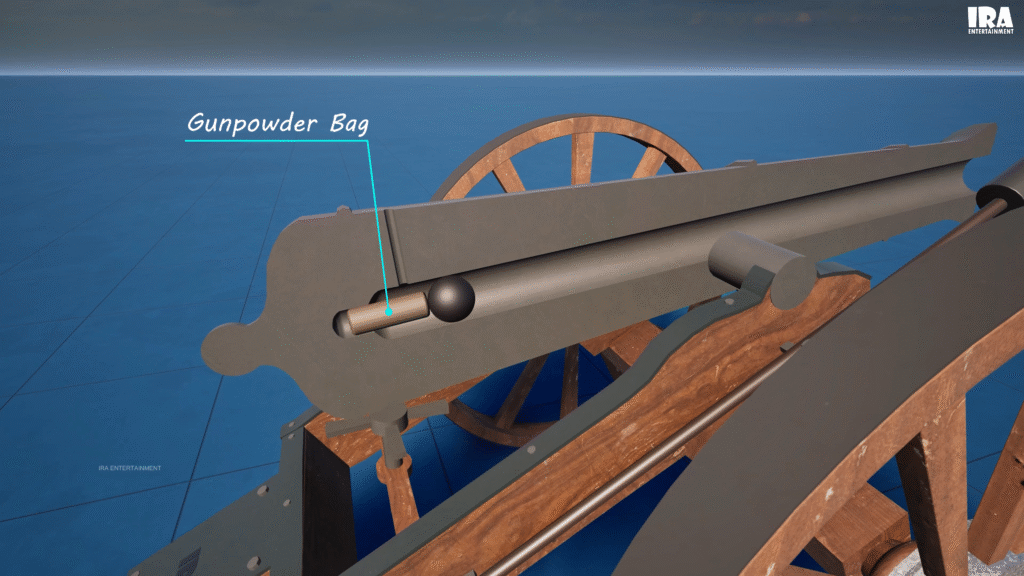
Step 5 – Cannonball Loading
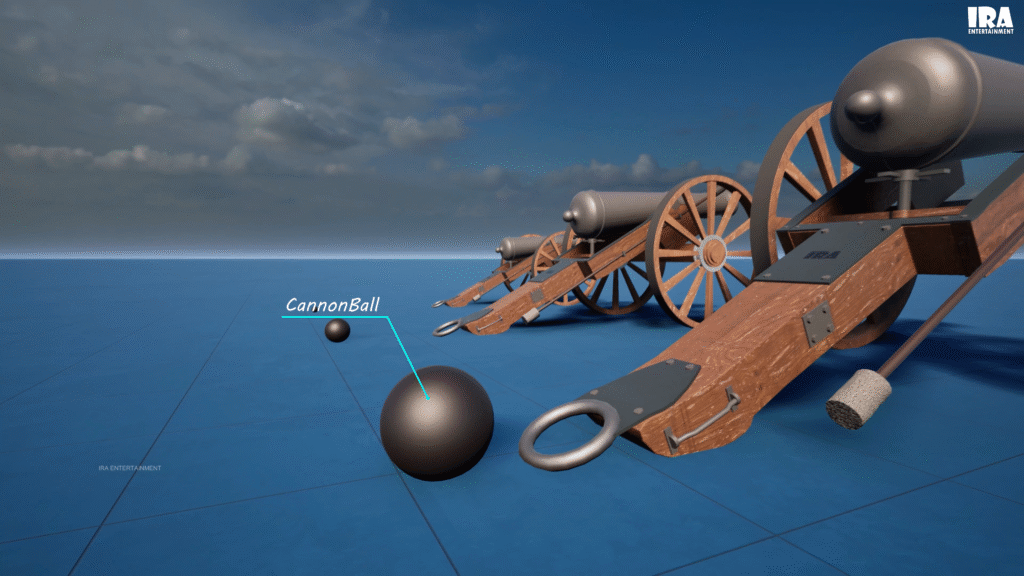
After the powder, the cannonball is loaded. Some cannonballs are solid iron, while others are hollow shells filled with explosives.
Cannonball Weights
Small: 0.9kg – 2.7kg
Medium: 5.4kg – 10.9kg
Large: 14.5kg – 19kg or more
Step 6 – Set Elevation
Use the elevation screw to raise or lower the angle based on the distance.
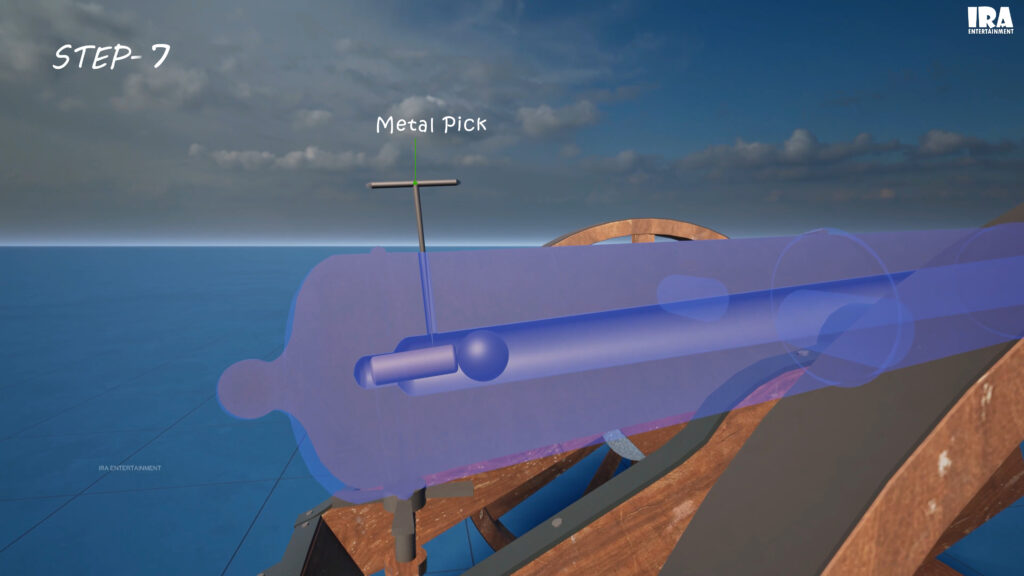
Step 7 – Ignite and Fire!
A metal pick is inserted through the vent to pierce the powder bag, creating a hole that allows the fire to ignite the charge more quickly
A fuse plug is inserted into the vent.
When struck, it creates friction and sparks, igniting the powder.
Old method of ignition
In earlier times, a heated metal rod or a burning stick was used to ignite the gunpowder manually.
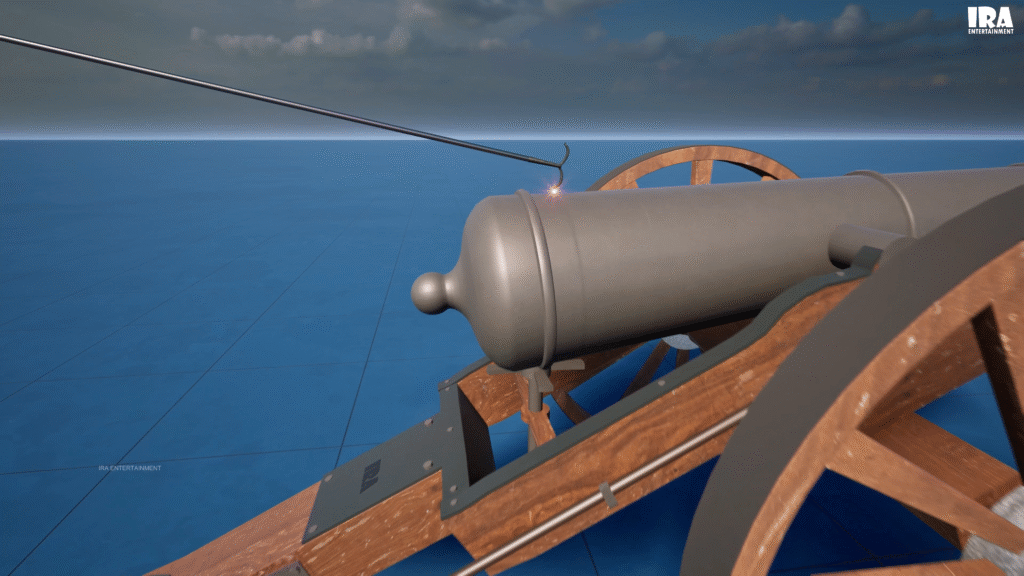
BOOM! The cannonball fires out at speeds of up to 400 km/h, creating massive force and recoil.
Are Cannons Still Used Today?
Cannons have come a long way since their invention. Early versions, such as fire lances and rudimentary metal barrels, were groundbreaking in medieval warfare, allowing armies to breach fortifications and dominate battlefields in ways that were previously impossible. Over centuries, cannon technology evolved into sophisticated artillery, capable of firing heavier projectiles over greater distances with remarkable accuracy.
Today, traditional cannons are rarely used in modern combat. Military technology has largely shifted to advanced artillery, missiles, and precision-guided weapons, which offer far greater range, speed, and destructive power. Modern weapon systems rely on electronics, targeting computers, and rocket propulsion — far removed from the simple gunpowder-fired barrels of the past.
However, cannons have not disappeared entirely. They are still widely used for ceremonial purposes, including military salutes, historical reenactments, and national celebrations. Naval ships often maintain ceremonial cannons to honor tradition during special events, while historic fortresses and castles display antique cannons as symbols of heritage and engineering skill. In some coastal regions, cannons serve as tourist attractions, giving visitors a glimpse into the past and the evolution of military technology.
Beyond ceremonies and museums, some countries maintain a limited number of functional artillery cannons as part of their military reserves or for training purposes. These are generally updated versions of traditional artillery pieces, integrated with modern targeting systems, but their roots can still be traced back to the classic cannons of centuries ago.
The story of the cannon illustrates a broader theme in engineering and innovation: tools and technologies often outlive their original practical use, becoming symbols of ingenuity, heritage, and human creativity. From battlefields to museums, from ceremonial salutes to educational displays, cannons continue to connect us with history while reminding us of the remarkable progress in weapons and engineering over the centuries.
About the Author
This article was prepared by the IRA Studios editorial team, creators of high-quality 3D educational visualizations designed to simplify complex ideas through clear and engaging visuals.
Watch the Full 3D Animation
To explore all of these processes in 3D, check out our detailed 3D Animation video.
Watch it in Malayalam
Want to learn more? Check out our detailed 3D explanation on How a Grenade Works.