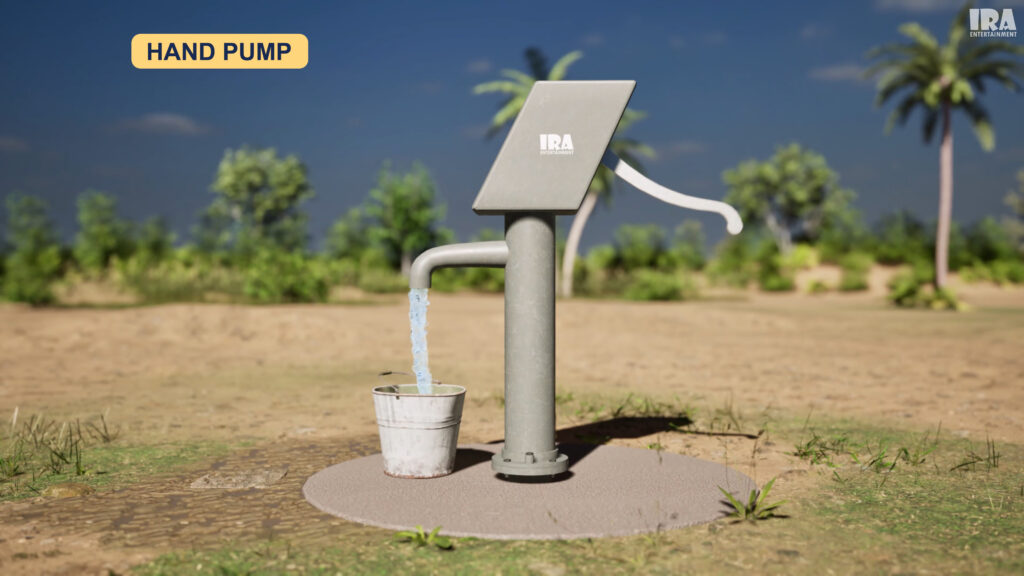
How does a Hand Pump Work?
Hand pumps have long been a dependable lifeline for water in rural communities and households, quietly serving generations without electricity or complex machinery. What makes them truly remarkable is the simple science behind their operation—using basic pressure and suction to draw water from deep underground. When viewed through a clear 3D visual, the hand pump comes to life, revealing how each internal component works together in perfect coordination. This perspective not only explains how water rises to the surface, but also builds appreciation for a humble invention that continues to sustain millions of lives every day.
The Invention of the Hand Pump

After the discovery and widespread use of metal in the 1800s, the hand pump was invented — a simple yet revolutionary tool that allowed people to access groundwater using only human strength, without any electricity or complex machinery.
Hand pumps quickly became indispensable, especially in villages and homes with deep tube wells. They transformed daily life, making clean water more accessible and reliable for drinking, cooking, and irrigation. Over time, these pumps became a common sight across the world, quietly powering the lifeblood of communities.
Main parts of a hand pump
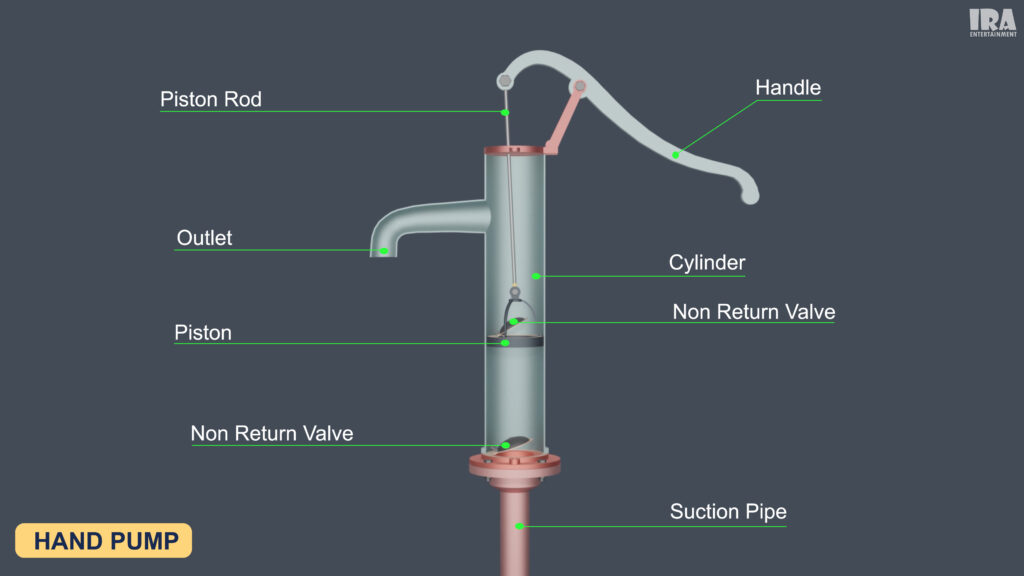
1. The Main Cylinder
The main cylinder is the heart of the hand pump. It houses the piston and plays a crucial role in controlling the flow of water, ensuring it moves smoothly from the well to the spout.
2. The Handle
The handle sits at the top of the pump and is connected to the piston rod. Moving the handle up and down drives the piston inside the cylinder, setting the pump in motion and allowing water to be drawn up.
3. The Piston & Valves
The piston has a non-return valve that allows water to pass only in one direction.
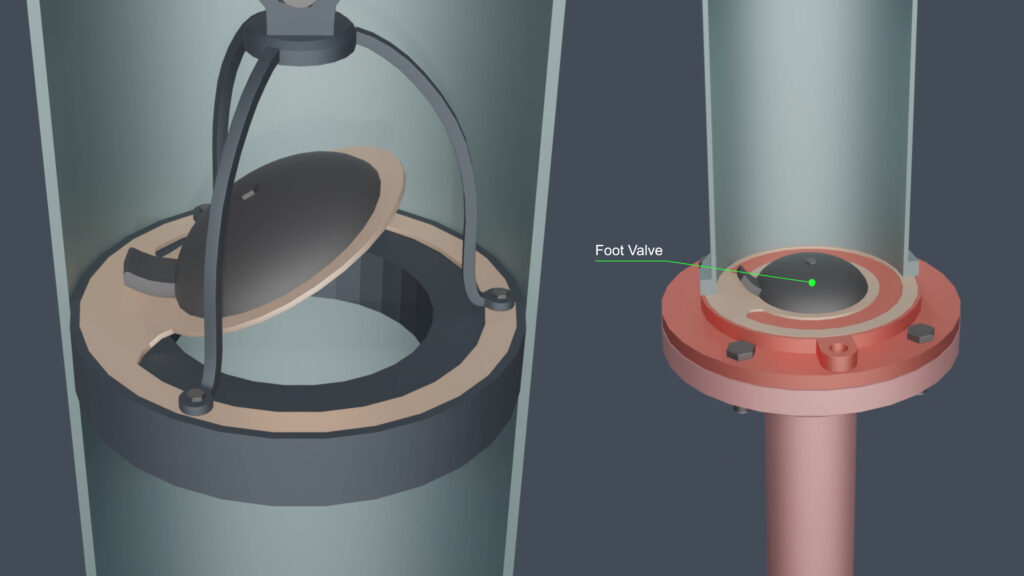
Another foot valve is placed at the bottom of the cylinder.
These valves are crucial to trap water and push it upward.
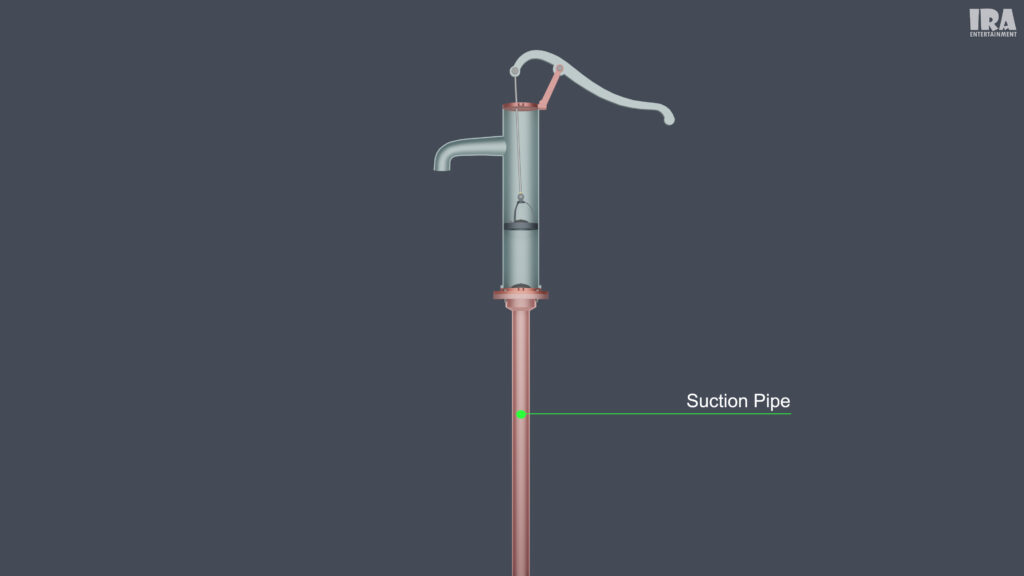
4. The Suction Pipe
The suction pipe is attached below the cylinder and extends deep into the underground water source. It serves as the pathway through which water is drawn up into the pump.
5. The Outlet
The outlet is the point where water finally emerges from the pump, ready to be collected and used.
The Working Cycle
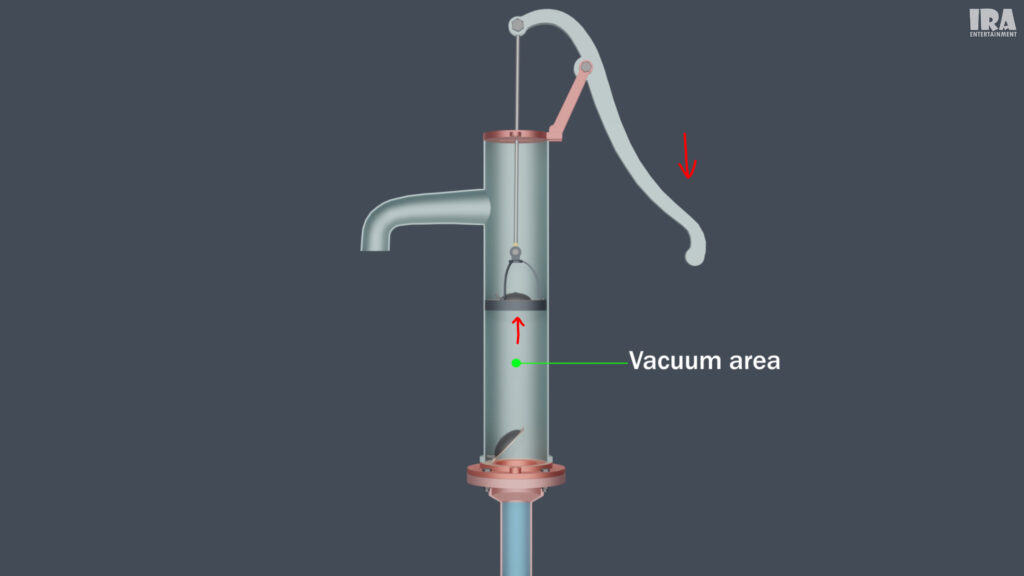
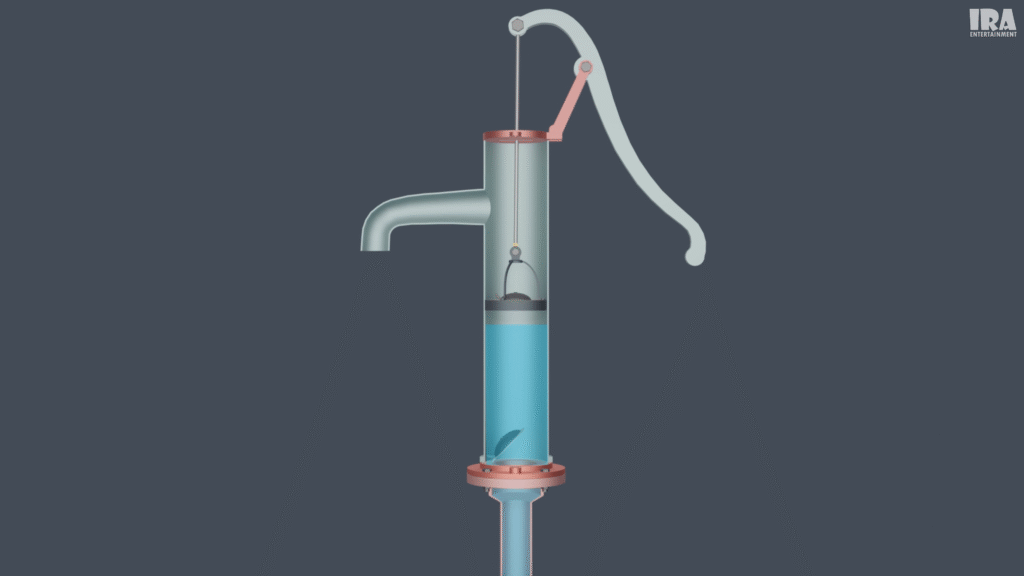
When You Push the Handle Down:
Let’s understand how the hand pump lifts water with every movement:
- The piston moves up inside the cylinder.
This creates a vacuum below the piston.
The piston valve closes, and the foot valve opens.
Water rises up to fill the empty space.
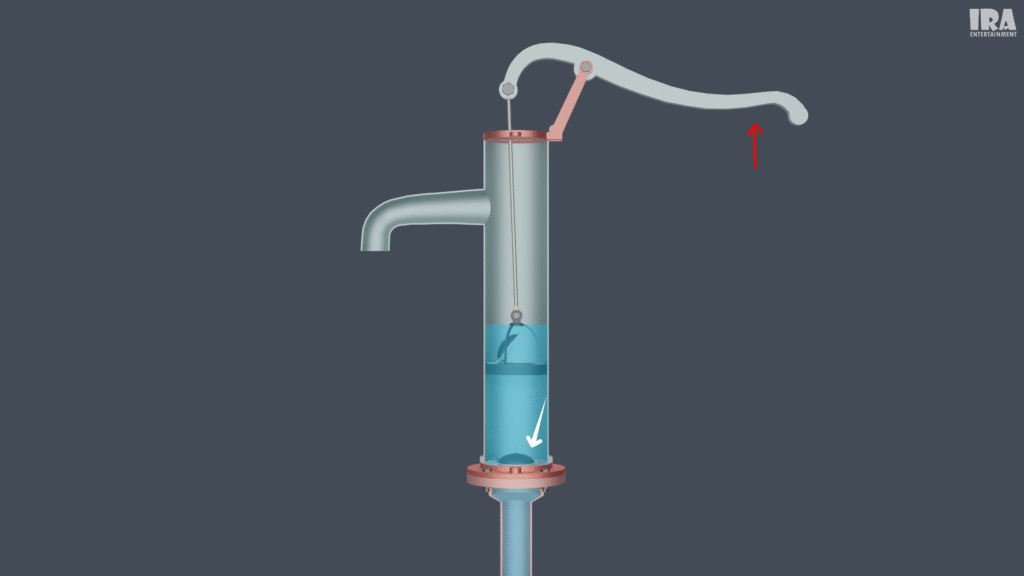
When You Pull the Handle Up:
The piston moves down.
Now the piston valve opens, and the foot valve closes.
Water moves further up and stays trapped inside the cylinder.
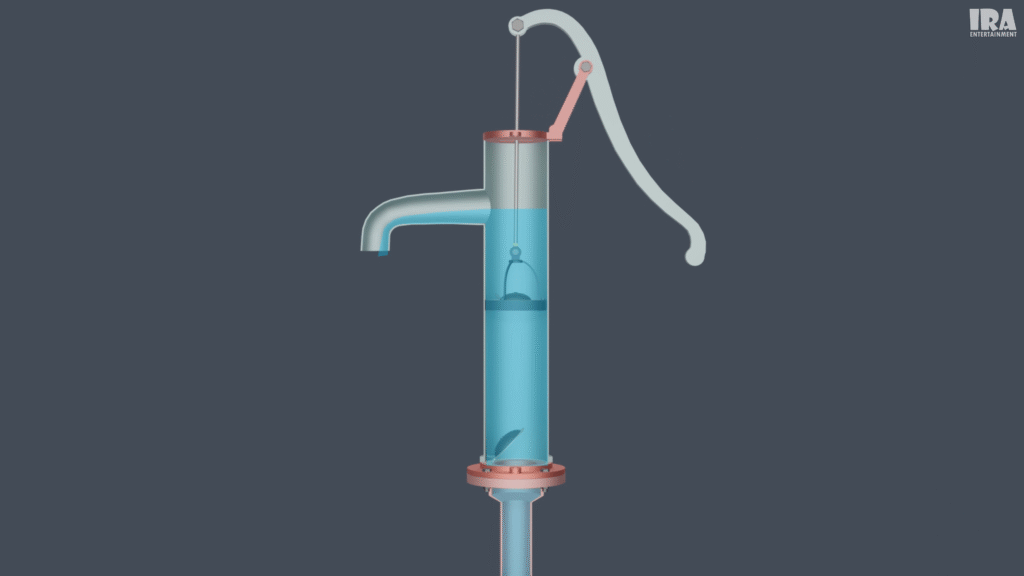
Repeating the Cycle:
Each up-down motion pulls more water from below and pushes it higher until the cylinder fills up and water flows out through the outlet.
Why Is This Important?
Hand pumps may seem simple, but their impact is anything but. They require no fuel, electricity, or batteries — just human effort and the clever use of physics. This simplicity makes them highly reliable and affordable, especially in rural areas, remote villages, and places where modern water systems are limited or nonexistent.
The story of hand pumps is intertwined with centuries of human ingenuity. Although the modern metal hand pump emerged in the 1800s, manual pumping solutions have existed for much longer, evolving to lift water from deep underground efficiently. These designs transformed the way communities accessed water, providing a dependable source of clean water without relying on rivers, rain, or labor-intensive bucket systems.
Hand pumps remain essential across the world. In sub-Saharan Africa, countries like Uganda, Malawi, South Sudan, Zimbabwe, Guinea, and Burkina Faso rely heavily on them — in some areas, more than half of the rural population depends on hand pumps as their main source of drinking water. In South Asia, millions of villages in India still use the India Mark II hand pump, one of the most widely installed designs in history, while Pakistan continues to use them in rural households to provide safe and reliable water.
In West Africa, nations such as Nigeria have tens of thousands of boreholes fitted with hand pumps, serving rural homes and small towns. East African countries like Rwanda and Mozambique also depend on hand pumps in areas where piped water systems have not yet reached. Even in more developed regions, hand pumps are found on farms, off-grid homesteads, and emergency relief sites in parts of North America and Europe, where electricity is unavailable or unreliable.
Understanding where and why hand pumps are still used today shows their lasting relevance. They provide reliable access to water, reduce the time and effort spent fetching it, and improve health, hygiene, and quality of life. Children can spend more time in school instead of walking long distances for water, and women gain valuable hours for work or family responsibilities.
In essence, hand pumps are more than just tools; they are symbols of sustainable engineering, human resilience, and ingenuity. They demonstrate how simple technology can meet one of humanity’s most vital needs: clean, accessible water — a lifeline for millions of people around the globe.
Beyond providing water, hand pumps also represent community cooperation and sustainability. Many villages maintain their pumps collectively, teaching generations the value of care, repair, and shared responsibility. In this way, hand pumps are not just tools for water — they are a testament to how simple technology can strengthen communities and inspire self-reliance.
About the Author
This article was prepared by the IRA Studios editorial team, creators of high-quality 3D educational visualizations designed to simplify complex ideas through clear and engaging visuals.
Watch the Full 3D Animation
To explore all of these processes in 3D, check out our detailed 3D Animation video.
Watch it in Malayalam
Want to learn more through visual storytelling? Check out our detailed 3D explanation blog on Persian Wheel (Saqiyah): The Ancient Water Lifting Machine That Turned Deserts Into Farmland
Helpful Link – Hand Pump