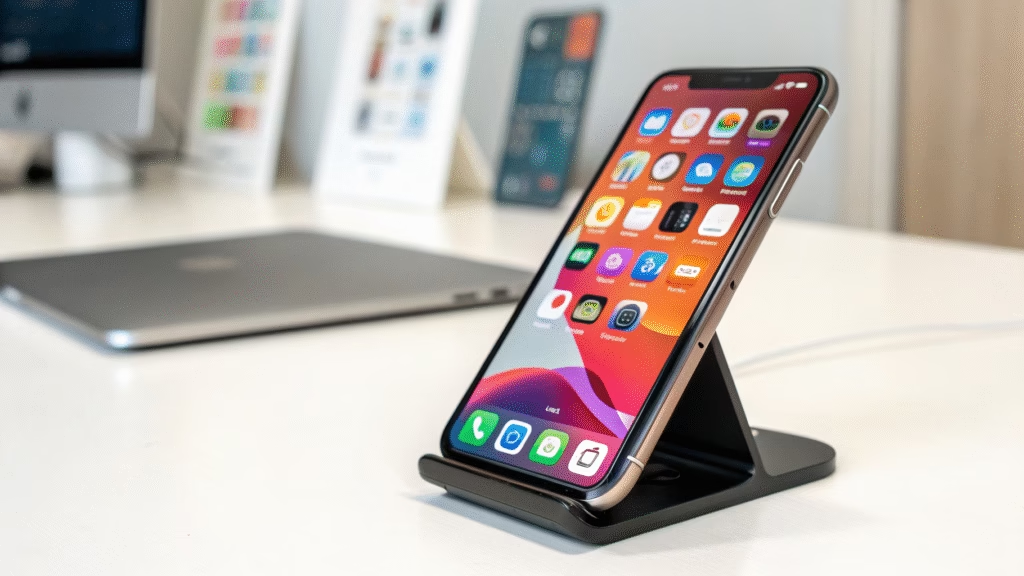
Smartphone more powerful than Apollo 11 computer…
Have you ever paused to consider the incredible device in your pocket? That smartphone you use for chatting, scrolling social media, or streaming videos packs more computing power than the NASA computers that landed humans on the Moon in 1969. The technology that guided astronauts across millions of miles of space has been vastly outpaced by today’s handheld gadgets.
In this post, we’ll explore this mind-blowing comparison, dive into the specs, and highlight what it means for modern life. If you’re searching for “smartphone vs Apollo computer” or “NASA Moon landing tech evolution,” you’re in the right place.
The Apollo Guidance Computer: NASA’s Moon Mission Brain
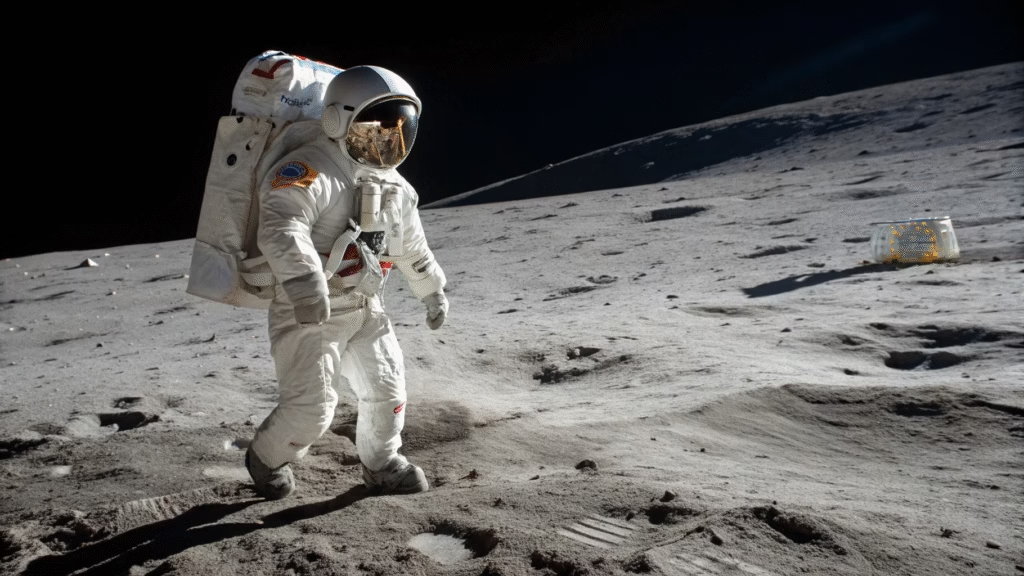
The Apollo 11 mission, humanity’s first lunar landing, relied on the Apollo Guidance Computer (AGC) for navigation, guidance, and control. Developed by MIT for extreme reliability in space, the AGC was a marvel of 1960s engineering. By today’s standards, its capabilities seem modest—but it performed critical real-time calculations flawlessly.
Key specs of the AGC (Block II, used in crewed missions):
Memory: 4 KB of erasable memory (RAM) + 72 KB of read-only memory (ROM)
Processor Speed: ~1 MHz, capable of ~85,000 instructions per second
Size & Weight: ~24 × 12.5 × 6 inches (≈2 cubic feet), 70 lbs (32 kg)
The AGC handled real-time calculations for trajectory, lunar landing, and rendezvous—all in a harsh, unforgiving environment.
Modern Smartphones: Pocket-Sized Supercomputers
Fast-forward to 2025, and even a mid-range smartphone dwarfs the AGC in every metric. Devices like the latest iPhones or Android flagships aren’t just phones—they’re versatile computing powerhouses.
Typical specs for a modern smartphone:
Memory: 4–12 GB RAM + 128–512 GB storage (millions of times more than the AGC)
Processor Speed: Multi-core processors clocked at 2–3 GHz+, capable of billions of instructions per second
Size & Weight: Slim and portable, around 6 × 3 × 0.3 inches, weighing 6–8 ounces (170–230 grams)
In raw computing terms, your smartphone has vastly more power than the AGC, capable of performing similar calculations many times faster—though it would require software adaptation to run the original Apollo programs.
Smartphone vs. Apollo Guidance Computer: Side-by-Side Comparison
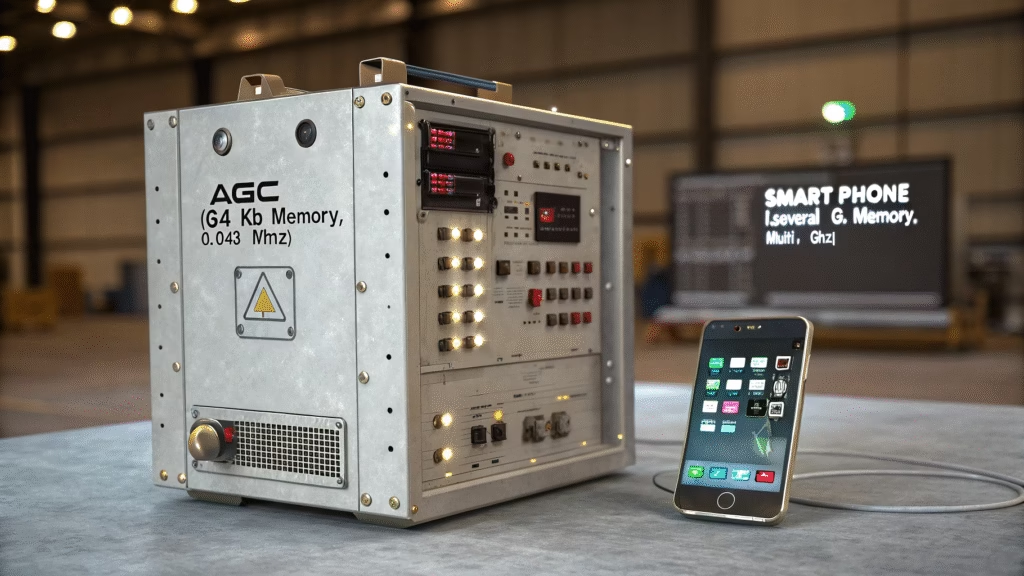
| Feature | Apollo Guidance Computer (1969) | Modern Smartphone (2025) |
|---|---|---|
| Memory | 4 KB RAM + 72 KB ROM | 4–12 GB RAM + 128–512 GB storage |
| Processor Speed | ~1 MHz (~85,000 instructions/sec) | 2–3 GHz+ multi-core (billions of instructions/sec) |
| Size | 24 × 12.5 × 6 in | Pocket-sized, 6 × 3 × 0.3 in |
| Weight | 70 lbs (32 kg) | 6–8 oz (170–230 g) |
| Functionality | Navigation, guidance, basic computations | AI, apps, internet, media, gaming, photography |
| Power Source | Spacecraft electrical system | Rechargeable lithium-ion battery |
Why Your Smartphone Outshines NASA’s Moon Tech
Several breakthroughs have fueled this transformation:
Miniaturization of Hardware
Modern chips pack billions of transistors into a fingernail-sized space, compared to the AGC’s 2,800 integrated circuits.Software Optimization
iOS and Android efficiently manage hardware, enabling complex multitasking that the AGC’s custom assembly code could not.Connectivity and Cloud Integration
Unlike the standalone AGC, smartphones access global networks, cloud computing, and AI servers, extending their power exponentially.Battery and Power Efficiency
Smartphones deliver high performance on a tiny battery, while the AGC relied on spacecraft power systems.
These innovations make smartphones capable of tasks unimaginable in the 1960s, from real-time AI processing to 4K video editing.

Real-World Impacts: From Moon Landings to Daily Life
The AGC’s legacy lives on in modern space technology, but smartphones have democratized computing power. Consider:
-
AI Features: Voice assistants and facial recognition process data in seconds—tasks impossible for the AGC.
-
Photography and Media: Computational photography allows high-res photos and instant editing on the go.
-
Entertainment and Communication: Stream movies, play immersive games, or video call globally—all from your pocket.
-
Productivity: Apps for navigation, finance, and learning perform calculations that once took NASA hours.
This transformation highlights the explosive growth of technology, turning “rocket science” into everyday tools.The legacy of the Apollo Guidance Computer (AGC) still lives on in modern space technology, but today’s smartphones have taken computing power far beyond the boundaries of space programs and placed it directly into the hands of everyday users. What was once reserved for astronauts and engineers is now accessible to billions of people around the world.
Consider how this shift has transformed daily life:
AI features such as voice assistants, facial recognition, and real-time language translation process enormous amounts of data in seconds—tasks that were unimaginable during the era of the AGC.
In photography and media, computational photography enables smartphones to capture high-resolution images, enhance lighting automatically, and edit photos instantly, all without specialized equipment.
Entertainment and communication have also been revolutionized. People can stream movies, play immersive games, and video call across the globe from a single pocket-sized device, breaking down geographical barriers that once limited connection.
Productivity has seen equally dramatic changes. Navigation, financial management, education, and productivity apps now perform complex calculations and data processing in real time—tasks that once required hours of work by NASA’s computers and teams of engineers.
Together, these advancements highlight the explosive growth of technology over just a few decades, transforming what was once considered “rocket science” into everyday tools that quietly power modern life.
The Future of Computing: What’s Next?
The future of computing is set to be shaped by a new generation of emerging technologies that go far beyond today’s smartphones and laptops. Innovations such as quantum computing, foldable and flexible devices, and AI-driven health monitoring systems are already beginning to redefine what computers can do.
Quantum computers, for example, promise to solve complex problems that are currently impossible for traditional machines, opening new possibilities in fields like climate modeling, drug discovery, and advanced materials research. At the same time, foldable and flexible hardware is changing how we interact with devices, allowing screens and computing power to adapt to different needs and environments.
Artificial intelligence is also becoming more deeply integrated into everyday technology. Future devices may continuously monitor health indicators, detect early signs of disease, and provide personalized insights—transforming preventive healthcare and medical research.
Looking ahead, your next smartphone may be capable of powering immersive virtual reality experiences, running advanced scientific simulations, or assisting with real-time problem-solving tasks. Many of these breakthroughs are built on the foundational research and engineering principles developed by NASA’s early computing pioneers, whose work helped push the limits of processing power, reliability, and miniaturization.
As computing continues to evolve, the line between scientific tools and consumer technology will keep fading, bringing once-specialized capabilities into everyday life.
Final Thoughts: Appreciate the Power in Your Pocket
Next time you unlock your phone, remember: it has more computing power than the computer that guided humans to the Moon. From the Apollo Guidance Computer to today’s smartphones, this journey is a testament to human innovation and the astonishing pace of technological evolution.
Share your thoughts in the comments: What’s the most mind-blowing feature of your smartphone?
About the Author
This article was prepared by the IRA Studios editorial team, creators of high-quality 3D educational visualizations designed to simplify complex ideas through clear and engaging visuals.
Watch the Full 3D Animation
To explore all of these processes in 3D, check out our detailed 3D Animation video.
Watch it in Malayalam
Want to learn more? Check out our detailed 3D explanation on How does a Grenade Work? detailed 3D Explanation.
Helpful link: Apollo Guidance Computer