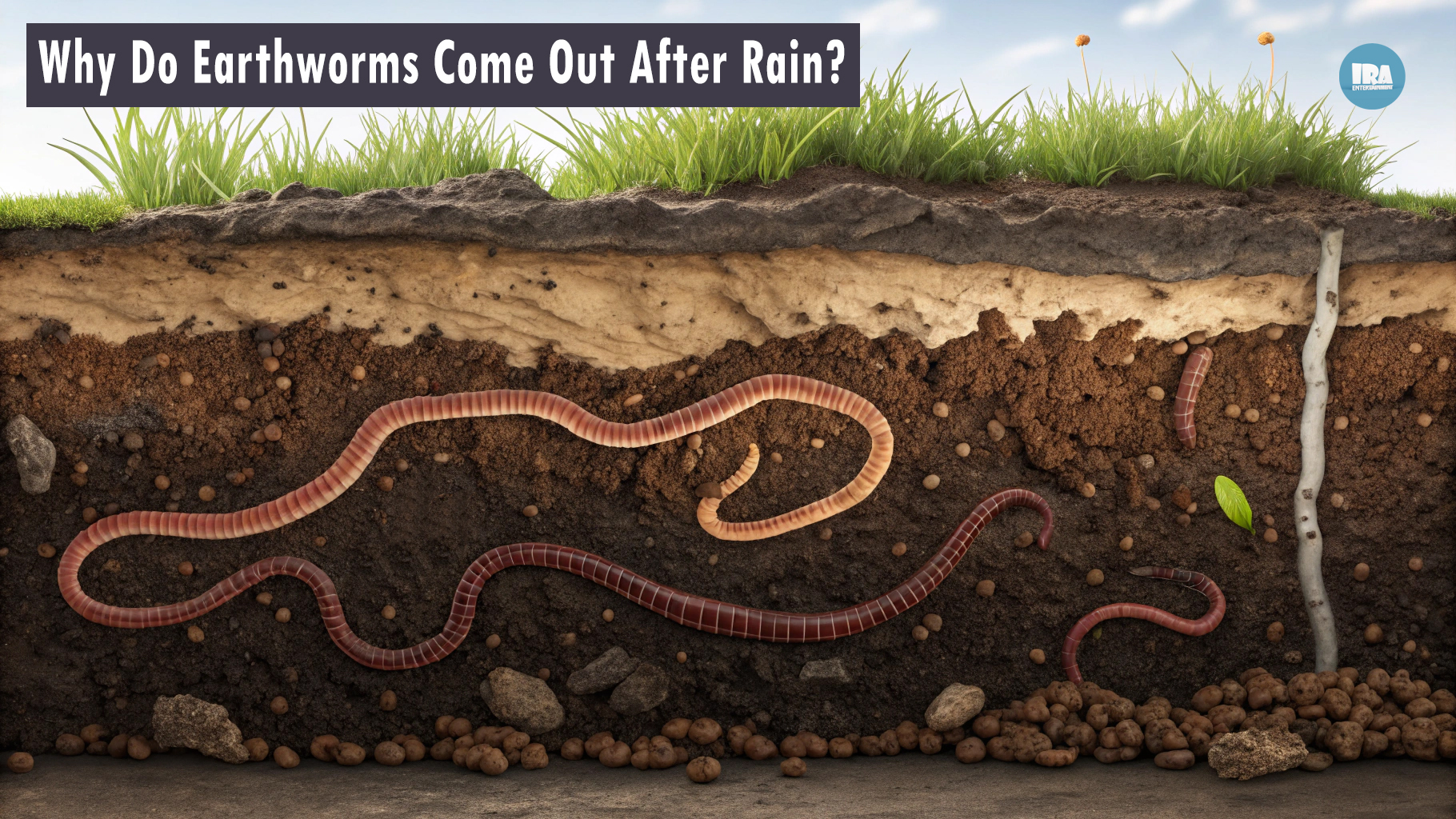
Why Do Earthworms Come Out After Rain?
Have you ever noticed large numbers of earthworms on roads, sidewalks, or garden soil after a heavy rain? This common natural phenomenon has sparked curiosity for years. While many explanations are suggested, scientific research points to a few widely accepted biological and environmental reasons.
In this article, we’ll explore the real science behind why earthworms emerge after rainfall. We’ll look at how they breathe, how soil oxygen levels change during rain, how moisture affects their survival, and what role movement, mating, and feeding play in this behavior.
Earthworm Biology
To understand why earthworms come out after rain, we first need to understand how they live.
How Earthworms Breathe
Earthworms do not have lungs. Instead, they breathe through their skin in a process called cutaneous respiration.
For this to work:
Their skin must remain moist.
Oxygen from the environment dissolves in the moisture on their skin.
The oxygen then diffuses into tiny blood vessels near the surface.
Carbon dioxide diffuses out in the same way.
If their skin dries out, gas exchange cannot occur properly. This is why earthworms prefer damp soil and are rarely seen in dry environments.
What Happens to Soil During Rainfall?
Rain dramatically changes the physical structure of soil.
Soil Structure and Air Spaces
Healthy soil contains:
Solid particles (sand, silt, clay)
Organic matter
Water
Air pockets
Under normal conditions, soil pores contain both water and air. These air pockets are important because they supply oxygen to plant roots and soil organisms, including earthworms.
Oxygen Levels Drop During Heavy Rain
When it rains heavily:
Water fills the air spaces in the soil.
Oxygen levels decrease.
Carbon dioxide levels increase.
Gas exchange becomes limited.
This condition is known as waterlogging.
Since earthworms rely on oxygen diffusing through moist skin, a sharp drop in soil oxygen can make breathing difficult. In severely waterlogged soil, oxygen may become too limited to support normal respiration.
Emerging to the surface allows worms to access areas where oxygen is more available.
Is Drowning the Only Reason?
For many years, it was commonly believed that earthworms come out after rain simply to avoid drowning. While oxygen reduction is an important factor, modern research suggests that the explanation is more complex.
Earthworms can tolerate low oxygen levels for short periods. Some species are even adapted to survive in temporarily flooded soil. Therefore, emergence is not always a desperate escape response. Instead, it may be a combination of survival strategy and opportunity.
Easier Movement on Wet Surfaces
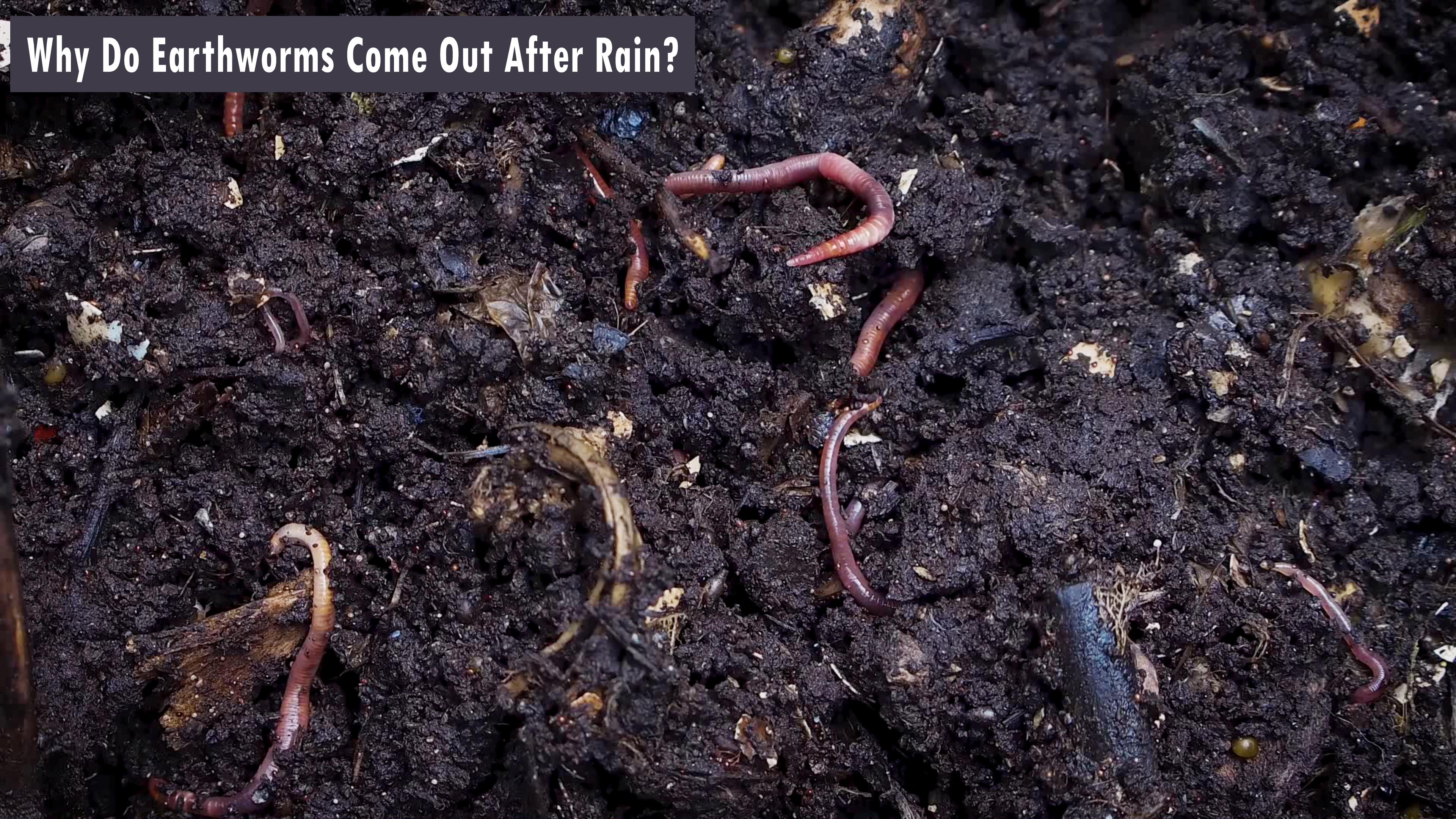
Another widely accepted reason involves mobility.
Movement Underground vs. Surface Movement
Moving through soil requires effort. Earthworms:
Contract and extend their muscles.
Anchor themselves using tiny bristles called setae.
Push through soil particles.
This process uses energy and is slower compared to movement on a smooth, moist surface.
After rain:
The ground surface becomes wet.
Friction is reduced.
The risk of drying out decreases.
Movement becomes easier and faster.
This creates an opportunity for worms to travel longer distances with less effort.
Searching for Mates
Earthworms are hermaphrodites, meaning each individual has both male and female reproductive organs. However, they still require another worm to reproduce.
Why Rain Helps Reproduction
Moist surface conditions are ideal for mating because:
Skin remains hydrated.
Movement between individuals is easier.
The risk of dehydration is low.
Soft soil allows cocoon deposition afterward.
Many species of earthworms are more active during or after rain because it increases the likelihood of successful reproduction.
Searching for Food
Earthworms feed primarily on:
Decaying plant matter
Microorganisms
Organic debris in soil
Rainfall often washes organic matter onto the surface and softens plant material. Moist conditions make decomposing matter easier to consume and digest.
Additionally, moving across the surface may allow worms to access new feeding areas that would be harder to reach underground.
The Role of Vibrations and Rainfall Patterns
Some researchers have suggested that vibrations caused by rain hitting the ground may also trigger emergence.
Interestingly, certain predators, such as moles, create vibrations when digging. Earthworms may instinctively respond to vibrations by moving toward the surface to escape perceived underground threats.
However, vibration alone does not explain large-scale emergence. It likely works together with soil oxygen changes and increased surface moisture.
Are Earthworms in Danger on the Surface?
While rain creates favorable conditions, surface exposure also has risks:
Predation by birds and small animals
Injury from vehicles or foot traffic
Sun exposure if the weather clears quickly
If the rain stops and the sun comes out, the surface can dry rapidly. Since earthworms depend on moist skin for respiration, prolonged exposure to dry air can be fatal.
This is why earthworms are most commonly seen during rain or immediately afterward—not long after the ground dries.
Do All Earthworm Species Behave the Same Way?
No. Earthworm behavior varies by species.
Scientists categorize earthworms into three main ecological groups:
Epigeic species – Live near the soil surface.
Endogeic species – Live within upper soil layers.
Anecic species – Create deep vertical burrows.
Surface emergence is more common in some species than others. Anecic worms, for example, often come out at night or during rain to feed and mate.
Ecological Importance of Earthworms
Earthworms play a critical role in ecosystems.
They:
Improve soil aeration
Increase nutrient cycling
Enhance soil structure
Promote plant growth
When they burrow, they create channels that allow oxygen and water to penetrate deeper into the soil. Their castings (waste material) are rich in nutrients and beneficial for plants.
Rain-induced surface movement may also help earthworms spread to new areas, improving soil quality across wider regions.
Common Myths About Earthworms and Rain
Myth 1: Earthworms drown in rain.
While oxygen levels decrease in saturated soil, drowning is not always the primary cause of emergence.
Myth 2: Earthworms only come out to escape predators.
Predators play a role, but environmental and physiological factors are more significant.
Myth 3: Earthworms prefer living above ground.
Earthworms are adapted to soil life. Surface exposure is usually temporary and opportunistic.
Frequently Asked Questions (FAQs)
1. Do earthworms actually need water to breathe?
They do not breathe water like fish. They require moisture on their skin so oxygen can dissolve and diffuse into their bloodstream.
2. Can earthworms survive underwater?
Some species can tolerate low oxygen for short periods, but long-term submersion is harmful.
3. Why do earthworms come out mostly at night?
Nighttime provides cooler temperatures and higher humidity, reducing the risk of dehydration.
4. Do vibrations from rain force them out?
Vibrations may contribute, but soil oxygen levels and moisture conditions are more scientifically supported explanations.
5. Why do so many earthworms die on roads after rain?
They may become disoriented, stranded when surfaces dry, or crushed by traffic.
The Most Scientifically Accepted Explanation
The most widely supported explanation combines several factors:
Reduced oxygen levels in waterlogged soil make breathing more difficult.
Moist surface conditions allow safe respiration outside the soil.
Easier movement helps them travel greater distances.
Improved opportunities for mating and feeding increase reproductive success.
Rather than a single cause, earthworm emergence after rain is likely a strategic response to multiple environmental changes.
Final Thoughts
When you see earthworms covering the ground after rain, you are witnessing a complex biological response shaped by respiration, soil chemistry, moisture dynamics, and survival strategy.
They breathe through their skin and depend on moisture for oxygen exchange. Heavy rainfall reduces oxygen in soil by filling air spaces with water. At the same time, the rain creates ideal surface conditions—cool, moist, and safe for movement. Earthworms take advantage of this opportunity to travel, search for mates, and find food more efficiently.
This fascinating behavior highlights how closely life is connected to environmental conditions. Even a simple rainfall event can dramatically influence the behavior of organisms beneath our feet.
Understanding these processes not only satisfies curiosity but also deepens our appreciation for soil ecosystems and the vital role earthworms play in maintaining healthy environments
Watch the Full 3D Animation
To explore all of these processes in 3D, check out our detailed 3D Animation video.
Watch it in Malayalam!
Want to learn more through visual storytelling? Check out our detailed 3D explanation blog on Why Snowfall Makes the World So Quiet: The Science Behind Winter’s Silence