Why Do Our Joints Crack? Explained with 3D Visuals
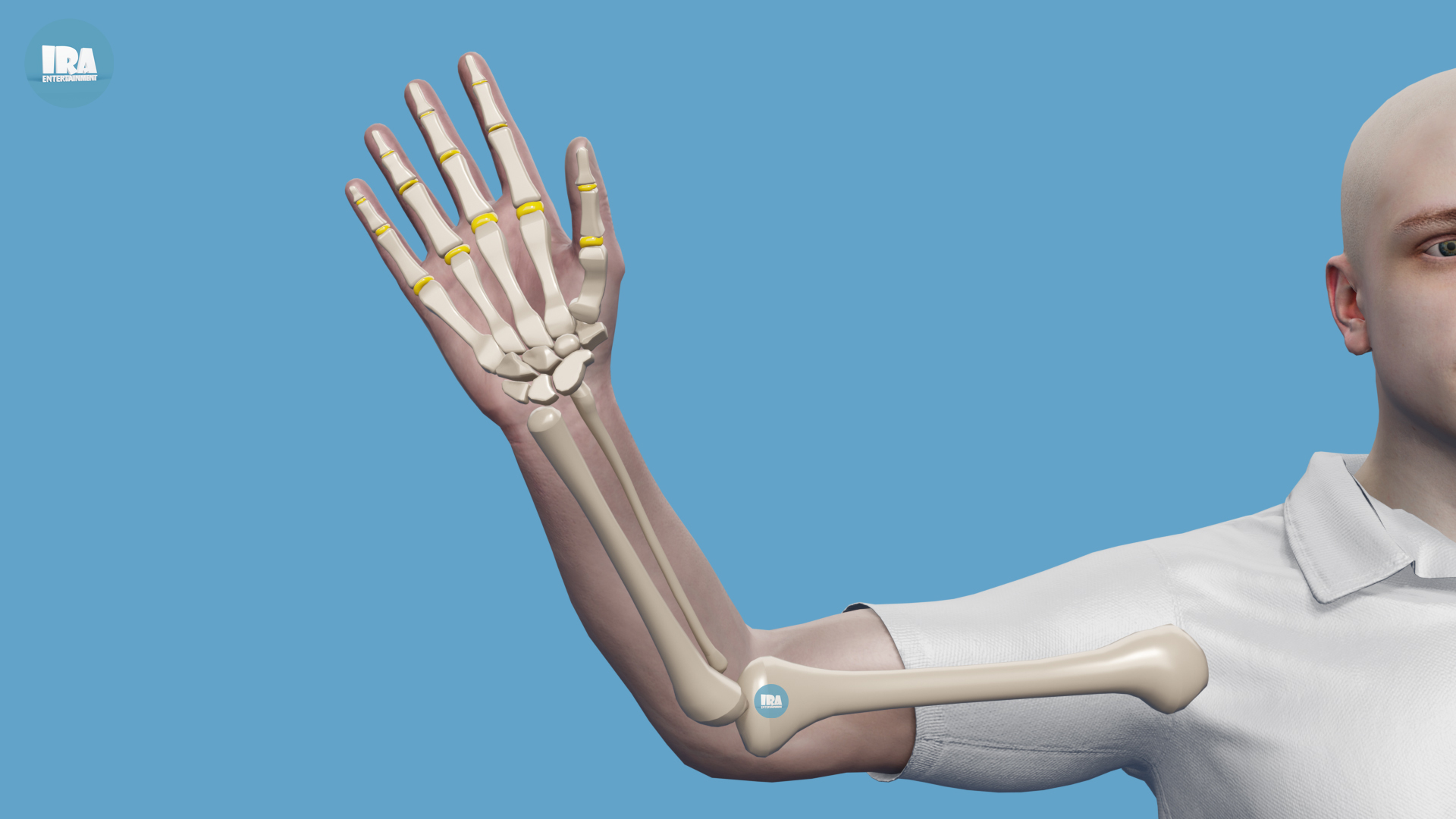
Have you ever stretched your fingers and heard that satisfying “pop” sound coming from your joints? Many people crack their knuckles without thinking twice about it, often because it feels oddly satisfying. But have you ever wondered what actually creates that sound inside our body?
In this article, we’ll explore the science behind joint cracking and discover what really happens inside your joints when they pop. With the help of 3D visuals, we’ll take a closer look at the role of synovial fluid, gas bubbles, and joint movement to understand this fascinating process.
What Is Inside Our Joints?
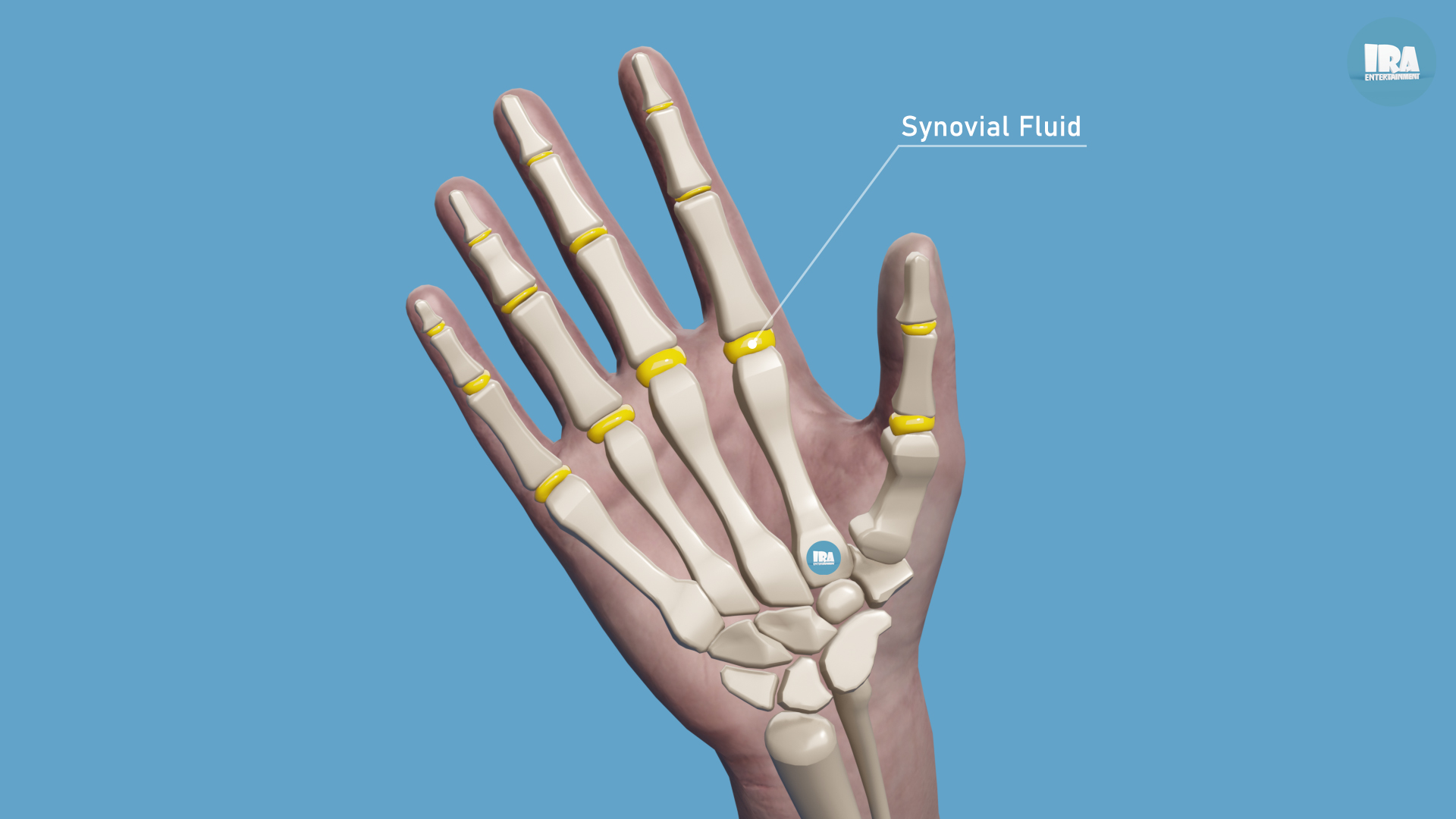
Our joints are where two bones meet. To allow smooth movement, these joints are filled with a thick, slippery liquid called synovial fluid.
Synovial fluid works much like engine oil in a machine. It lubricates the joint, reduces friction, and protects the bones from wearing down when they move against each other.
Inside this fluid are special cells called phagocytic cells. These cells help keep the joint clean by removing tiny fragments of bone or cartilage that may break off during normal movement.
Synovial Fluid Contains Dissolved Gases
Just like many other fluids in the human body, synovial fluid contains dissolved gases such as:
Oxygen
Nitrogen
Carbon dioxide
Normally, these gases stay dissolved in the fluid without causing any noticeable effect.
What Happens When You Crack Your Knuckles?
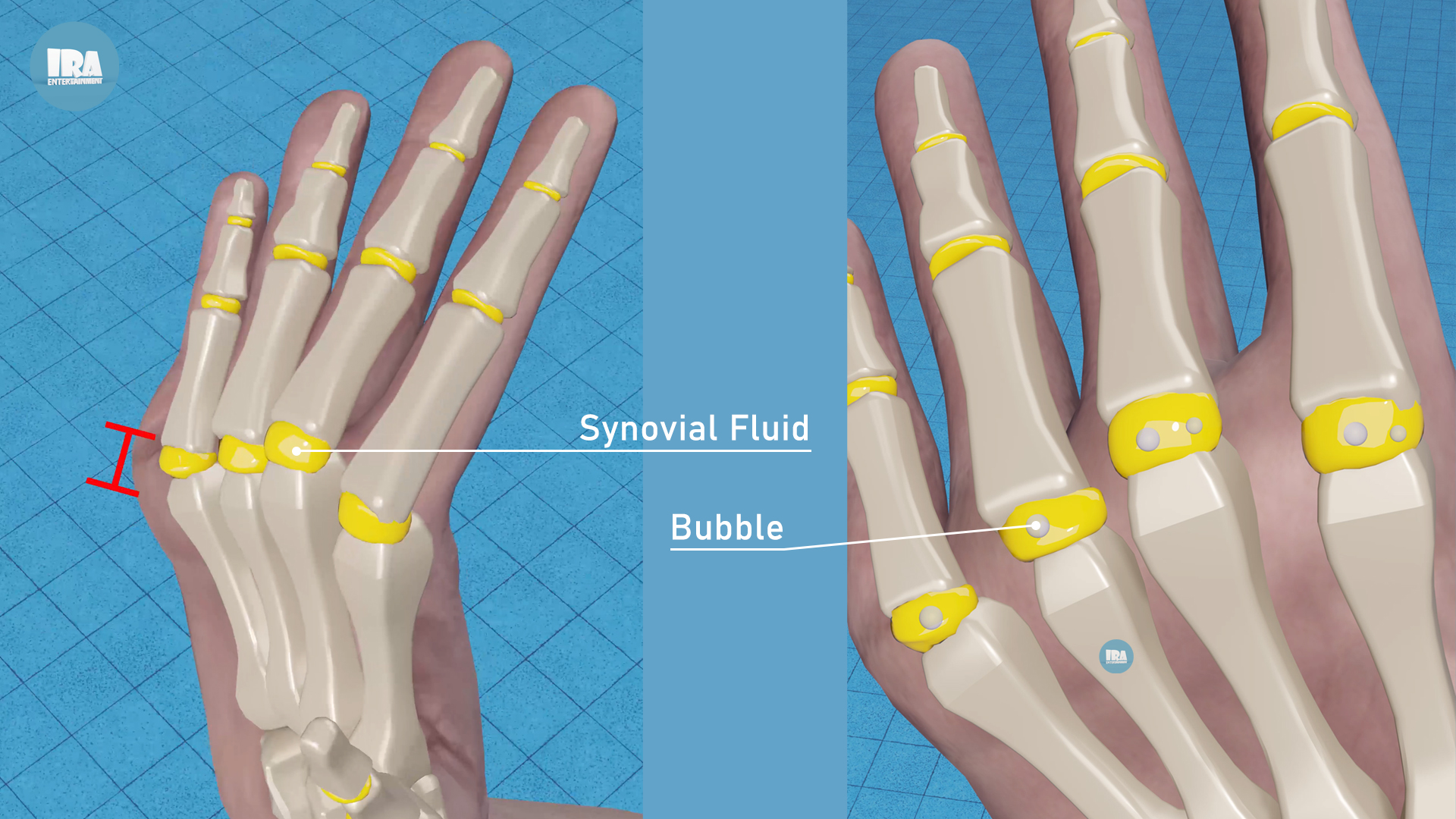
When you stretch or pull your finger to crack a joint, something interesting happens inside the joint.
The space between the bones suddenly increases. However, the amount of synovial fluid inside the joint remains the same.
This sudden increase in space creates a low-pressure zone inside the joint.
Because of this pressure change, the gases dissolved in the synovial fluid rapidly come out of the liquid and form tiny bubbles.
When these bubbles form and collapse quickly, they produce the familiar popping sound we hear.
Why Can’t You Crack the Same Joint Immediately?
After the bubbles form, they don’t disappear instantly.
It usually takes about 15–20 minutes for the gas to dissolve back into the synovial fluid. Until that happens, the same joint cannot create another bubble.
That’s why you can’t crack the same finger again right away.
Is Cracking Your Knuckles Harmful?
Most scientific studies suggest that occasional joint cracking is not harmful for healthy joints. In fact, many people crack their knuckles for years without developing joint problems directly related to the habit.
However, excessive or forceful cracking may sometimes irritate the surrounding tissues, ligaments, or tendons around the joint. Repeatedly applying strong pressure to the joints could lead to temporary soreness or mild inflammation in some individuals.
It is also important to pay attention to other symptoms. If joint cracking is accompanied by pain, swelling, stiffness, or reduced movement, it could indicate an underlying issue such as joint strain or inflammation. In such cases, it is always best to consult a medical professional for proper evaluation.
For most people, occasional knuckle cracking is simply a harmless release of gas bubbles inside the synovial fluid, rather than a sign of damage to the bones or joints.
Why Does Joint Cracking Feel Satisfying?
Many people feel a sense of relief or satisfaction when they crack their joints. Researchers believe this may happen because stretching the joint activates nerve endings and pressure receptors, giving a temporary feeling of looseness.
However, the exact reason why the sensation feels good is still being studied.
The Takeaway
The cracking sound from your joints is not your bones breaking. Instead, it’s a rapid release of gas bubbles inside the synovial fluid caused by a sudden change in pressure inside the joint.
Your body is full of fascinating processes like this, happening every day without us noticing.
So the next time you hear that pop from your fingers, you’ll know the tiny science experiment that just happened inside your joint.
Watch the Full 3D Animation
To explore all of these processes in 3D, check out our detailed 3D Animation video.
Watch it in Malayalam!
Want to learn more through visual storytelling? Check out our detailed 3D explanation blog on Why We Forget Things? How to Remember What Matters!