Why is it so hard to catch a fly?
Have you ever tried to catch a fly and failed—again and again?
You swing your hand, confident this time… and the fly is gone.
It’s frustrating, but the truth is simple: it’s not your lack of skill. It’s biology.
Flies are not just annoying insects. They are incredibly advanced when it comes to vision, reaction time, and flight control. Thanks to millions of years of evolution, flies experience the world very differently from humans—almost like living in slow motion.
In this article, we’ll explore the real scientific reasons why flies are so hard to catch, using clear explanations and proven biological facts.
Watch the Full 3D Animation
To explore all of these processes in 3D, check out our detailed YouTube explanation linked at the end of this blog — and don’t forget to subscribe for more insightful videos! (Available in English & Malayalam )
How Humans See the World vs How Flies See It
Human Vision

Humans see the world as a continuous stream of motion, but in reality, our brains process visual information in frames—similar to a video.
Humans process about 60 images per second
This limit is called the Critical Flicker Fusion Frequency (CFF)
Anything faster than this appears smooth to us.
Fly Vision
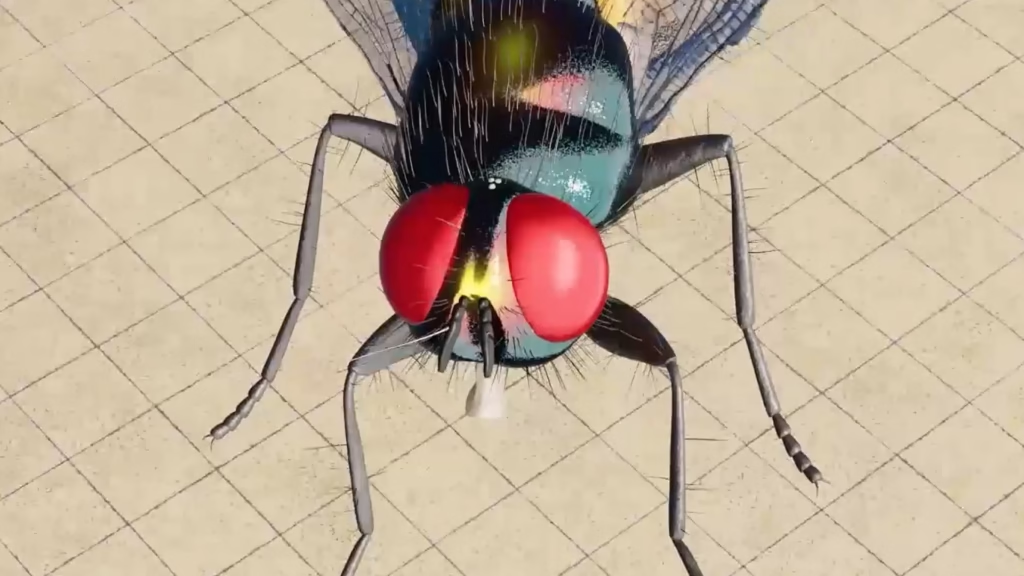
Flies, on the other hand, have a much higher critical flicker fusion frequency.
Flies can process 200 to 250 images per second
This gives them 4 times higher temporal resolution than humans
Temporal resolution refers to how quickly a brain can process changes in visual information.
👉 What looks fast to us looks slow to a fly.
Why Your Fast Hand Feels Like Slow Motion to a Fly
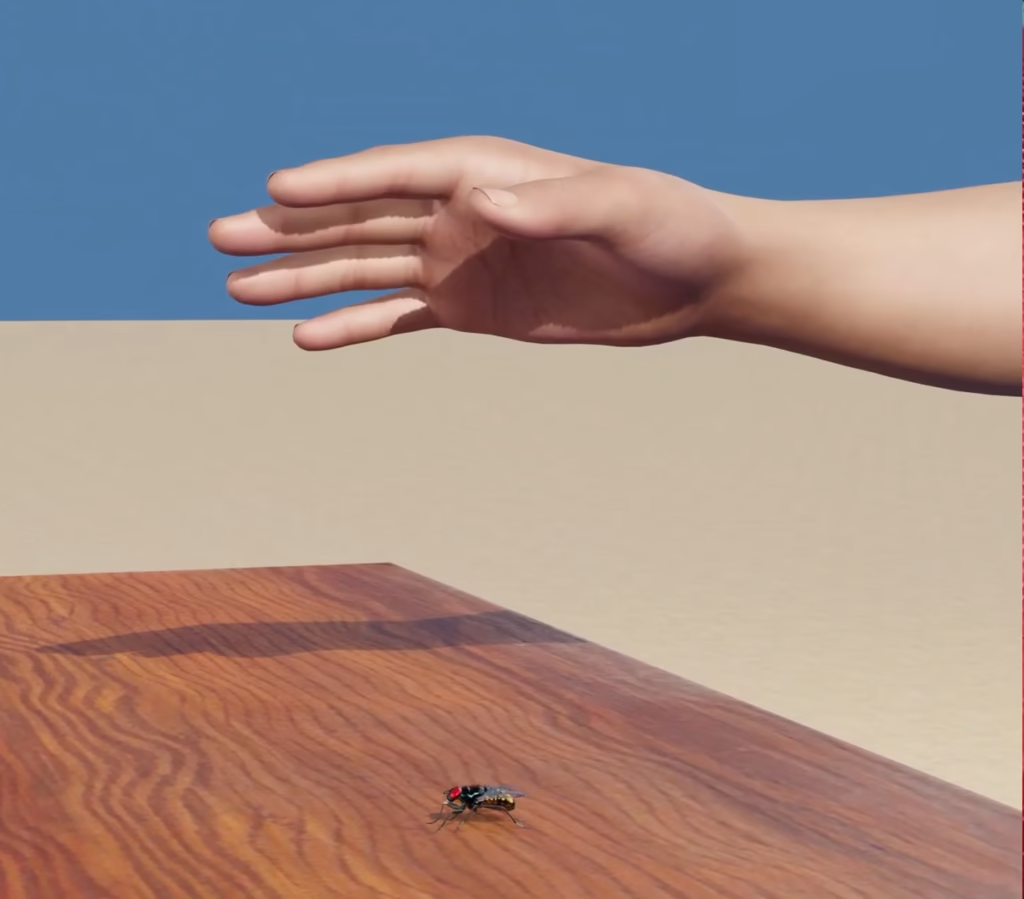
When you try to hit a fly, your hand moves quickly—but only by human standards.
Because flies process visual information so rapidly:
They see your hand approaching earlier
They see it moving slower
They have more time to react
To a fly, your attack looks like a slow-motion scene in a movie.
This gives them a huge survival advantage.
Compound Eyes: Thousands of Lenses Working Together
What Are Compound Eyes?
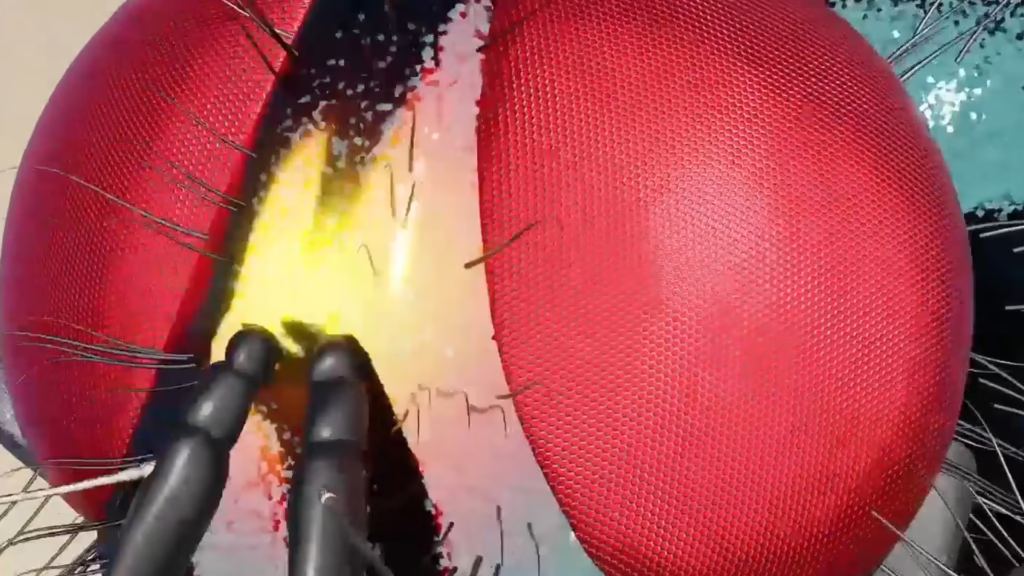
Unlike humans, flies do not have single-lens eyes. Instead, they have compound eyes.
Each eye contains thousands of tiny lenses called ommatidia
Each lens captures a small part of the visual field
The brain combines all this information into a complete image
Advantages of Compound Eyes
Compound eyes give flies several powerful abilities:
Almost 360-degree vision
Excellent motion detection
Ability to detect even tiny movements
No large blind spots like humans have
This means a fly can see you approaching from almost any direction.
Motion Detection: Flies Are Built to Sense Movement
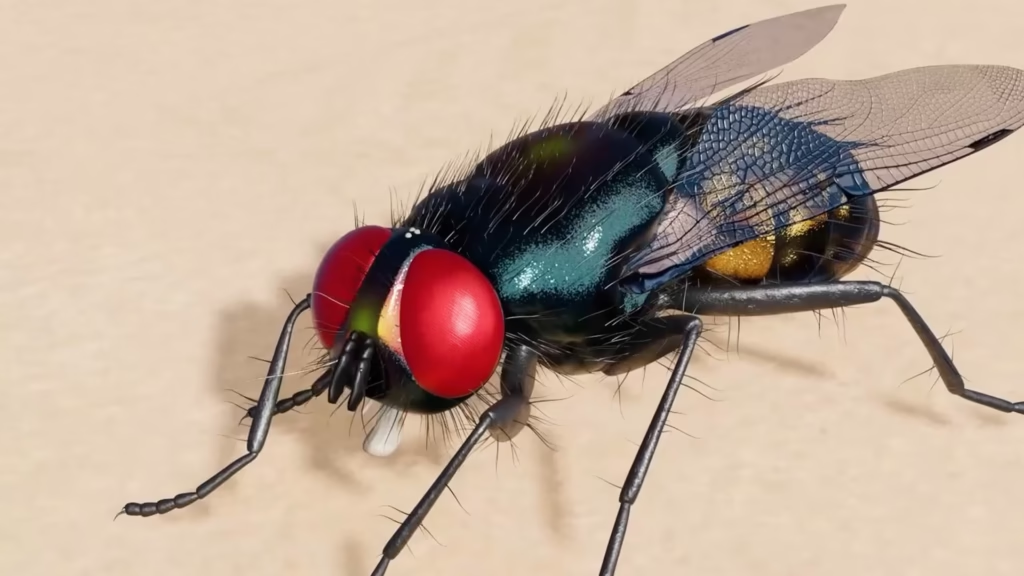
Flies are especially sensitive to changes in motion, not fine details.
Their visual system is optimized to answer one critical question: “Is something moving toward me?”
The moment your hand starts moving:
The fly’s eyes detect the motion
The brain processes it instantly
A survival response is triggered
They don’t wait to identify what the object is.
If it moves fast and comes closer—it’s a threat.
Feeling the Air: Flies Sense More Than Just Vision
Flies don’t rely only on their eyes.
Air Pressure and Hair Sensors
Their bodies are covered with tiny sensory hairs that detect:
Changes in air pressure
Air movement caused by your hand
So even before your hand gets close:
The fly can feel the air disturbance
This gives them an early warning system
This is why sneaking up slowly often works better than fast attacks.
The Escape Reflex: Instant Survival Mode
Once a threat is detected, the fly’s escape reflex activates.
This reflex is:
Automatic
Pre-programmed
Extremely fast
There is no “thinking” involved.
Reaction Time of a Fly
Flies react within 20 to 100 milliseconds
That’s faster than human reaction time
Their nervous system is shorter and simpler, allowing signals to travel faster.
Preloaded Legs: Built Like Tiny Springs
A fly’s legs are not passive.
Before takeoff:
Their leg muscles are already preloaded with energy
Think of a compressed spring
When the escape reflex triggers:
The legs release instantly
The fly launches into the air
This happens in a fraction of a second—often before we even realize it.
Flight Stability: The Role of Halteres
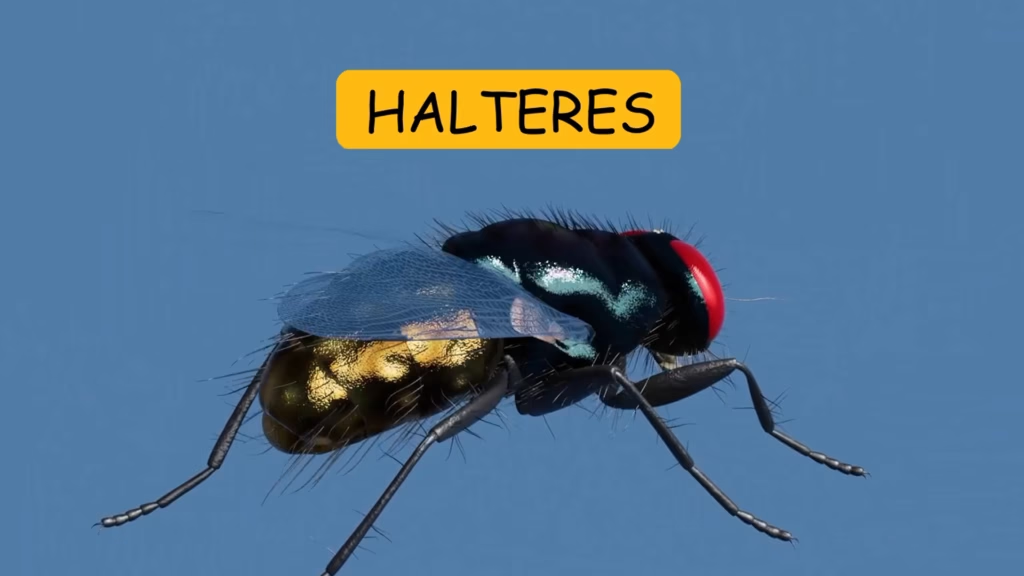
What Are Halteres?
Halteres are small, club-shaped organs located behind the wings.
They are:
Modified hind wings
Unique to flies (order Diptera)
What Do Halteres Do?
Halteres act like gyroscopes.
They help flies:
Maintain balance
Detect rotation
Control body orientation during flight
Even during sudden takeoff, halteres ensure the fly doesn’t lose control.
This allows flies to:
Take off instantly
Change direction mid-air
Escape with precision
Why Swatting Rarely Works
When you try to swat a fly:
The fly sees your movement early
It feels air changes
Its escape reflex activates
It launches using spring-loaded legs
Halteres stabilize its flight instantly
By the time your hand reaches the target:
The fly is already gone
From the fly’s perspective, you were never fast.
Can Humans Ever Catch a Fly?
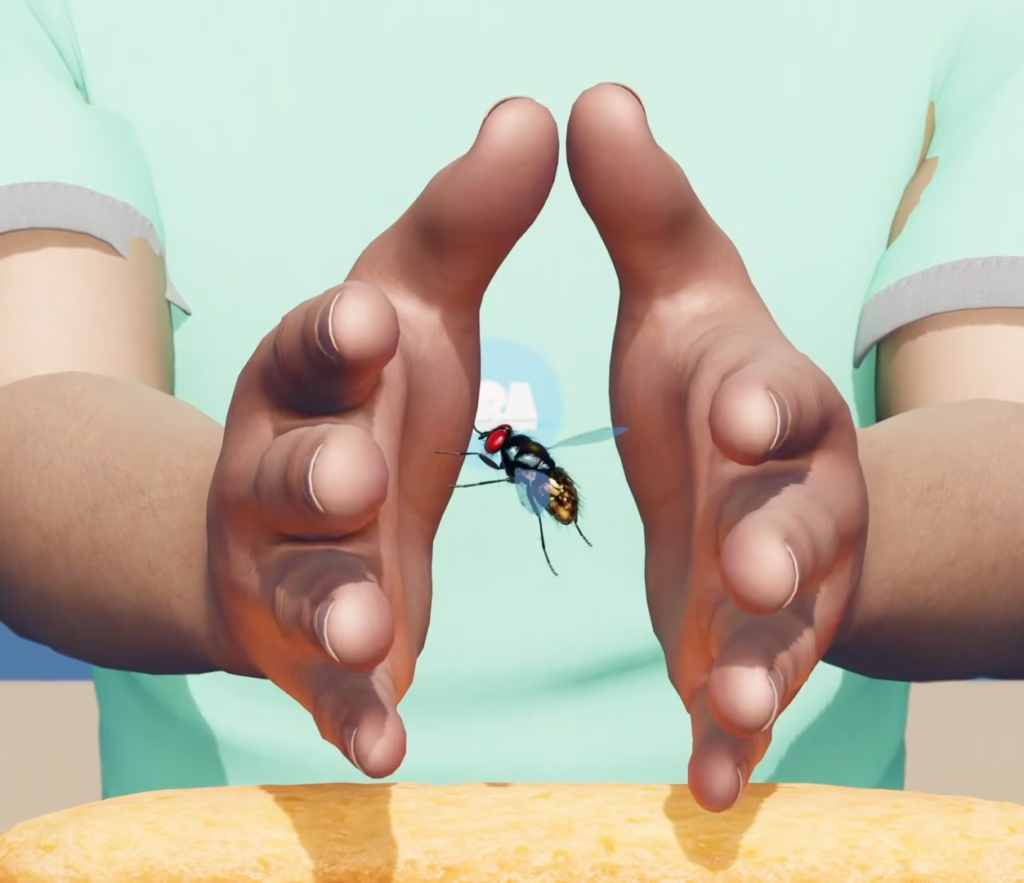
Yes—but only by working against fly biology, not brute speed.
Some strategies include:
Moving very slowly
Approaching from below
Using two hands
Reducing air movement
Even then, the odds favor the fly.
Conclusion: Evolution Built the Perfect Escape Artist
Flies may look simple, but they are biological masterpieces of survival.
Their advantages include:
Ultra-fast vision
High temporal resolution
Compound eyes
Air-sensing hairs
Lightning-fast reflexes
Preloaded legs
Halteres for perfect balance
With all this built-in technology, it’s no surprise that catching a fly feels impossible.
So next time a fly escapes your hand, remember:
It’s not your failure—it’s evolution at work.
Watch the full process in action!
Watch it in Malayalam

Love what I do?
Consider supporting my work by👉 buying me a coffee
Check out our related products and other links 👉 Products & other platforms
Want to learn more through visual storytelling? Check out our detailed 3D explanation blog on Why We Forget Things? How to Remember What Matters!
Useful Links : Fly
Nice