Why Seasons Happen on Earth?
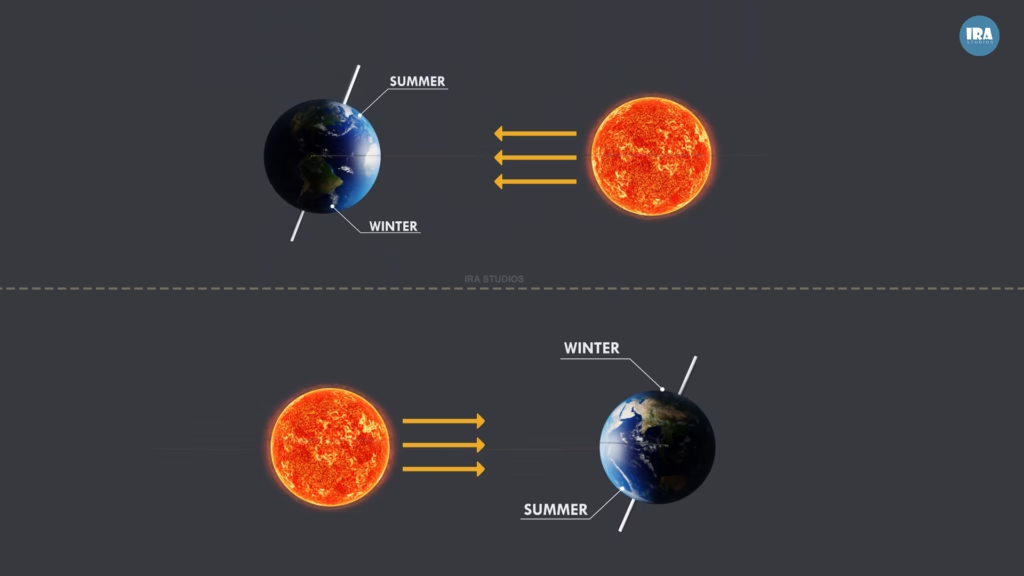
Have you ever wondered why we experience summer, winter, spring, and autumn on Earth? Many people believe that summer happens when Earth is closer to the Sun and winter happens when it is farther away. But this idea is actually wrong.
The real reason behind Earth’s seasons is the tilt of Earth’s axis. In this article, we will explore how seasons actually work, why different parts of Earth experience opposite seasons, and what happens in the middle part of Earth.
Watch the full animated visual presentation of this topic at the end of this blog.
What Causes Seasons on Earth?
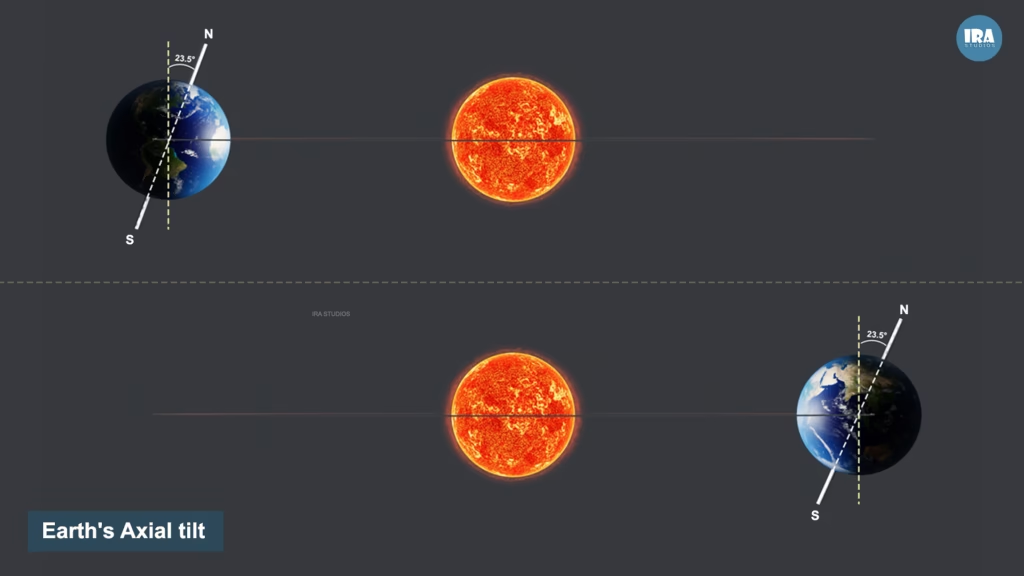
The seasons are caused by the 23.5-degree tilt of Earth’s axis as our planet revolves around the Sun.
Earth rotates around an imaginary line called its axis, which runs through the North Pole and the South Pole. But this axis is not straight — it is tilted at about:
23.5° (See above image)
As Earth moves around the Sun, this tilt always stays pointed in the same direction. Because of this, different parts of Earth receive different amounts of sunlight during the year.
Earth’s Revolution Around the Sun
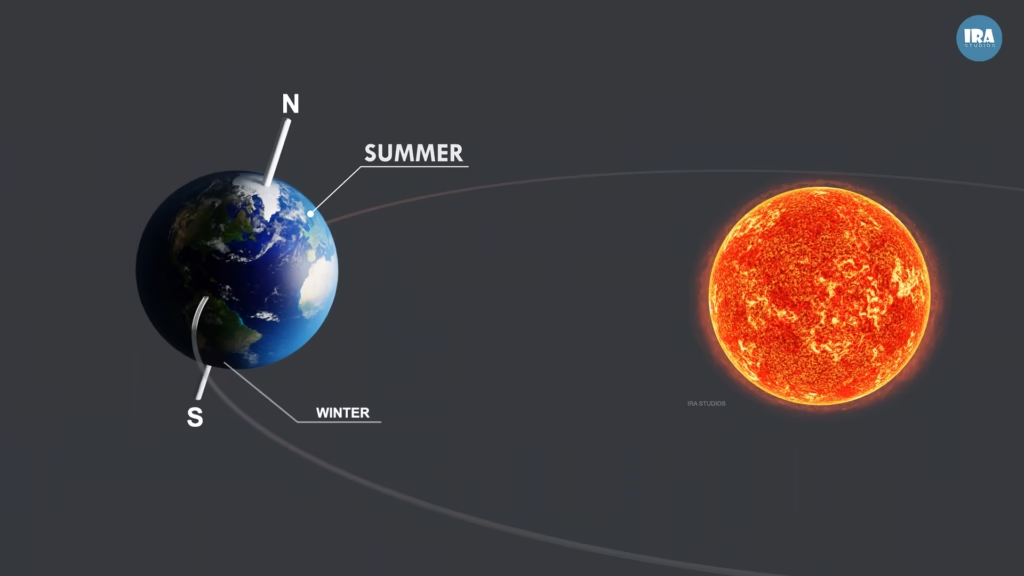
Earth takes about 365 days to complete one orbit around the Sun. During this journey, the tilted axis changes how sunlight falls on Earth. (See above image)
When the Northern Hemisphere is tilted toward the Sun:
- Sunlight is more direct
- Days become longer
- More heat is received
- Temperature increases
This creates summer in the Northern Hemisphere
At the same time:
- The Southern Hemisphere gets less sunlight
- Days are shorter
- It becomes winter there
Why Direct Sunlight Matters
Sunlight angle plays a very important role in temperature.
Direct sunlight:
- Energy is concentrated in a smaller area
- More heating happens
- Temperature rises quickly
Slanted sunlight:
- Energy spreads over a larger area
- Less heating occurs
- Temperature stays cooler
That’s why seasons depend on sunlight angle, not distance from the Sun.
Opposite Seasons in Hemispheres
Earth’s two halves experience opposite seasons.
| Northern Hemisphere | Southern Hemisphere |
|---|---|
| Summer | Winter |
| Winter | Summer |
| Spring | Autumn |
| Autumn | Spring |
So when it is summer in the USA, Europe, and Canada, it is winter in Australia and parts of South America.
What Happens Six Months Later?
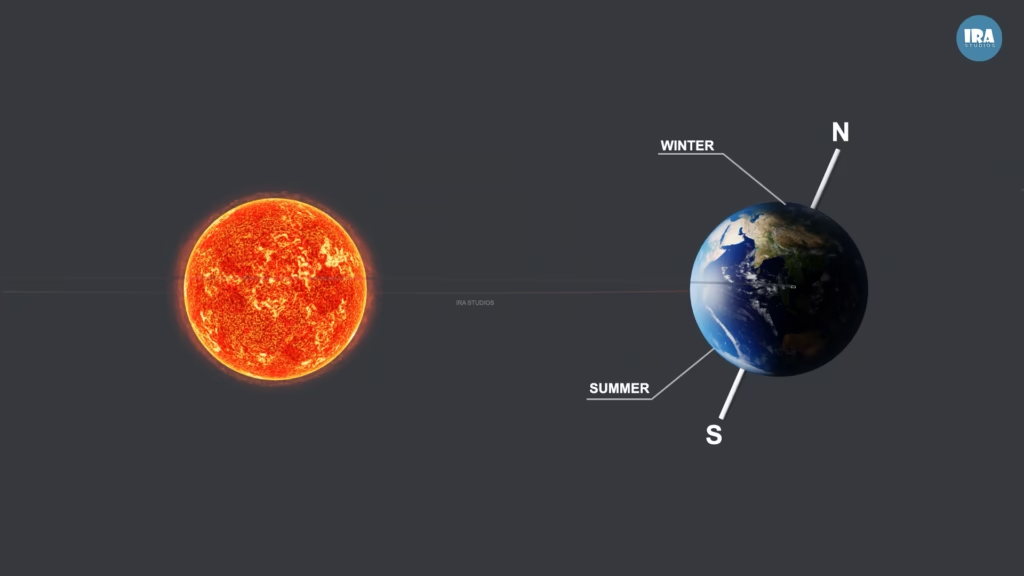
After about six months, Earth moves to the opposite side of its orbit. (See above image)
Now:
- The Northern Hemisphere tilts away from the Sun
- Sunlight becomes less direct
- Days become shorter
- Temperature decreases
This becomes winter in the North and summer in the South
What Happens in the Middle of Earth (Equator)?
This is an important part many people don’t know.
At the Equator (middle region of Earth):
- Sunlight is almost direct all year
- Day and night are almost equal (around 12 hours each)
- Temperature stays warm throughout the year
- No strong summer or winter like polar regions
Instead of 4 seasons, equator regions usually experience:
- 🌧️ Wet season
- ☀️ Dry season
Because the tilt of Earth affects the poles much more than the middle part. At the equator, sunlight does not change much during the year, so seasons are not extreme.
Is Earth Closer to the Sun in Summer?
No. In fact, Earth is slightly closer to the Sun during January, when it is winter in the Northern Hemisphere.
This proves that distance from the Sun is not responsible for seasons.
Conclusion
Seasons are not caused by Earth’s distance from the Sun. They happen because Earth is tilted at 23.5 degrees.
23.5°
This tilt changes how sunlight reaches different parts of Earth throughout the year, creating summer, winter, spring, and autumn.
The poles experience strong seasonal changes, while the equator remains mostly warm all year.
Understanding this helps us clearly see how our planet works and why climate changes during the year.
Watch the Full 3D Animation
To explore all of these processes in 3D, check out our detailed 3D Animation video.
Watch it in Malayalam!
Want to learn more through visual storytelling? Check out our detailed 3D explanation blog on Why Rain Smells So Good : Science Behind Petrichor
Useful Links :