Why do we always see the same side of the Moon? At first glance, it might seem as though the Moon doesn’t rotate at all. In reality, it does rotate—but in a very special way. The reason we always see the same face is a phenomenon called tidal locking. In this article, we’ll explain how it works and why it happens.
Watch the full animated visual presentation of this topic at the end of this blog.
The Moon Orbits the Earth
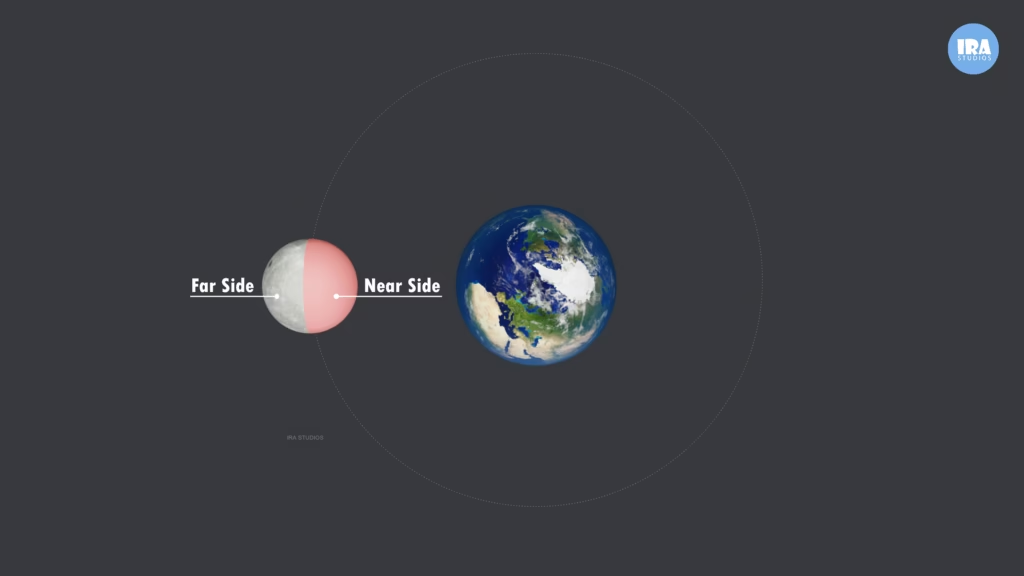
The Moon is Earth’s only natural satellite. It revolves around the Earth because of Earth’s gravity.
It takes about 27.3 days for the Moon to complete one orbit around the Earth.
If you observe the Moon over many nights, you may notice that it always appears to show the same surface. The side we see is called the Near Side, while the side that always faces away from Earth is called the Far Side.(See the image above)
If the Moon doesn’t have axial rotation..
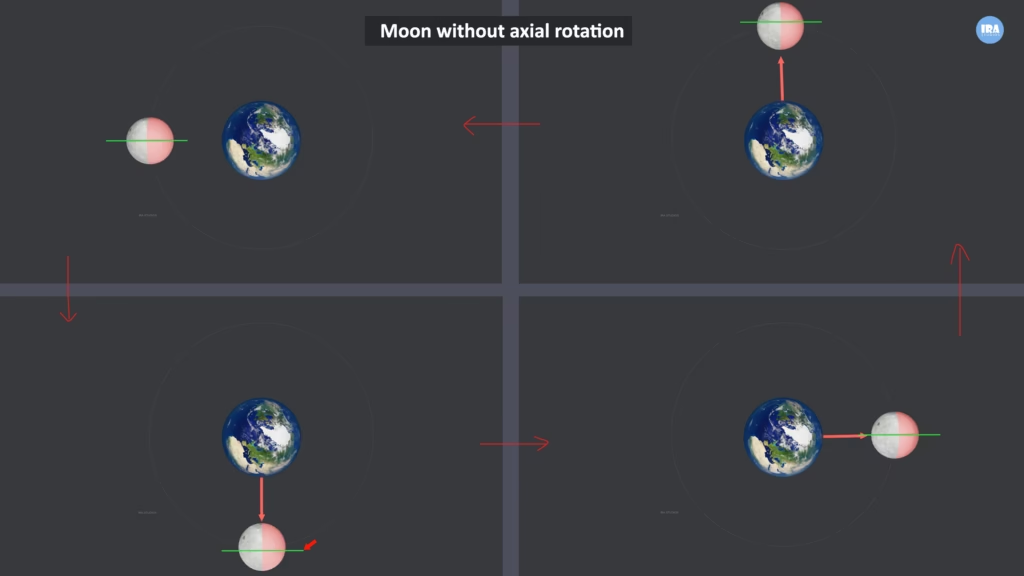
At first glance, it may seem that the Moon does not rotate at all. But this is not true.
Imagine drawing a straight line on the Moon. If the Moon did not rotate while orbiting Earth, the line would always point in the same direction in space. When the Moon does not rotate on its axis, we (from Earth) can see all sides of the Moon.
That means the Moon is rotating!
What If the Moon Rotated Like Earth?
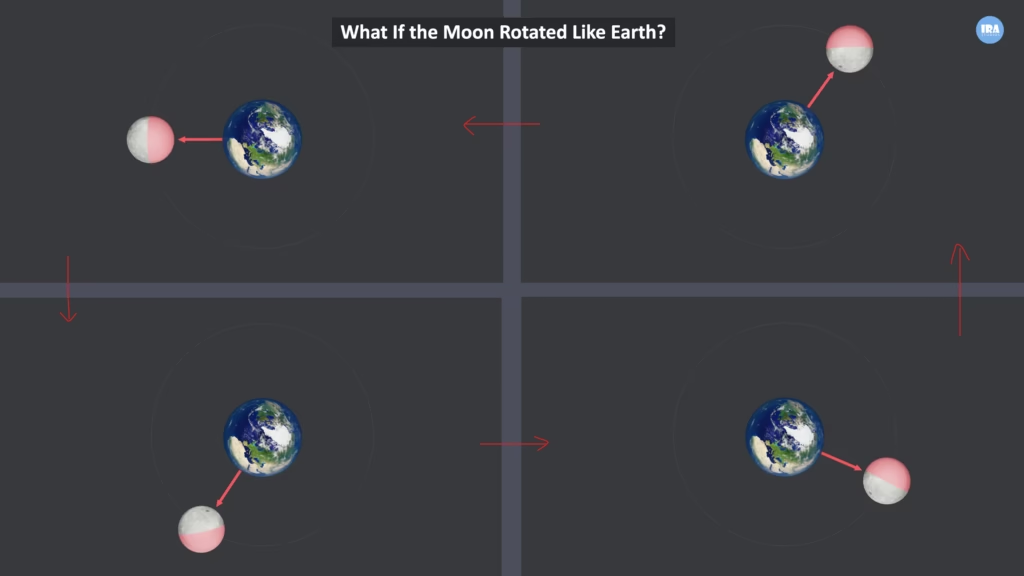
If the Moon rotated on its axis like the Earth does, we would not always see the same side of it. Instead, different parts of the Moon’s surface would become visible over time as it moved around the Earth.
As the Moon completes its orbit, its rotation would cause all sides of the Moon to gradually face Earth at different times. This means we would eventually be able to see the entire surface of the Moon.
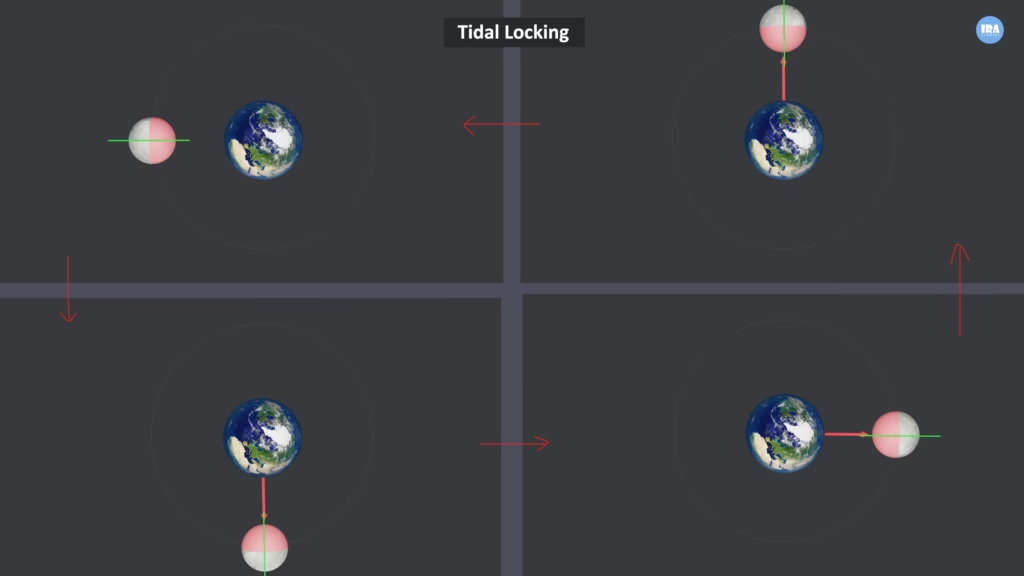
But that is not what happens in reality. The Moon rotates at exactly the same rate as it orbits the Earth. Because of this perfect balance, the same side of the Moon always faces us, while the far side remains hidden. This special condition is called tidal locking.
Tidal Locking
The Moon rotates on its own axis.
However, it rotates very slowly.
The important fact is this:
- The Moon takes about 27.3 days to rotate once on its axis.
- It also takes about 27.3 days to orbit the Earth.
Because these two periods are exactly the same, the same side of the Moon always faces Earth.
This special condition is called tidal locking.(See above image)
How Earth's Gravity Slowed the Moon
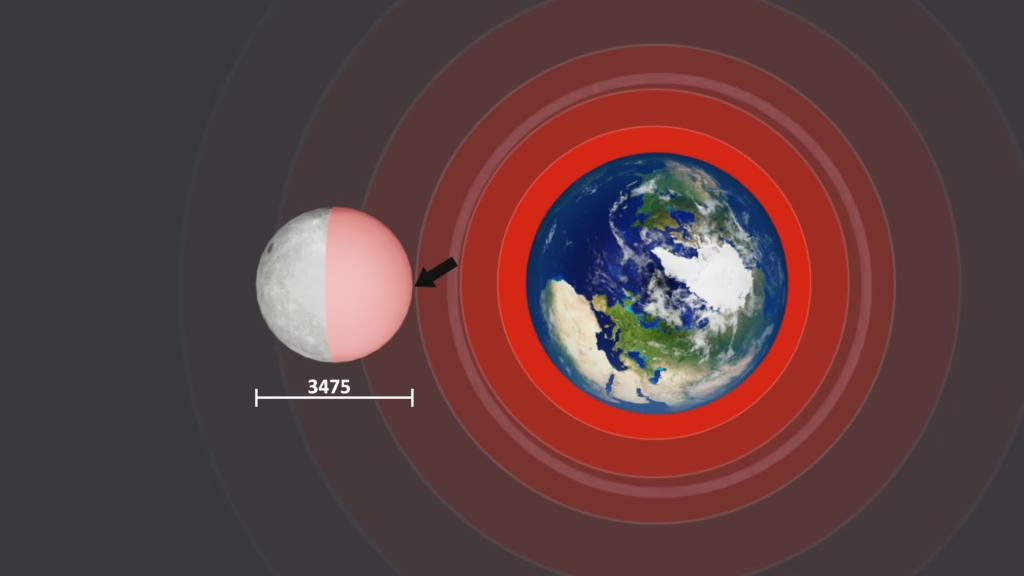
Billions of years ago, the Moon was much closer to Earth.
It also rotated much faster than it does today.
If you had lived back then, you would eventually have been able to see every side of the Moon.
Over time, Earth’s gravity changed that.
Earth’s gravity is slightly stronger on the side of the Moon facing Earth than on the far side.
This happens because the Moon is about 3,475 kilometers wide.
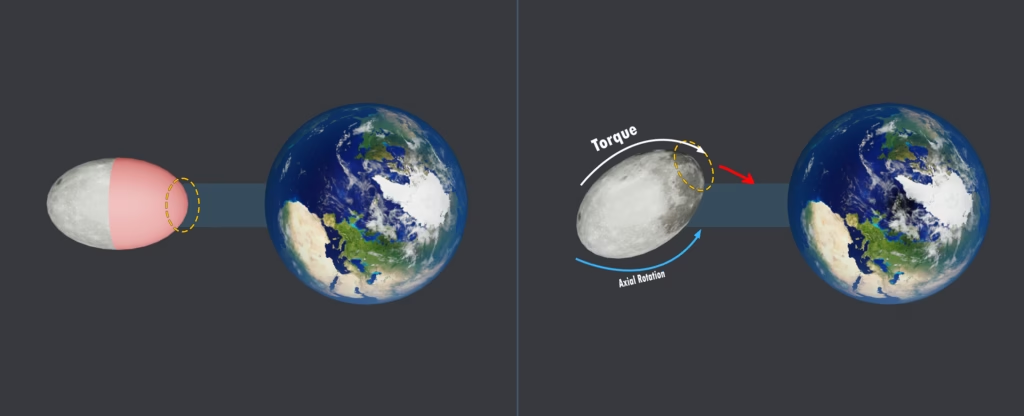
The difference in gravity slightly stretched the Moon, making it a little longer along the Earth-facing direction. This created small tidal bulges.
These bulges always tried to point toward Earth.
But because the Moon was spinning, the bulges were carried slightly ahead of their ideal position.
Earth’s gravity pulled these bulges back, creating a torque, which is a twisting force.
This torque acted like a brake, slowly reducing the Moon’s rotation.
Billions of Years of Slowing Down
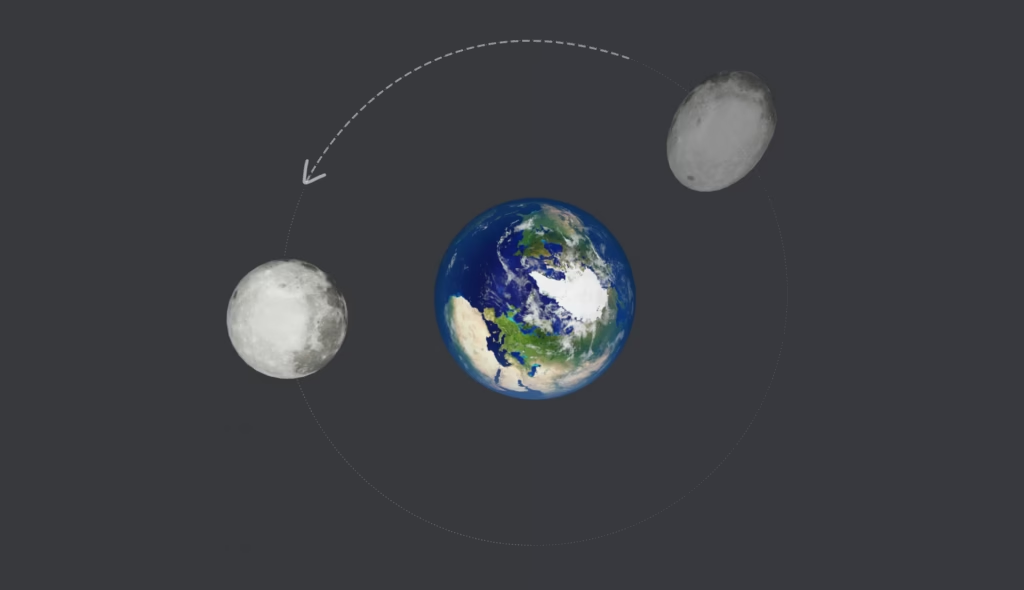
As the Moon’s shape changed over and over again, friction inside the Moon converted some of its rotational energy into heat.
This process continued for billions of years.
Eventually, the Moon’s rotation slowed until it matched its orbital period.
At that point:
- The Moon completed one rotation in exactly the same time as one orbit.
- The tidal bulges stayed permanently aligned with Earth.
- The Moon became tidally locked.
That is why we always see the same side today.
Has Anyone Seen the Moon's Far Side?
Yes.
For thousands of years, humans could only see the Moon’s Near Side from Earth.
Everything changed in 1959, when the Soviet spacecraft Luna 3 flew around the Moon and captured the first photographs of the Far Side.
Later, in 1968, the astronauts aboard Apollo 8 became the first humans to see the Moon’s Far Side with their own eyes while orbiting the Moon.
Why Does the Far Side Look Different?
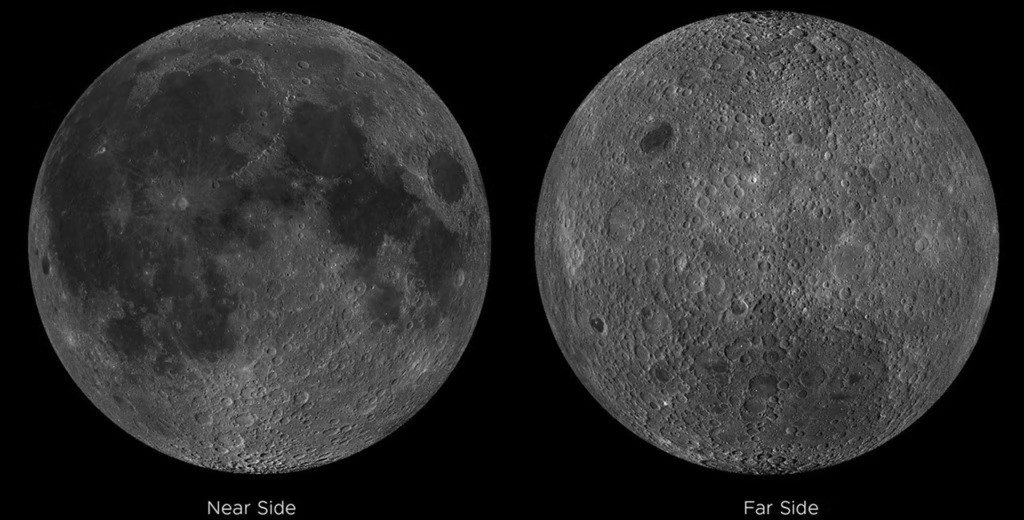
Scientists expected both sides of the Moon to look similar.
Instead, they discovered something surprising.
The Near Side contains large dark regions called maria. These were formed billions of years ago when molten lava flowed across the surface and later cooled.
The Far Side, however, has far fewer maria. Instead, it is covered with many more impact craters and appears much brighter.
Why Are the Two Sides Different?
Scientists now know that the Moon’s Far Side has a much thicker crust than the Near Side.
Because of this thicker crust, molten rock inside the Moon could not easily reach the surface.
On the Near Side, the crust is thinner, allowing lava to erupt through cracks and spread across the surface.
These ancient lava flows formed the dark plains we can easily see from Earth.
Recent NASA research indicates that the crust on the Moon’s Far Side is roughly 50 kilometers thicker than the crust on the Near Side.
Watch the Full 3D Animation
To explore all of these processes in 3D, check out our detailed 3D Animation video.
Watch it in Malayalam!
Want to learn more through visual storytelling? Check out our detailed 3D explanation blog on How Rain and Snow Are Formed : Water Cycle explained with visuals