When a dark sky suddenly lights up with a bright flash followed by a deep rolling sound, you are witnessing one of the most powerful natural events on Earth.
Lightning is not just light, and thunder is not just sound.
They are both parts of a huge electrical system that builds up inside storm clouds and releases energy in a fraction of a second.
Let’s understand thunder and lightning explained in a simple, scientific way.
Learn It Visually
Watch the full animated visual presentation of this topic at the end of this blog.
It All Begins with the Sun
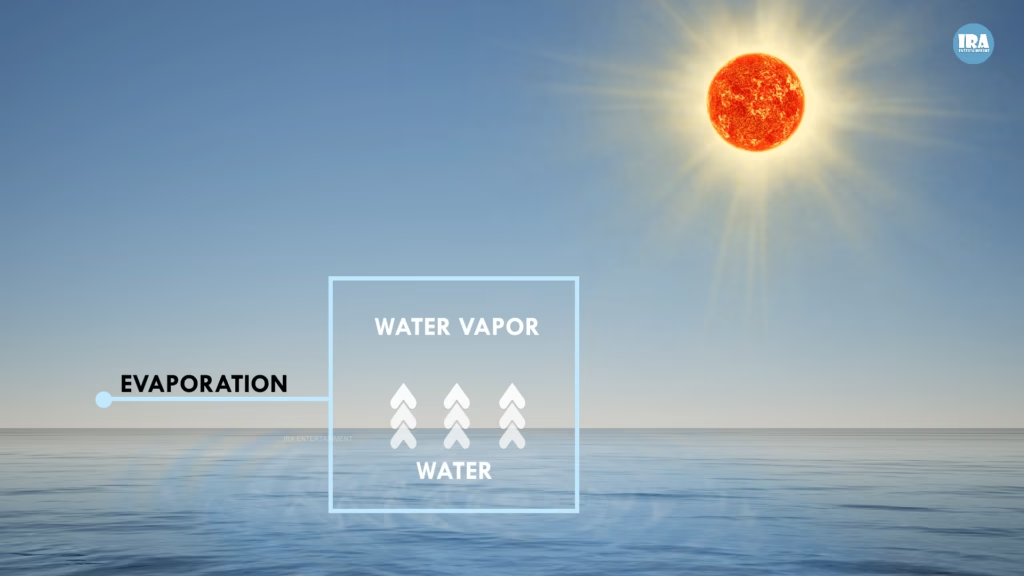
Every thunderstorm starts with energy from the Sun.
The Sun heats water in oceans, lakes, rivers, and even moist ground. As the water warms, it evaporates and rises into the atmosphere as invisible water vapor.
As this warm, moist air climbs higher, it enters cooler regions of the sky. The drop in temperature causes the water vapor to condense into tiny water droplets.
Over time, billions of these microscopic droplets gather together, forming clouds.
When this upward movement of warm air becomes very strong and continuous, the clouds grow taller and more powerful—eventually developing into massive storm clouds capable of producing lightning and thunder.
Birth of a Thunderstorm Cloud
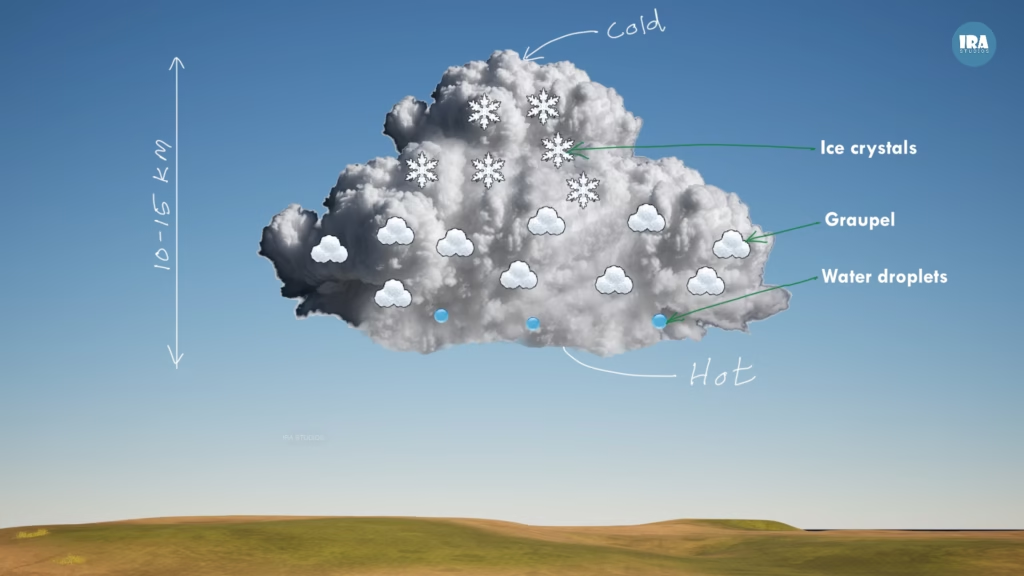
Lightning only forms inside special clouds called Cumulonimbus Clouds (See above image)
These are:
- Extremely tall (can rise 10–15 km high)
- Very cold at the top and warm at the bottom
- Filled with water droplets, ice crystals, and graupel (soft hail particles)
This mix creates the perfect environment for electricity to build up.
Inside the Storm

Inside a thunderstorm cloud, air is always moving.
Warm air rises upward (updrafts), while cooler air sinks downward (downdrafts). This creates constant movement inside the cloud. (See above image)
Because of this, tiny particles—ice crystals, water droplets, and graupel (soft hail particles)—keep bumping into each other. These collisions happen again and again. Over time, this helps build the electrical charge that leads to lightning.
How Electrical Charges Are Created
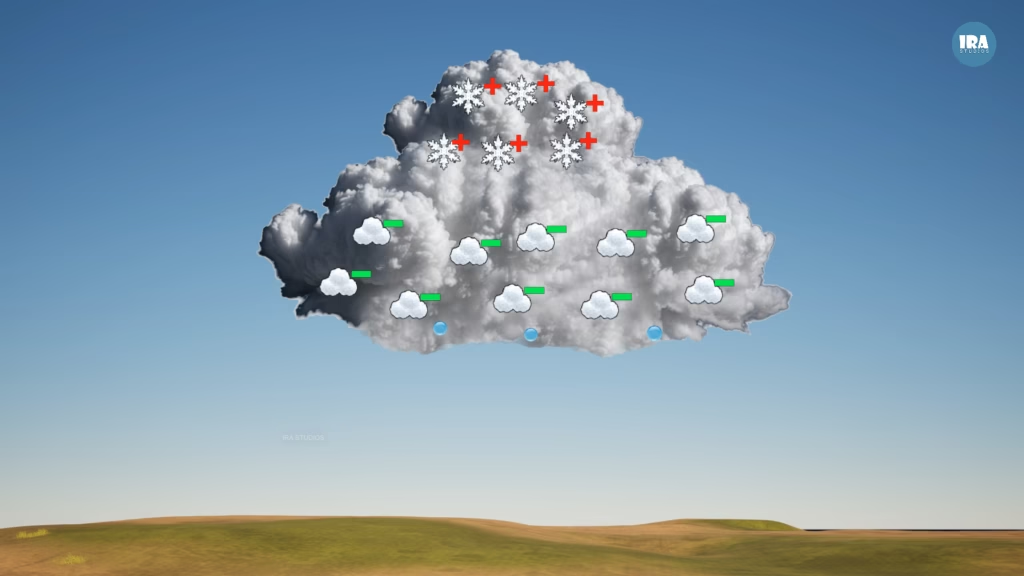
Every collision transfers tiny electric charges (electrons).
Over time:
Lighter ice crystals lose electrons → become positively charged (+)
Heavier graupel gains electrons → become negatively charged (−)
Then gravity and air currents separate them:
Positive charges move upward
Negative charges sink downward (See above image)
This creates a strong electric imbalance inside the cloud.
This is similar to static electricity, like when you rub a balloon on your hair and it sticks to a wall or gives a small shock when you touch metal.
The Cloud Becomes a Giant Battery
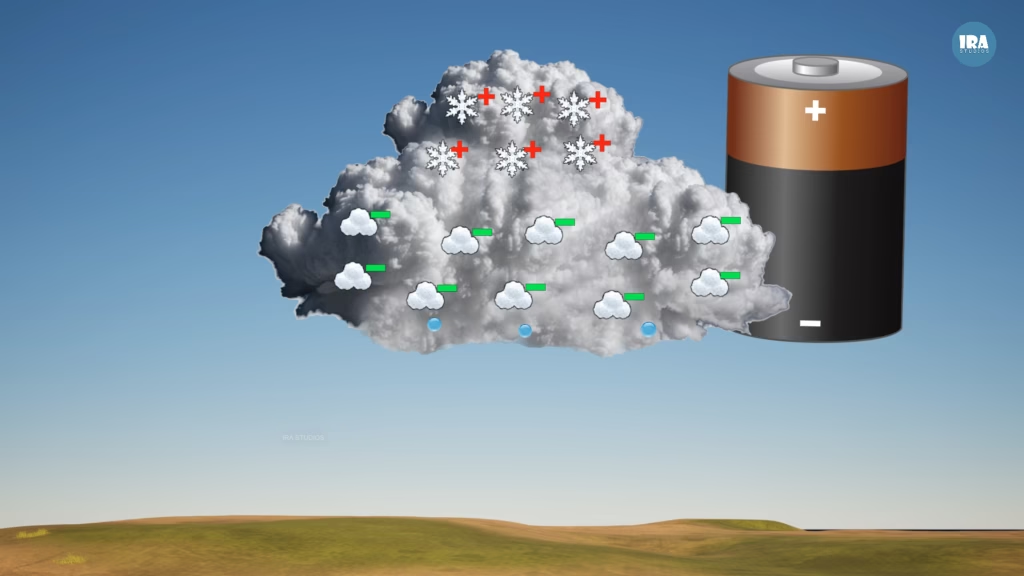
A thunderstorm cloud works like a huge natural electrical system.
Inside the cloud:
- The top region becomes positively charged (+)
- The bottom region becomes negatively charged (−)
At the same time, the negative charge at the bottom of the cloud pushes electrons in the ground away. This makes the ground relatively positive.
This creates a strong electric field between the cloud and the Earth.
Nature always tries to restore balance between opposite charges.
What Actually Causes Lightning?
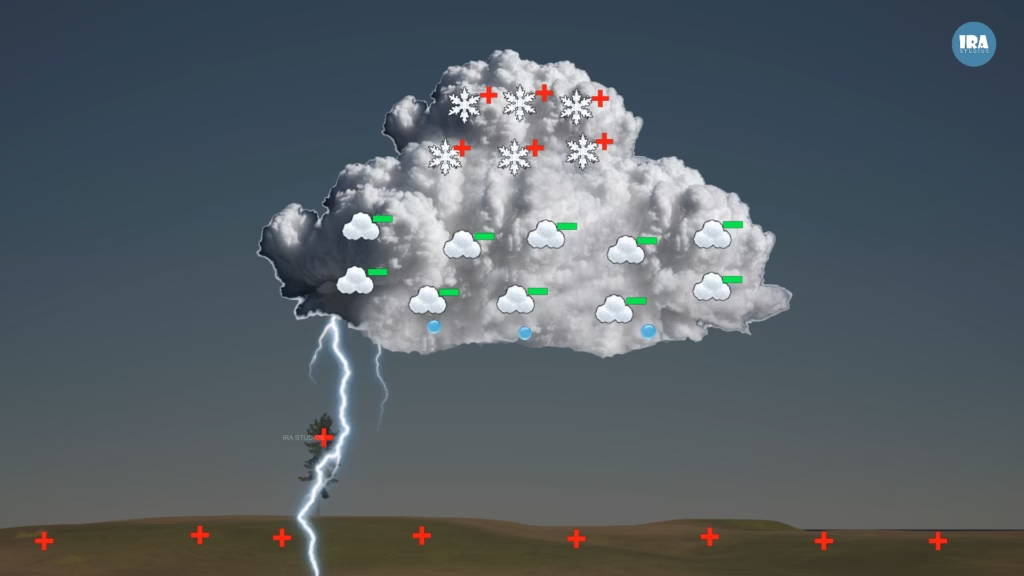
Normally, air acts as an insulator, which means it does not allow electricity to flow easily.
But inside a thunderstorm cloud, electric charges can build up to extremely high levels. When this happens:
- The air becomes electrically stressed
- It can no longer resist the electric force
- The air molecules break down and become ionized (a conducting path forms)
- A fast channel of charged particles opens
Once this path is created, electricity rushes through it in a fraction of a second. This sudden flow of electricity is what we see as lightning.
A lightning bolt carries massive energy.
It heats the surrounding air to about 30,000°C.
That is:
5 times hotter than the surface of the Sun
This happens so fast that the air cannot expand normally—it explodes outward.
Lightning can happen in different ways:
- Inside a single cloud
- Between two clouds
- Between a cloud and the ground
What Causes Thunder?
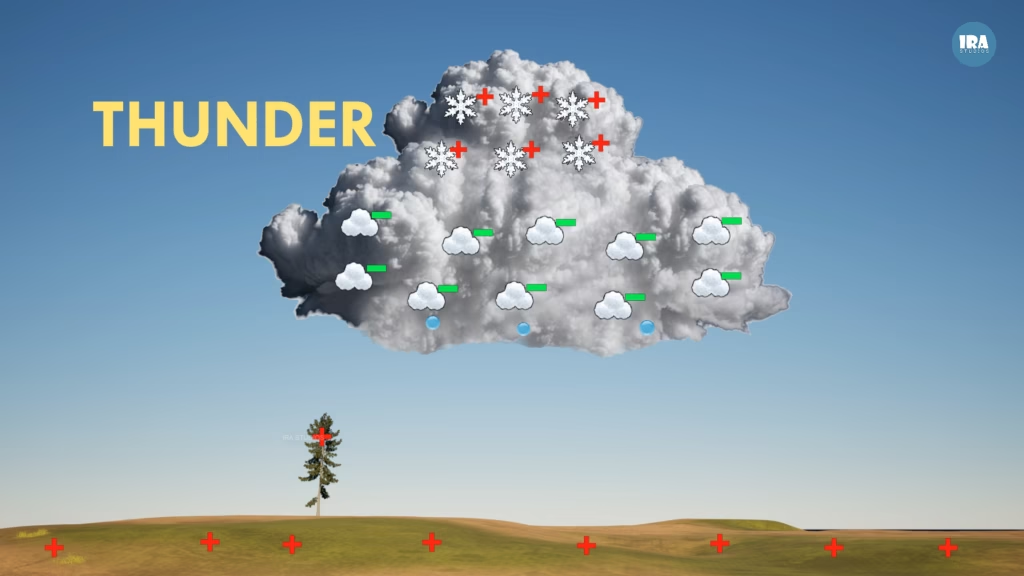
The sudden heating from lightning makes the surrounding air expand very quickly.
This rapid expansion creates a strong pressure wave in the air called a shockwave.
As this shockwave travels through the atmosphere, it reaches our ears as sound.
That sound is what we hear as thunder.
✔ Lightning = a sudden electrical discharge (light)
✔ Thunder = the sound created by expanding air (shockwave)
Simply put: thunder is the sound of air exploding outward around a lightning bolt.
Why You See Lightning Before You Hear Thunder
Light and sound travel at very different speeds.
- Light travels at about 300,000 km/s, which is almost instant for human distances
- Sound travels at about 343 m/s, which is much slower
Because of this difference:
- We see the lightning flash immediately
- The sound of thunder reaches us later
The delay between lightning and thunder is useful—it helps us estimate how far away the storm is.
Why Lightning Strikes Certain Objects
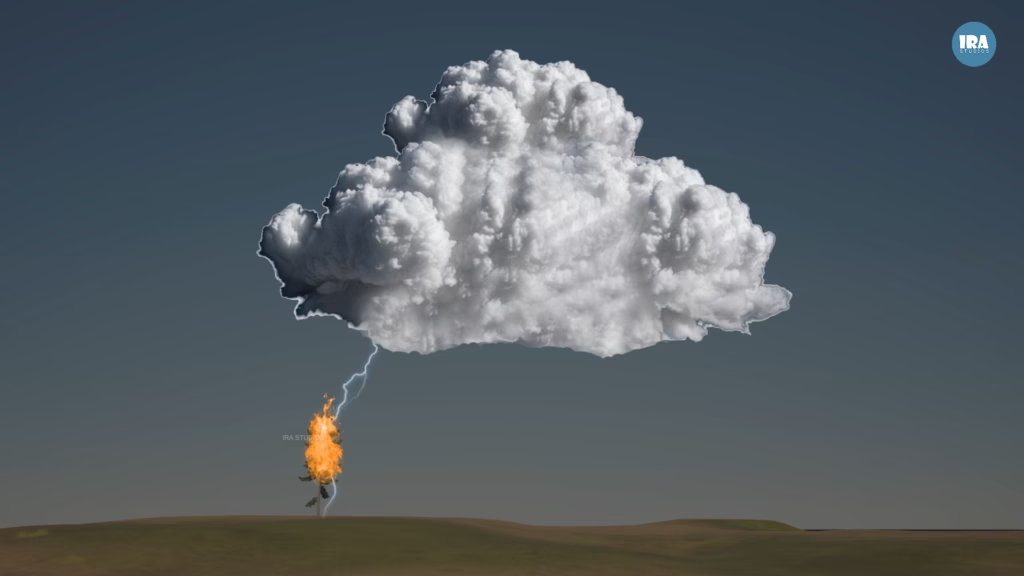
Lightning always follows the easiest path to the ground.
Tall objects are more likely to be struck because they:
- Are closer to the storm cloud base
- Reduce the distance electricity needs to travel through air
- Create a stronger electric field at their tips
However, lightning does not only strike tall objects. It can also hit shorter objects and even flat ground if that is where the easiest electrical path forms.
Common examples include:
- Trees
- Buildings
- Towers
- Mountain peaks
- Open ground
Lightning simply chooses the path of least resistance, not just the tallest object.
Thunderstorm Safety
To stay safe during storms:
- Stay indoors inside a solid building
- Avoid trees and open fields
- Do not stay in water (pools, lakes, showers)
- Avoid metal objects and wired electronics
- Unplug devices during strong storms
Watch the Full 3D Animation
To explore all of these processes in 3D, check out our detailed 3D Animation video.
Watch it in Malayalam!
Want to learn more through visual storytelling? Check out our detailed 3D explanation blog on How Rain and Snow Are Formed : Water Cycle explained with visuals