Imagine a place where the Sun stays in the sky for months without setting. Now imagine another place where the Sun doesn’t rise at all for months. It may sound impossible, but both of these incredible natural phenomena happen every year near Earth’s North and South Poles.
These events are called Polar Day and Polar Night, and they happen because of Earth’s tilt and its journey around the Sun.
Let’s see how it works.
Watch the full animated visual presentation of this topic at the end of this blog.
What Causes Day and Night?
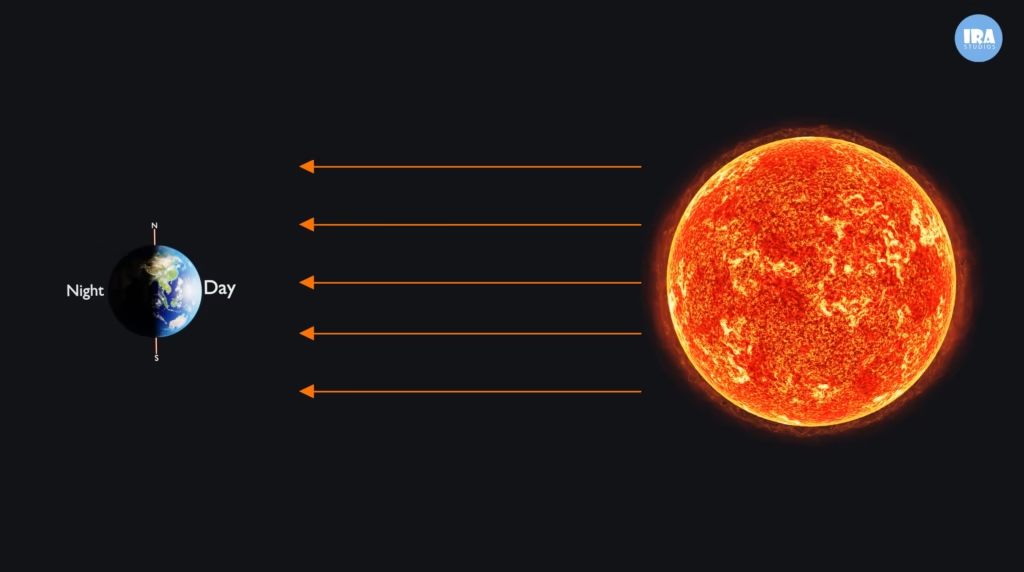
Earth is constantly spinning on an imaginary line called its axis. One complete rotation takes about 24 hours.
As Earth rotates:
- The side facing the Sun experiences daytime.
- The side facing away from the Sun experiences nighttime.
This daily rotation is why most places on Earth experience a regular cycle of day and night.(See above image)
Earth's Axis Is Tilted
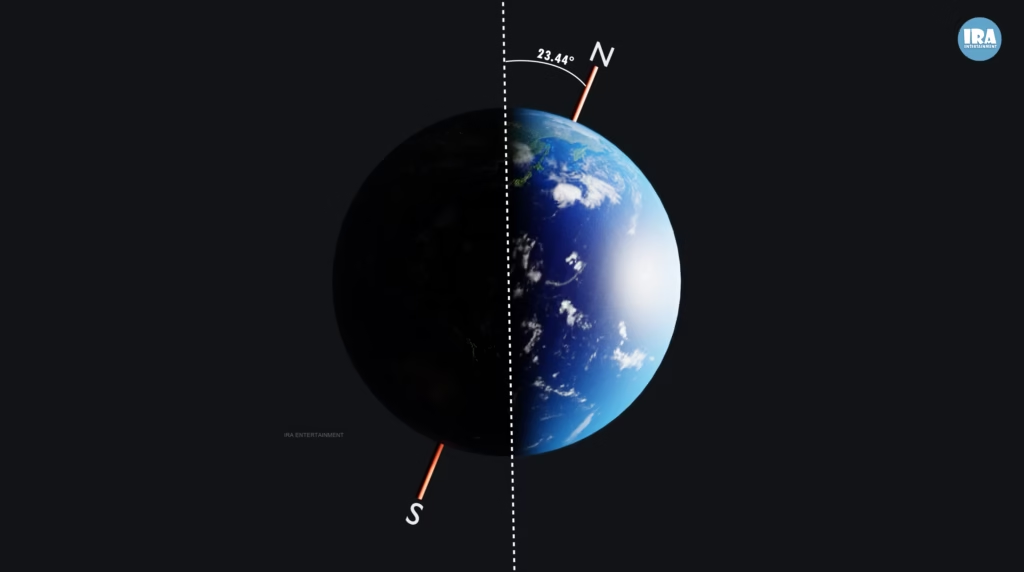
If Earth spun perfectly upright, every location on the planet would experience nearly equal lengths of day and night throughout the year.
But Earth doesn’t spin upright.
Instead, its axis is tilted by about 23.5 degrees relative to the plane of its orbit around the Sun.
This small tilt changes how sunlight reaches different parts of Earth during the year and is the main reason we have seasons, Polar Day, and Polar Night.(See above image)
What Is Polar Day?
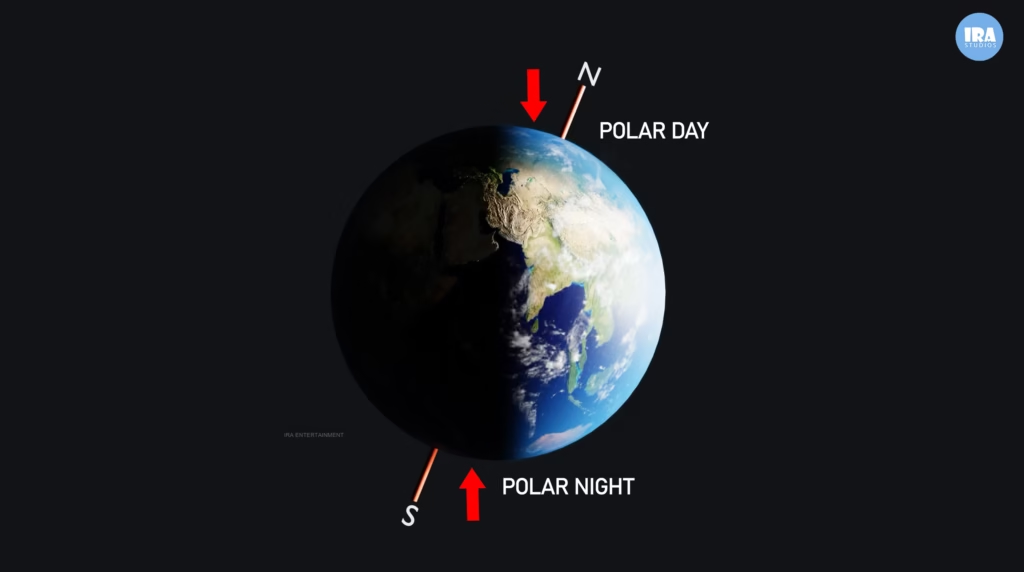
As Earth travels around the Sun, there comes a time when the North Pole is tilted toward the Sun.
During this part of the year, sunlight reaches areas within the Arctic Circle (about 66.5° North latitude) even at midnight.
Because of Earth’s tilt, the Sun never drops below the horizon in these regions. Even though Earth continues rotating every 24 hours, the Sun appears to circle around the sky without setting.
This continuous daylight is called Polar Day, also known as the Midnight Sun.
The farther north you go, the longer Polar Day lasts.
At the North Pole, the Sun remains above the horizon continuously for about six months, from around the March equinox until the September equinox.(See above image)
What Is Polar Night?
At the same time, the opposite happens in the Southern Hemisphere.
Since the South Pole is tilted away from the Sun, sunlight cannot reach areas within the Antarctic Circle (about 66.5° South latitude).
As a result, the Sun stays below the horizon all day and all night for an extended period.
This period of continuous darkness is called Polar Night.
Just like Polar Day, the duration depends on how close you are to the pole.
At the South Pole, Polar Night lasts for about six months, from around the March equinox until the September equinox.(See above image)
Six Months Later, Everything Reverses
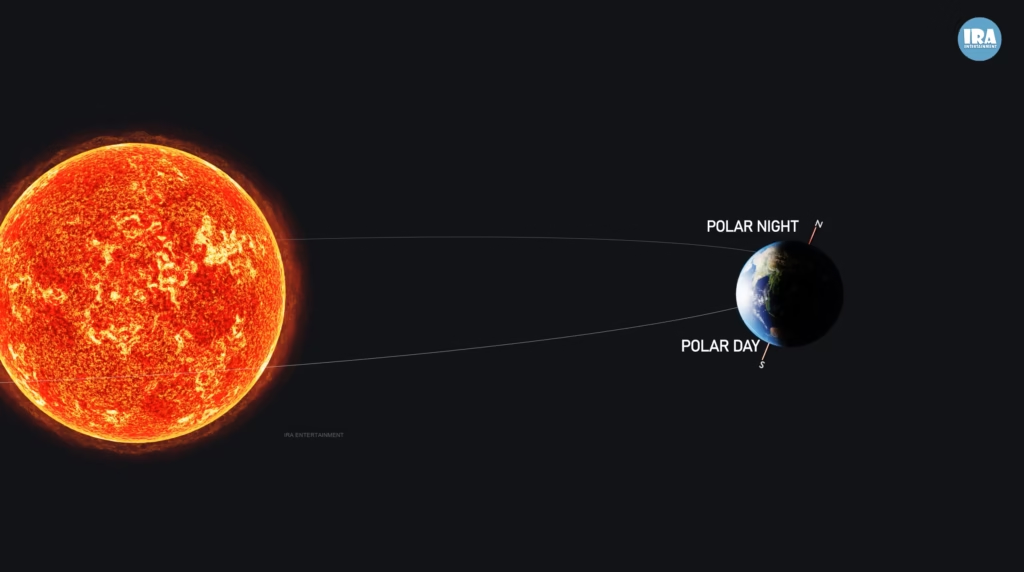
Earth’s axis keeps pointing in nearly the same direction in space as our planet orbits the Sun.
About six months later, Earth reaches the opposite side of its orbit.
Now the situation completely reverses.
- The South Pole is tilted toward the Sun and experiences Polar Day.
- The North Pole is tilted away from the Sun and experiences Polar Night.
This cycle repeats every year.(See above image)
Why Doesn't the Sun Set During Polar Day?
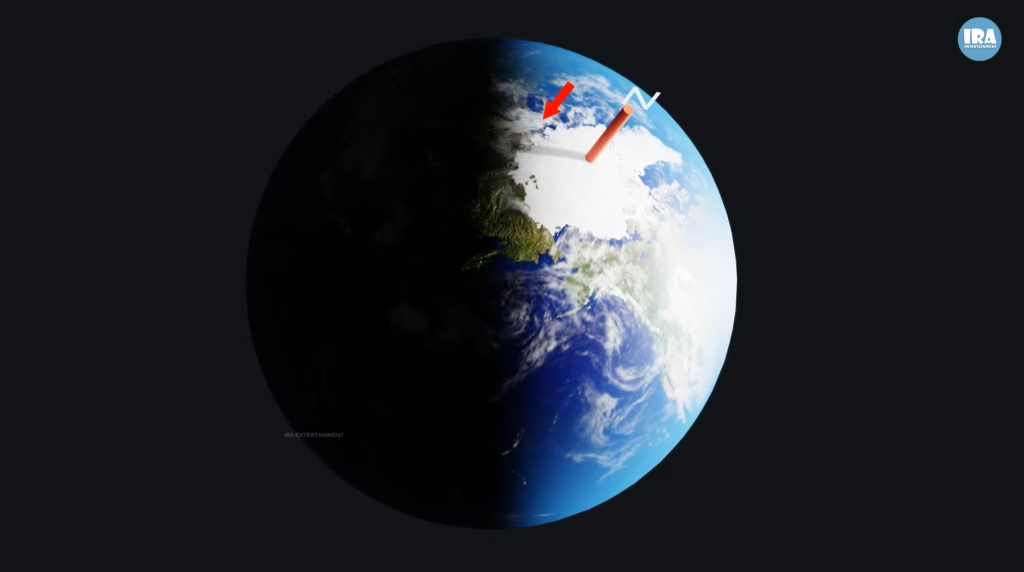
Many people wonder why the Sun doesn’t set if Earth is still spinning.
The answer is simple.
Normally, Earth’s rotation carries your location into the nighttime side of the planet.
But during Polar Day, the tilt keeps the polar region inside the Sun’s illuminated half of Earth throughout the entire rotation.
So, even after one full 24-hour spin, the Sun never goes below the horizon.
Instead, it appears to move in a wide circle across the sky.
Where Can You See Polar Day and Polar Night?
These phenomena occur only in regions inside the Arctic and Antarctic Circles.
Some famous places where people experience the Midnight Sun include:
Northern Alaska, USA
Northern Canada
Greenland
Iceland (some northern areas experience nearly continuous daylight around the summer solstice)
Northern Norway
Sweden
Finland
Svalbard
Polar Night can also be experienced in many of these Arctic locations during winter, while Antarctica experiences the most extreme version around the South Pole.
How Long Do Polar Day and Polar Night Last?
The length depends on how close a location is to either pole.
- Just inside the Arctic or Antarctic Circle, these events may last only one day.
- Farther toward the poles, they last for weeks or months.
- At the North Pole and South Pole, each lasts for approximately six months.
Watch the Full 3D Animation
To explore all of these processes in 3D, check out our detailed 3D Animation video.
Watch it in Malayalam!
Want to learn more through visual storytelling? Check out our detailed 3D explanation blog on Why Do We Always See the Same Side of the Moon? Tidal Locking Explained with 3D visuals
Yes I remember my school life and geography teacher 5 mark question in the examination clearly explained