What Happens to Food After You Swallow It?
Have you ever wondered what happens to your food after you swallow it?
Your digestive system turns the food you eat into small nutrients your body can absorb and use for energy, growth, and cell repair. Food travels through a long, muscular pathway called the gastrointestinal (GI) tract, which runs from your mouth to your anus.
Here’s what happens to your food, step by step.
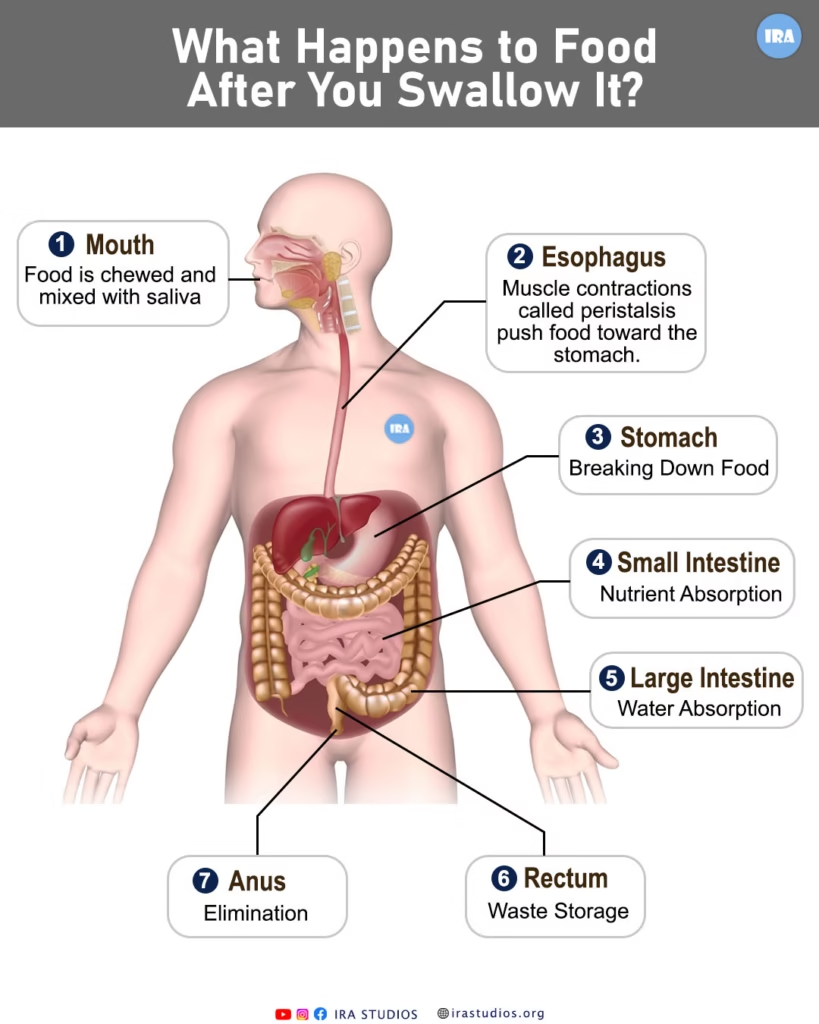
1. Mouth: Chewing and Saliva
Digestion begins in your mouth. Your teeth break food into smaller pieces while saliva moistens it and contains enzymes that begin breaking down starches. When you swallow, your tongue pushes the food toward your throat and into the esophagus.
2. Esophagus: Moving Food to the Stomach
After you swallow, the food enters your esophagus, the muscular tube connecting your throat to your stomach.
Wave-like muscle contractions called peristalsis push the food downward. This movement happens automatically—you don’t have to consciously push the food toward your stomach.
3. Stomach: Mixing and Breaking Down Food
When food reaches your stomach, stomach muscles mix and churn it with digestive juices.
Stomach acid and enzymes help break down food, particularly proteins. The mixture gradually becomes a thick liquid called chyme, which is slowly released into the small intestine.
4. Small Intestine: Digestion and Nutrient Absorption
The small intestine is where most digestion and nutrient absorption takes place.
Here, chyme mixes with digestive juices from the small intestine, pancreas, and liver. The pancreas provides enzymes that help break down carbohydrates, fats, and proteins, while bile made by the liver helps with fat digestion.
The walls of the small intestine then absorb most of the digested nutrients into your bloodstream. Your body can use these nutrients for energy, growth, and cell repair.
5. Large Intestine: Absorbing Water
After most nutrients have been absorbed, the remaining material moves into the large intestine.
The large intestine absorbs water and some electrolytes from the remaining material. As water is removed, the waste becomes more solid and forms stool. Bacteria in the large intestine also help break down some remaining material.
6. Rectum: Storing Waste
The remaining stool moves into the rectum, the lower end of the large intestine.
The rectum temporarily stores stool until it is ready to leave the body.
7. Anus: Waste Leaves the Body
Finally, stool leaves the body through the anus during a bowel movement.
And that completes the journey of the food you ate.
What Happens to the Nutrients?
Not everything you eat simply becomes waste.
During digestion, carbohydrates are broken down into simple sugars, proteins into amino acids, and fats into fatty acids and glycerol. Most of these nutrients are absorbed through the small intestine and transported around the body for energy, growth, and cell repair.
The Journey in One Line
Mouth → Esophagus → Stomach → Small Intestine → Large Intestine → Rectum → Anus
The entire process involves much more than simply moving food from one organ to another. Muscles, digestive juices, enzymes, bile, nerves, hormones, blood, and gut bacteria all work together to turn food into nutrients your body can use.
Want to learn more through visual storytelling? Check out our detailed 3D explanation blog on Why do we cough? 3D Visual Explanation