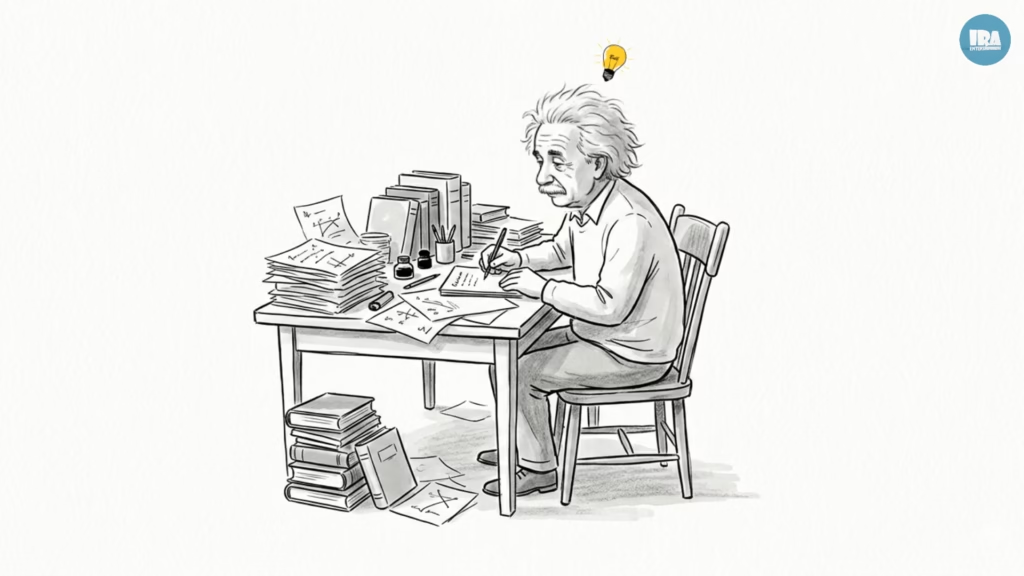
Albert Einstein Final Days…..
Even in the final years of his life, Albert Einstein remained completely devoted to science. Although he had already become one of the most famous scientists in history, Einstein continued searching for answers to some of the universe’s biggest mysteries.
Most people know Einstein as the genius behind the Theory of Relativity, but very few know how deeply he worked until the very end of his life. His final years were not spent relaxing or enjoying fame. Instead, they were filled with research, study, and an endless curiosity about the universe.
Einstein’s Final Scientific Mission
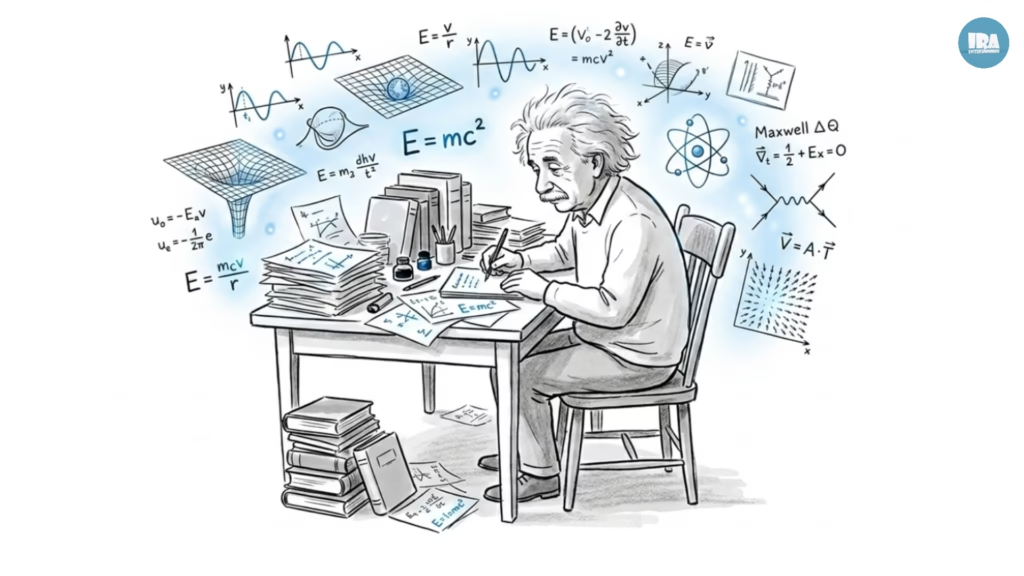
During the last years of his life, Einstein focused almost entirely on one difficult goal — creating a single theory that could explain all the forces of nature together. Scientists today often call this idea the “Theory of Everything.”
Einstein believed the universe followed one unified set of rules. He spent years trying to connect gravity, electromagnetism, and other natural forces into one complete theory. Even though many scientists respected him greatly, this final mission remained unfinished.
Despite becoming world famous, Einstein stayed away from public attention as much as possible. He preferred a quiet life filled with books, papers, and scientific discussions instead of interviews and celebrity events.
Every day, he continued reading, thinking, and writing letters to other scientists around the world. His curiosity never disappeared. Even in old age, Einstein still behaved like a student trying to learn something new.
Einstein’s Health Became Worse
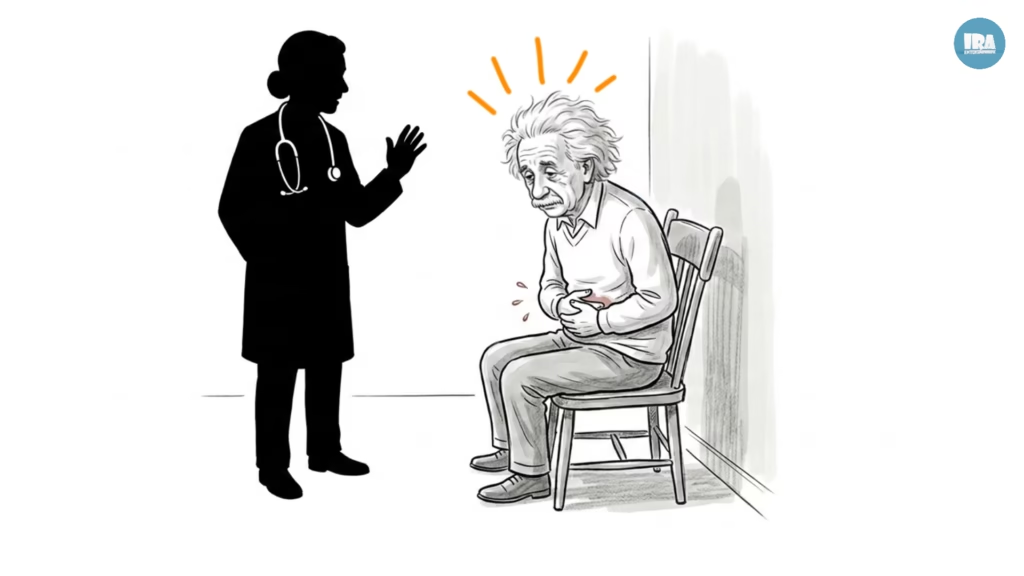
By 1955, Einstein’s health had become very serious because of a condition called an abdominal aortic aneurysm. This happens when the large blood vessel carrying blood from the heart becomes weak and swollen. If the blood vessel bursts, it can become life-threatening.
Doctors advised Einstein to undergo surgery to save his life. However, Einstein refused the operation. He believed that extending life artificially was unnecessary. According to reports, he accepted death calmly and wanted nature to take its course.
His decision surprised many people, but it also reflected the way he viewed life — with acceptance, simplicity, and dignity.
The Death of Albert Einstein
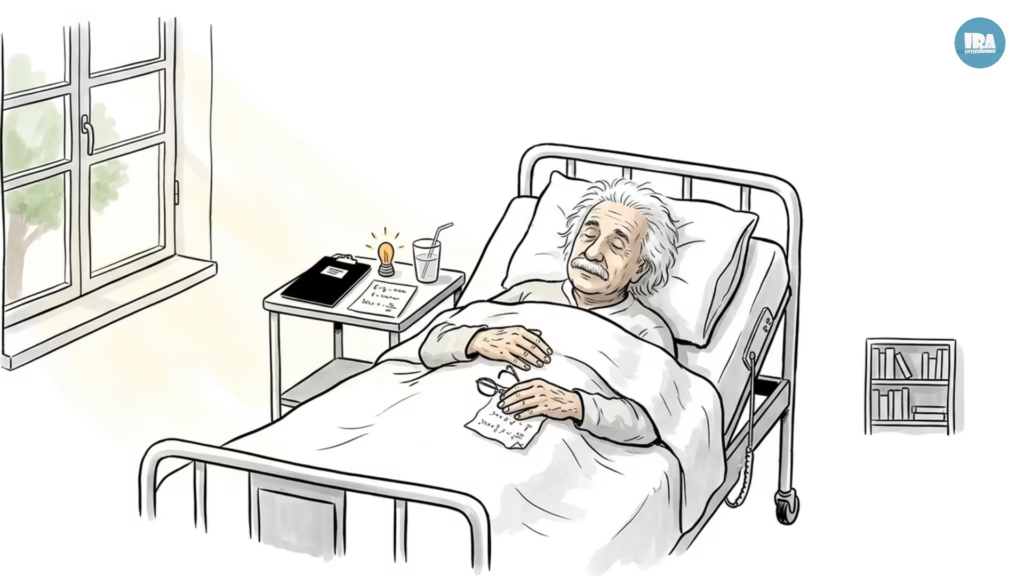
On April 18, 1955, Albert Einstein died at the age of 76 at Princeton Hospital.
The news quickly spread across the world. Newspapers, radio stations, and journalists rushed to cover the death of one of history’s greatest minds. People everywhere wanted to know more about Einstein’s final moments and the legacy he left behind.
But while reporters gathered outside the hospital, one man made a very different decision.
The Photographer Who Captured History
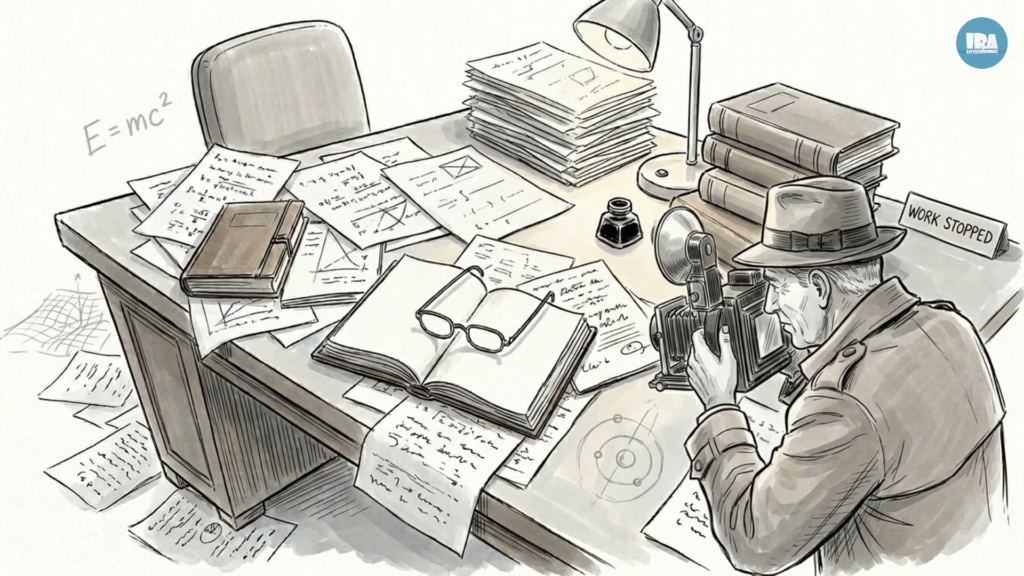
Ralph Morse, a photographer working for Life magazine, chose not to follow the crowd at the hospital. Instead, he went directly to Einstein’s office at the Institute for Advanced Study.
What he discovered there became one of the most emotional and iconic scenes connected to Einstein’s life.
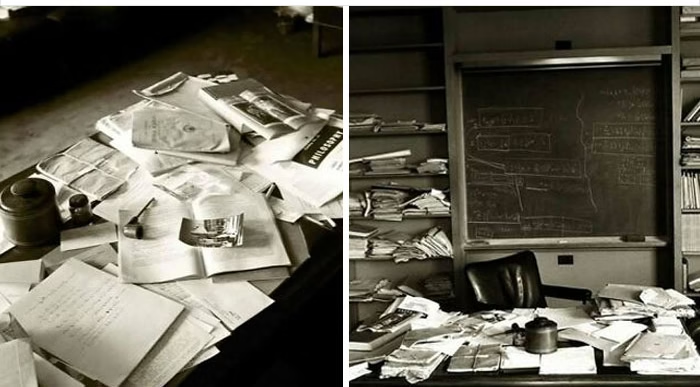
Inside the office, everything looked exactly as Einstein had left it:
- Books piled up everywhere
- Papers spread across the desk
- Scientific notes and unfinished ideas untouched
The room looked messy, but it also revealed the mind of a man who never stopped thinking.
Morse carefully photographed the office, capturing silent images that felt deeply powerful. There were no people in the photographs, yet Einstein’s presence could still be felt everywhere in the room.
Those images later became famous around the world because they showed something very human about genius — the endless search for knowledge.
Einstein’s Legacy Lives On
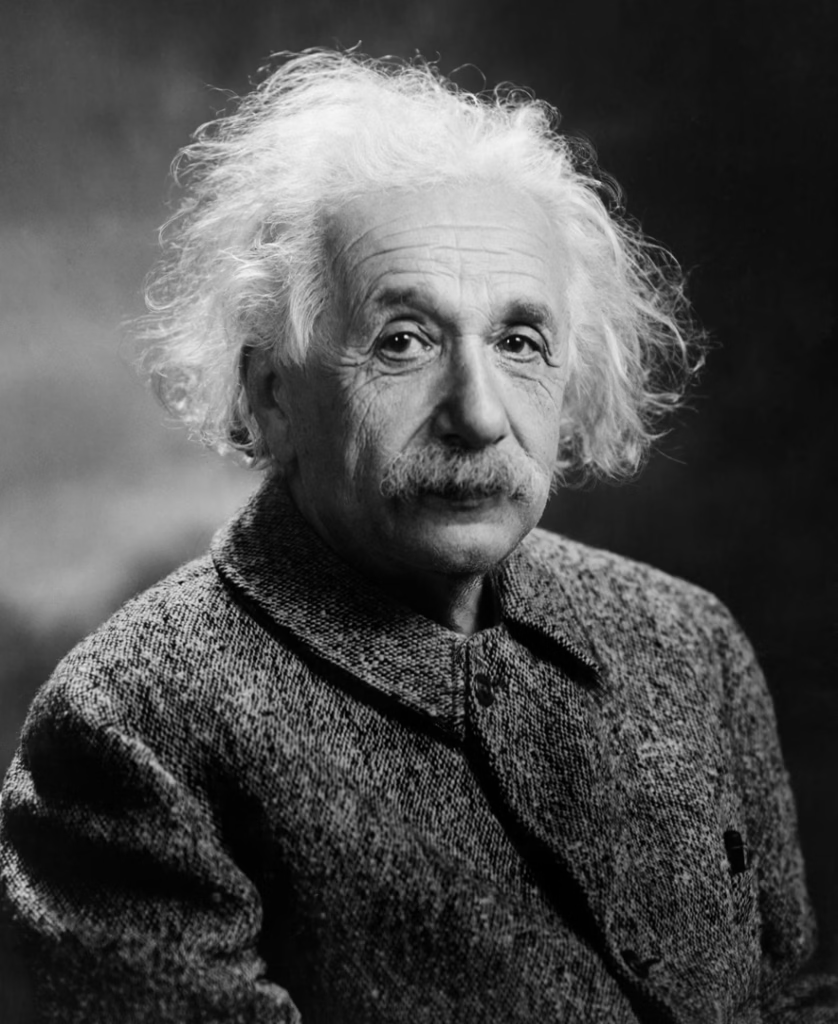
The photographs of Einstein’s office became much more than simple pictures. They became a symbol of curiosity, dedication, and lifelong learning.
Einstein’s story continues to inspire millions of people today because he never stopped asking questions. Even after changing science forever, he still believed there was more to discover.
His final years remind us that true intelligence is not about knowing everything. It is about continuing to learn, explore, and remain curious until the very end.
More than 70 years after his death, Albert Einstein remains one of the greatest scientific minds the world has ever seen.
Watch the Full 3D Animation
To explore all of these processes in 3D, check out our detailed 3D Animation video.
Watch it in Malayalam!
Want to learn more through visual storytelling? Check out our detailed 3D explanation blog on Why We Forget Things? How to Remember What Matters!